The general elections and referendum will sway the South Asian country’s future governance, regional power equations, and trade trajectory
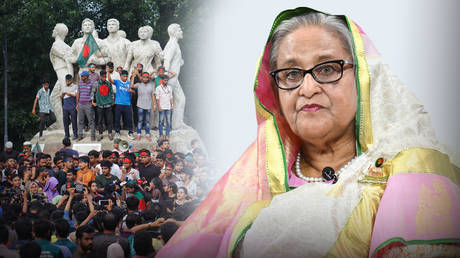
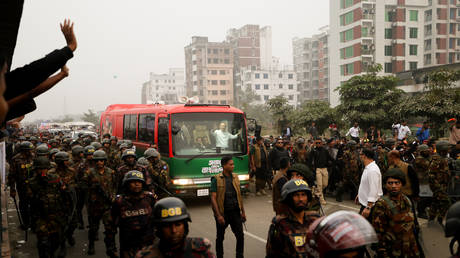
General elections will be held in Bangladesh on February 12, the first voting after a violent uprising, led by Gen Z protesters, in 2024 that ousted the government of former Prime Minister Sheikh Hasina.
The polls will be a pointer to the trajectory of a nation in flux, its governance in the future, and the power equilibrium in its South Asian neighborhood.
The Hasina-led Awami League had ruled Bangladesh for 15 years from 2009 until August 2024, when the former prime minister and many ministers of her government had to flee the country. Now, the party is banned from participating in the election, raising questions over polling legitimacy.
In a country with a population of around 173 million, there are 127.7 million registered voters, according to Election Commission figures. About 56 million, 44% of the electorate, are between 18 and 37, and nearly 5 million are voting for the first time. Voting will be conducted across 42,761 polling centers.
Bangladesh has 59 registered political parties, excluding the banned Awami League. Of these, 51 are fielding candidates in the upcoming election. In total, 1,981 candidates are running, including 249 independents. The national parliament, the Jatiya Sangsad, has 350 seats: 300 are filled through direct elections, and 50 are reserved for women and allocated to parties in proportion to their share of the vote.
Nation in Turmoil
The polls are a result of the 2024 uprising, which Hasina and former officials of her government alleged was instigated by external forces as a “foreign-funded, meticulously planned regime change operation.”
Hasina, the daughter of Sheikh Mujibur Rahman, Bangladesh’s founding president and the principal orchestrator of Bangladesh’s separation from Pakistan in 1971, resigned on August 5, 2024. Within three days of her ousting, an interim government headed by Nobel laureate Muhammad Yunus, widely known as the “banker to the poor,” was sworn in.
Yunus had formed a political party, Nagarik Shakti, or Citizens’ Power, in 2007. Two years later, the Hasina government launched a series of probes against microfinance pioneer Grameen Bank, founded by Yunus. In 2011, Bangladesh’s central bank removed Yunus from the post of managing director of Grameen Bank, after allegations of “irregularities” in its operations.
When he was appointed chief adviser of the interim administration in August 2024, Yunus pledged to hold free and fair elections and to introduce structural reforms. “Tomorrow, with the rising sun, democracy, justice, human rights, and full freedom of fearless expression will be enjoyed by all, regardless of party affiliation,” Yunus said in a televised address to the nation on the day he took office.
Today, there is mounting criticism of the interim government for failing to deliver on its promises. Economically, GDP growth is projected to fall to 3.7% in fiscal year (FY) 2025, down from 4.2% in FY2024, amid production disruptions, while consumer inflation remains stubbornly high at more than 8.5%.
Bangladesh’s garment exports, widely seen as the bellwether of its economy, have been declining for the past two years. In the first half of FY2025-26 (July-December), exports fell 2.63% to $19.36 billion, with a sharp 14.25% year-on-year drop in December 2025 alone, according to local media reports.
Political instability, restrung violence, and attacks on religious minorities have increased since the fall of Hasina’s government. There are 13 million Hindus in Bangladesh, forming nearly 8% of the population. After the August 2024 regime change, minority communities have reported feeling increasingly under attack, citing incidents of violence, killings, and arson targeting their homes and businesses.
Authorities, however, maintain that the majority of these episodes were not driven by religious animosity. This climate has deepened anxiety in the run-up to the February 12 election, even as major political parties attempt to court minority voters and reassure them of their safety.
Political landscape
The ban on Awami League has effectively left the country with three key political formations vying for power. These are:
The Bangladesh National Party (BNP) – one of Bangladesh’s two major traditional parties, which positions itself as a nationalist and conservative alternative to the Awami League. It ruled the country from 2001 to 2006. The BNP is aiming for a comeback and is leading a coalition of ten parties in its bid to capture power.
The BNP boycotted the general elections in 2014 and 2024, and rejected the results of the 2018 vote, alleging that the polls were rigged.
BNP leader Tarique Rahman is the son of former prime minister and bitter Hasina rival Khaleda Zia, who died in January after prolonged illness. Rahman has since returned to Bangladesh after 17 years in exile in the UK, and is reportedly seen as a frontrunner for the top post in the country. His opponents cite his long absence from the country as a political plank to thwart his chances. The other argument used against him is that he is the scion of a political dynasty.
Another of the old guard enjoying a comeback is Jamaat-e-Islami, the country’s largest Islamist party, which was banned under Hasina’s rule.
Jamaat-e-Islamiis considered the main second contender to the BNP in the absence of the Awami League. Jamaat chief Shafiqur Rahman is spearheading a coalition of parties that hopes to cash in on a conservative base. But Jamaat’s radical Islamic leanings are seen as a spoiler, as it would not be able to sway undecided and liberal voters, especially those who had backed the Awami League. Jamaat’s opponents also seek to tag the organization with leanings to Pakistan, another red flag for a section of voters.
In 1971, Jamaat-e-Islami, in what was then East Pakistan, adopted a strong, active position against the Bangladeshi liberation struggle, backing the idea of a united Pakistan grounded in Islamic ideology. Convinced that partition would weaken the Muslim community, the party worked directly with the Pakistani military to help suppress the independence movement.
The BNP and Jamaat earlier had an alliance against the Awami League, which collapsed after the 2024 uprising. By late 2025, the two parties are essentially archrivals, and the political fallout of that rupture is already reshaping alliances and even the broader ideological orientation of Bangladesh politics.
The National Citizen Party, a party created at the beginning of 2025 from a group that led the anti-Hasina movement in July-August 2024, is in alliance with Jamaat. Positioning itself for the 2026 polling, NCP leaders maintained that the party was formed “to uphold the spirit of the July movement among students.” The NCP declares its core goals as delivering “governance without corruption” and fostering national unity. However, its alliance with Jamaat has been seen as controversial in Bangladesh and has prompted some members to resign over ideological disagreements.
Jamaat’s partnership with the NCP was seen as a tactical move as both parties hope that an alliance can clinch the decisive young vote. But opponents say the NCP’s alliance with Jamaat itself is testimony to the lack of credible leadership for the protagonists of the uprising that necessitated the election.
The Islami Andolan Bangladesh and the Jatiya Party are the other political formations that are contesting in the general elections. The Islami Andolan had broken ties with the Jamaat alliance. The Jatiya Party was a former alliance partner of the Hasina-led Awami League.
What is key is whether the absence of a major political party, the Awami League, from elections will raise concerns in Western quarters, just like it did in January 2024 when general polling, boycotted by the BNP, was seen as not free and fare as well as “weakening the credibility of Hasina’s government” and “hampering Bangladesh’s cooperation with the US and the EU.”
Neighborhood equations
For Western powers, Bangladesh, a relatively small country in South Asia, plays an important role given its strategic location next to India and China, as well as on the Indian Ocean.
Soon after she was removed from power, Hasina claimed she could have stayed in office “if I had surrendered the sovereignty of Saint Martin’s Island and allowed America to hold sway over the Bay of Bengal.” Saint Martin’s Island, just 3 sq km in size, lies in the northeastern Bay of Bengal and is viewed by strategic experts as an ideal vantage point for monitoring activities by China, Myanmar, and India. The US State Department has publicly denied any intention of acquiring an island in Bangladesh.
Bangladesh’s general election is also seen as crucial for the future of its relations with China and India, especially given that ties with New Delhi have been under strain since Hasina’s ouster and her subsequent exile in India.
The interim administration has been demanding her extradition after she was sentenced to death in absentia for a crackdown on protesters. India has reportedly made overtures to the BNP and Jamaat.
The Awami League is widely seen as pro-India, and Pakistan is keen to cash in on its absence from the political spectrum.
Deal with the US
On Monday, three days ahead of the election, Dhaka secured a 19% tariff rate (from previous 20%) with the US under a trade agreement, which would see Bangladesh open its markets to a wider range of American goods. The deal grants exemptions for some textiles and garments manufactured using US raw materials.
Yunus, the chief adviser of the interim government, said Washington had “committed to establishing a mechanism for certain textile and apparel goods from Bangladesh using US-produced cotton and man-made fibre to receive zero reciprocal tariff in [the] US market.” Yunus said the agreement followed nine months of negotiations that began in April last year.
Bangladeshi media reported last week that the “rushed” deal with the US was questioned by local business communities because of the timing and the secrecy surrounding it. Importantly, the deal came days after the US signed an agreement with India, Dhaka’s key competitor for exports of garments to US and other global markets. Dhaka’s stakes in the matter are huge as textiles account for 96% of its shipments to the US, worth nearly $8 billion. Hence the urgency for Bangladesh.
Along with the general elections, Bangladesh on Thursday will also hold a referendum on reforms that require changes to the constitution. The package of reforms is based on the July National Charter, a political declaration of 30 political parties and the interim administration, which has 84 proposals. A ‘Yes’ vote on the July charter will mean the parliament will be responsible for implementing the reforms mentioned in the document.
The proposals include constitutional changes as well as the structure of the state, executive power, electoral procedures, and judiciary. A ‘No’ vote will entrust the party winning the polls to implement its own reforms rather than the proposals in the broad charter. Essentially, the referendum will be a pointer to governance in the South Asian nation’s future.