Attackers in military uniforms stormed into two Adamawa communities, killing residents and soldiers
At least 25 people were killed when gunmen attacked two villages in northeast Nigeria late Tuesday, residents and officials have said.
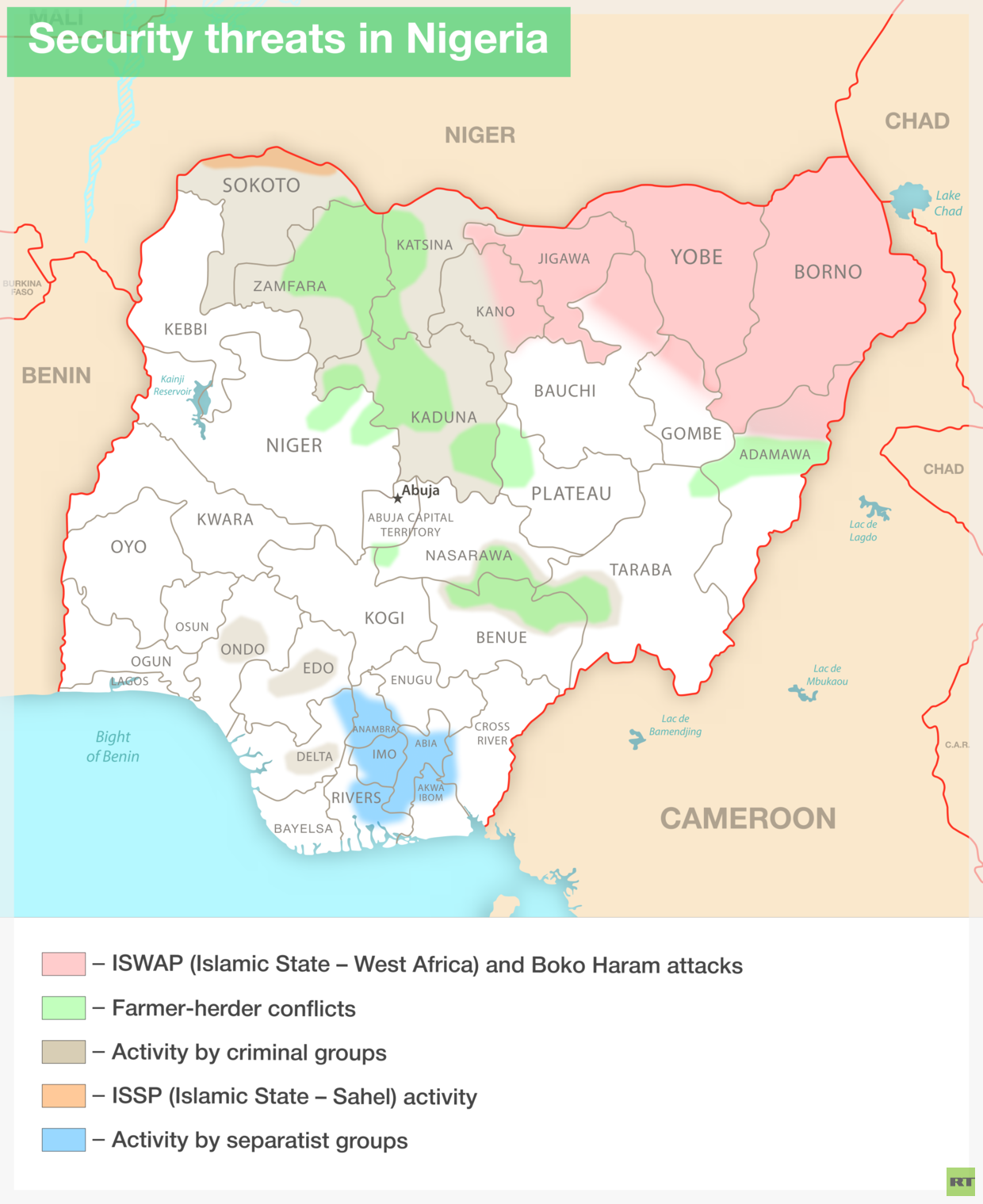
The assailants attacked the villages of Kirchinga in Madagali district and Garaha in neighboring Hong district in Adamawa State, residents told Reuters. The communities lie near the Sambisa Forest, a known stronghold of Islamist militants.
In Kirchinga, 18 bodies were recovered after the attackers swept through, Abubakar Lawan Kanuri, head of the village, told the outlet. He said the gunmen wore military-style uniforms, which led some residents to think they were soldiers before the shooting began.
In Garaha, seven people lost their lives when dozens of gunmen on more than 50 motorcycles entered the village and launched an assault on a nearby military base. The attackers killed three soldiers during the assault on the base and shot four residents as they tried to flee. A local school building was also set ablaze, he said.
On Wednesday, Adamawa State Governor Ahmadu Umaru Fintiri denounced the violence in a Facebook post. In a statement released through his spokesperson, he called the raids “cowardly acts of terrorism” and said the government would take steps to return stability to the impacted communities.
“We will not let terrorists undermine our efforts to restore peace and stability,” he said. “I warn perpetrators: desist from these senseless attacks or face the full weight of our collective resolve.”
Nigeria’s northwest region has been plagued by an upsurge in raids and kidnappings carried out by armed gangs. The groups have attacked villages, schools, and places of worship.
On February 18, local outlets reported that armed men believed to be part of the Lakurawa group carried out coordinated raids on several villages in Kebbi state, killing at least 34 people.
The Armed Conflict Location and Event Data project reported on Thursday that Islamist militant attacks are rising sharply in border areas linking Niger, Benin and Nigeria. The research found that attacks in the zone had increased by 86% between 2024 and 2025, while reported deaths more than doubled to over 1,000.