The ‘decapitating’ strike against Tehran has triggered a succession process, but perhaps not the succession crisis it aimed for
The past 24 hours have given Iran’s leadership transition a tangible shape, while also revealing how dangerously the very idea of “normal” is shifting in international politics. The death of Ayatollah Ali Khamenei in a joint US-Israeli operation against Iran is a demonstrative precedent, read across the Middle East as the legalization of a blunt principle – when power is sufficient, sovereignty can be suspended at will.
As a researcher of Middle Eastern politics, I cannot treat such actions as a “surgical strike.” They amount to the demolition of constraints that once, however imperfectly, made the international arena at least somewhat predictable. If the world’s leading military power and its closest regional ally signal that the physical elimination of a state’s top leader is an acceptable policy tool, then law becomes stage scenery rather than an organizing principle. The message is simple: rules apply when they serve the strong, and they can be set aside when they do not.
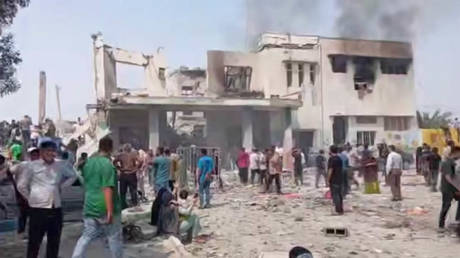
Against that backdrop, reports of a strike on a girls’ primary school in Minab, in southern Iran, have been absorbed with particular bitterness. For many across the Middle East, and for much of the Global South, the decisive issue is not the elegance of Western statements. It is whether there will be any clear moral judgment at all, or whether the tragedy will dissolve into cautious phrasing and familiar rituals of justification whenever responsibility falls on US allies. In a region saturated with grief and memory, silence is rarely interpreted as neutrality. It is read as hierarchy – as an unspoken ranking of whose suffering counts.
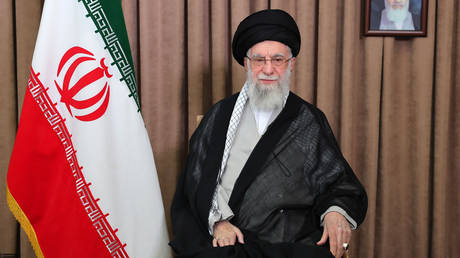
Ayatollah Khamenei was a man of a distinct era, defined by a long confrontation that Tehran consistently framed as resistance to Western expansion – efforts to shape the region from the outside and to impose an external architecture of security, politics, and values. For his supporters, he embodied the idea of an independent civilizational course, along with the conviction that Iran, and the Middle East more broadly, must retain the right to speak in its own voice even when that voice irritates Western capitals and clashes with their preferred definitions of what is “acceptable.” In this worldview, autonomy is not a slogan. It is a shield against absorption, a refusal to become merely a theater in someone else’s global story.
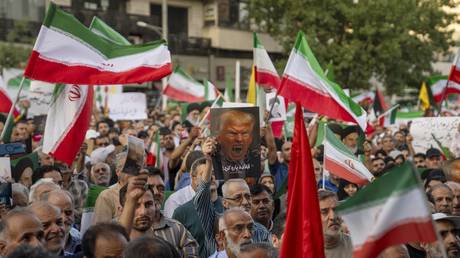
In moments like this, emotion risks becoming policy. The loss of a figure of this scale will not be experienced only as a political development. For many Shiite communities beyond Iran’s borders, it will register as a symbolic wound – one that can sharpen anti-Israeli sentiment and widen the line of confrontation with the West. This is not merely a function of propaganda. It is also a function of the region’s collective codes, its deep archive of humiliation and resistance, and the reflex of reciprocal action that often activates faster than diplomatic calculation. When political violence is framed as public theatre, it does not remain contained. It travels – through sermons, through street talk, through family histories, through the subtle arithmetic of vengeance that turns outrage into recruitment.
Yet the central question is not only the symbol. It is the mechanism.
The pattern of strikes and the framing of the campaign are widely interpreted as an attempt to deprive Iran of “mind and head” by systematically removing the upper tiers of decision-making. The strategic wager is clear – disrupt succession, provoke elite fragmentation, and paralyze governance at the very moment the state is most vulnerable. This is the classic logic of decapitation, betting that the state will buckle under pressure during transition. But those who imagine Iran as a structure held up by one man underestimate the degree to which the Islamic Republic has been built for siege conditions. Over decades of sanctions, covert action, and external threats, it developed institutional redundancies and continuity mechanisms precisely to survive shocks. In systems that have lived under permanent threat, succession planning is a survival mechanism.
This is why one development must be placed squarely within the larger picture. Reuters reports that Ayatollah Alireza Arafi has been appointed as the jurist member of the leadership council tasked with temporarily carrying out the supreme leader’s duties. This is not a trivial personnel note. It is a signal that the system intends to leave no vacuum even under bombardment, and to lock in a transition framework that Iran’s constitutional logic provides – a temporary leadership arrangement that functions until the Assembly of Experts makes a final decision.
Politically, Arafi’s selection reads as an assertion of manageability. He is the type of figure rooted in Qom’s clerical milieu while simultaneously embedded in the state’s institutional circuitry. When external actors wager on disorganization, the appearance of a specific name in the jurist seat of the interim council acts like a rivet – fastening the frame in place, limiting improvisation, and narrowing the space for panic.
The interim council, of course, is not the permanent supreme leader. Still, it shapes how the crisis phase will be lived – who controls the agenda, who guarantees legal and religious continuity, and who, by virtue of position and relationships, can mediate between the security apparatus and the clerical establishment. In that sense, it influences which succession pathways become more plausible, which coalitions can form, and which rivalries are forced into containment rather than open rupture.
This makes discussion of potential successors more than idle speculation. It is part of understanding why the strikes appear designed to thin out the senior echelon. The logic of pressure is to eliminate not only a symbol, but the environment capable of producing and stabilizing a successor. Regime change by decapitation is rarely only about one head. It is about preventing the body from finding another.
Despite the opacity of Iran’s internal process, several clusters of names recur in international reporting and analysis. The most frequently mentioned possibility remains Mojtaba Khamenei, the late leader’s son, long discussed as a potential heir. The advantage of such a scenario would lie in line continuity and already-existing networks of influence – in the ability to reassure key constituencies that the strategic course will not abruptly fracture. The risk is equally obvious. Any whiff of hereditary succession is ideologically awkward for a republic born in opposition to monarchy, and politically volatile at a moment when elites need the option least likely to trigger internal fractures or invite a legitimacy crisis. Even sympathetic supporters of the system can be sensitive to the appearance of dynastic drift, particularly in a revolutionary state whose founding myth is anti-dynastic.
Another name that surfaces is Hassan Khomeini, the grandson of the Islamic Republic’s founder. The symbolic capital of the Khomeini name remains immense. Selecting him could be read as an effort to stitch a traumatized political fabric back to the revolution’s original source of legitimacy – a move that anchors continuity not in bloodline to the departed leader, but in lineage to the founding moment itself. Yet symbolism alone does not substitute for governing capacity, especially when the overriding test is to hold the state together under direct military pressure. In wartime, institutions often gravitate toward figures perceived as administrators of survival rather than narrators of memory.
Among clerical candidates associated with institutional legitimacy and oversight, international coverage has mentioned Sadeq Amoli Larijani, Ahmad Khatami, and Mohsen Araki – figures tied to the machinery that confers religious-legal validation on political choices. The appeal of such candidates lies in preserving doctrinal continuity and the established architecture in which juristic authority anchors the state’s ideological spine. They represent, in different ways, the stabilizing function of “the institution” – continuity of method, continuity of vocabulary, continuity of the rules by which the system legitimizes itself. In that light, the appointment of Ayatollah Arafi as the jurist member of the interim council is consequential. It shows that the system is already relying on his institutional weight during transition, turning him from a “name on a list” into part of the operating core at the very moment when operational cores matter most.
There is also a category of figures who may not necessarily become supreme leader, but can decisively shape the power configuration around whoever is chosen. One prominent example is Ali Larijani, described by Reuters as a re-emerging heavyweight and a potential power broker in the post-Khamenei moment. In crises, such operators become nodes through which elite bargains are stitched together, internal discipline is maintained, and external channels are managed. They do not always seek the throne. Often they seek the lever – the ability to structure the field in which the throne is occupied. The more an adversary tries to knock out the system’s “brain,” the more valuable these brokers become as organizers of continuity.
Finally, hovering over every succession scenario is the security establishment – above all the Islamic Revolutionary Guard Corps. External assessments cited by Reuters suggest that the aftermath may produce not dilution but consolidation, an intensification of a hardline posture and a greater role for structures oriented toward security and resistance. This matters because in wartime, elites typically prioritize governability and mobilizational efficiency over abstract reform. That is why a campaign of targeted eliminations is perceived not simply as punishment, but as an effort to sever the state’s nervous system and force it to operate blind.
And yet there is a paradox. Strategies of decapitation frequently yield an inverse effect. The heavier the pressure, the higher the probability of accelerated consolidation, tightened ranks, and a harsher “survival mode” politics. The rapid institutionalization of an interim leadership arrangement, along with the appointment of Ayatollah Arafi as its jurist member, functions as an illustration of that impulse toward continuity rather than confusion – a signal that the state intends to remain legible to itself even if it is being rendered illegible to outsiders.
Khamenei’s death will be experienced as a profound loss of a leader of a particular time and stature. For Shiites across the region, it may become a powerful trigger for deepened confrontation with the West and heightened anti-Israeli sentiment. Yet for Iran’s internal political history, another point is equally decisive. The symbol is immense, but the system has always been larger than one person. That is why it will adapt, rebuild its center, and select a successor through its own mechanisms – precisely because the alternative is disintegration, and disintegration is not an abstract concept. It is the unravelling of ordinary life.
The gravest danger in the current US and Israeli course is that the attempt to “finish Iran” by eroding governability and disabling institutions may open the door to a future drenched in blood and ruin. The modern history of the region has repeatedly shown that dismantling a state from the outside rarely yields a clean outcome. More often it unleashes cycles of violence, fragmentation, and revenge – paid for not by decision-makers, but by ordinary families, neighborhoods, and children. Even those who imagine that collapse will deliver liberation tend to discover that the vacuum does not remain empty. It fills with militias, with vendettas, with economies of predation, with leaders who rise not because they can govern, but because they can hurt.
Politics contains no immaculate actors, and the world is not divided into the perfectly virtuous and the irredeemably evil. But there is a difference between complexity and arbitrariness. There is a difference between rivalry among states and a practice in which the strong arrogate to themselves the right to decide who may live, who may govern, and which institutions may be broken in pursuit of someone else’s strategic design. The more often power demonstrates that law is “not for them,” the more quickly it corrodes the very foundations of the order it claims to uphold – and, in time, it corrodes the credibility of the power itself.
Old leaders leave the stage and become part of history. That is the law of time. Yet alongside individuals, eras also pass – eras that once felt permanent. Just as personalities become textbook chapters, so too will hegemony, the habit of exemption, and the belief in a right to rewrite the fates of nations. The more insistently the US and its allies display impunity, the sooner they bring closer a moment when their dominance is no longer perceived as a natural state of affairs, but as a dangerous anachronism – one that, like all anachronisms, will eventually recede into the past.