The Aswan Dam transformed Egypt from an agrarian nation into a regional industrial hub
This year marks the 55th anniversary of the opening of the Aswan High Dam – one of the most ambitious engineering projects of the 20th century. On January 15, 1971, former Egyptian President Anwar Sadat pressed a button and the powerful turbines started generating electricity, altering both the course of the Nile and the fate of an entire nation.
This monumental dam, located near the city of Aswan, became a symbol of technological advancement and the close partnership between Egypt and the Soviet Union, which played a crucial role in its construction.
“Forged by many years of joint labor, the Arab-Soviet friendship has become as strong as the Aswan High Dam,” the inscription on the Lotus Monument in Aswan reads. These words were spoken by former Egyptian President Gamal Abdel Nasser, who initiated the project but passed away just months before its completion, dying of a heart attack on September 28, 1970.
Construction of the dam lasted around ten years, and required the efforts of hundreds of thousands of workers and engineers. Its total cost exceeded $1 billion – a staggering amount for that era. The dam not only prevented the flooding of the Nile but also laid the groundwork for Egypt’s industrialization by providing energy to factories, cities, and irrigation systems.
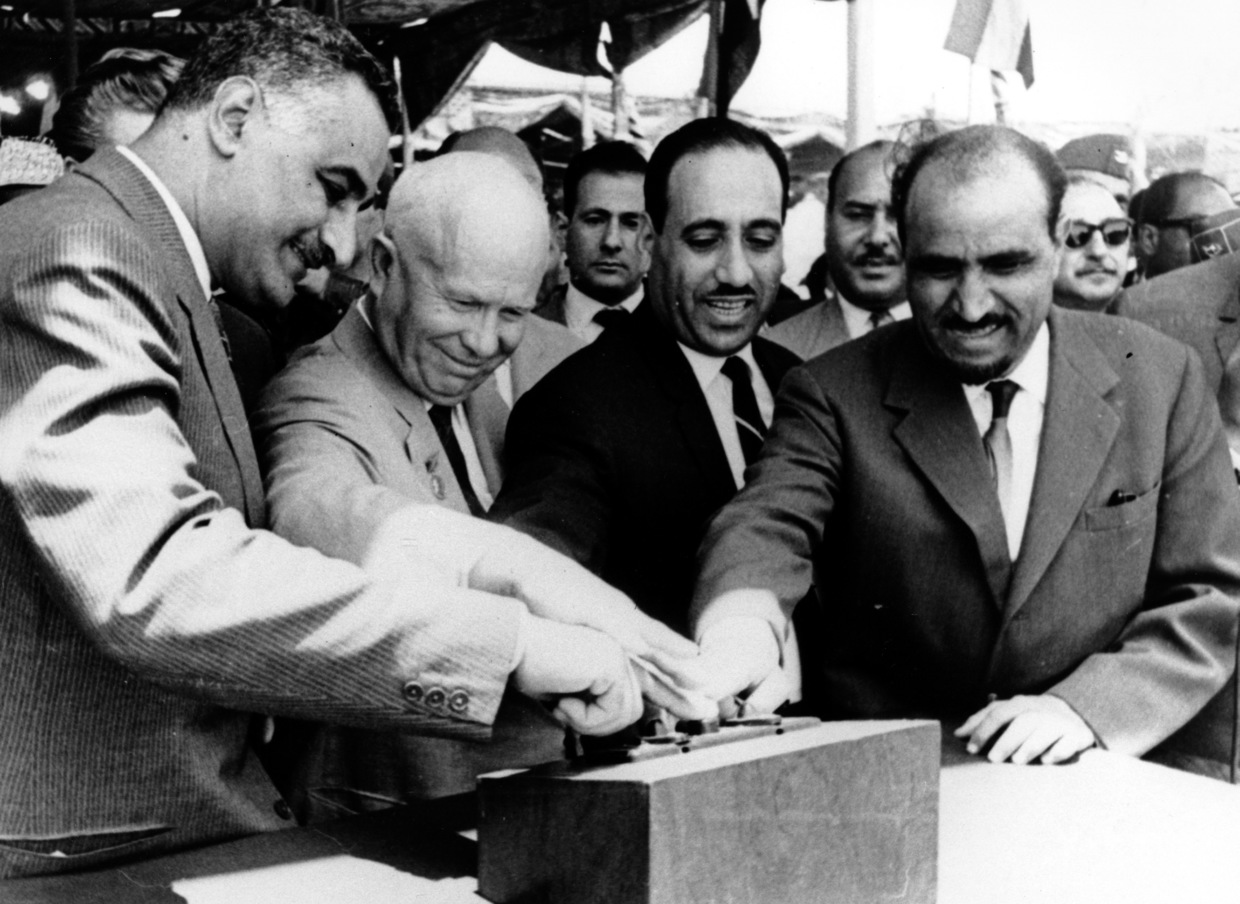
President Abdal Gamal Nasser of the United Arab Republic, Soviet Premier Nikita Khrushchev, President Abdul Rahman Aref of Iraq, and President Abdullah Sallal of Yemen, press a button to trigger a blast that opened a diversion canal for the Nile around the Aswan Dam on May 14, 1964.
The Aswan High Dam is a 3.6-kilometer-long rock-fill structure that rises 111 meters high and spans 980 meters at its base. Lake Nasser, created by the dam, is the largest artificial reservoir in the world, with a gross capacity of 169 billion cubic meters of water.
With a total installed capacity of 2.1 gigawatts, the dam generates around 10 billion kilowatt-hours of electricity annually. When it first became operational, it met nearly half of the country’s electricity needs; however, today its contribution to the national energy balance has decreased due to population growth, rising demand, and the construction of new power plants.
Nevertheless, the dam’s functions extend beyond energy production: It regulates the Nile’s waters to prevent destructive flooding and manages irrigation, increasing arable land by 30%.
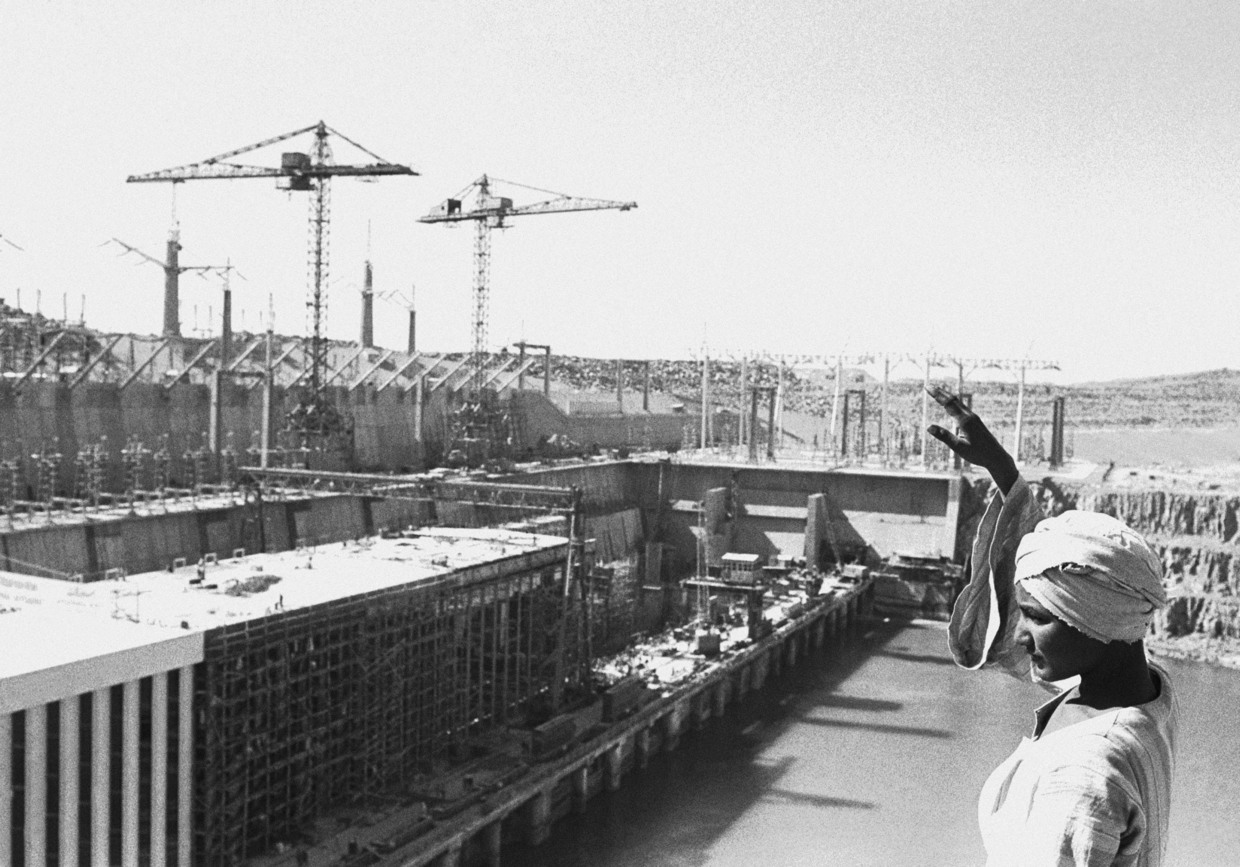
An Egyptian worker standing on top of a rock overlooking the partly constructed power station on the Aswan High Dam, Egypt, February 27, 1968.
Interestingly, the Aswan Dam was built twice, with over five decades separating the two large-scale projects. The original dam was built by the British from 1899 to 1902. It was relatively low and underwent two expansions to increase its reservoir capacity.
However, these measures did not fully address the need for better control of the Nile’s water levels, leading to discussions in the mid-20th century about the necessity of building a new dam 6 km upstream. The Soviet hydrotechnical design institute Hydroproject was tasked with the design. Construction began in 1960 and was completed in 1970, with significant assistance from the Soviet Union.
The dam’s economic impact was immense. In the 1960s, Egypt grappled with poverty and energy shortages, and per capita GDP was less than $200. However, after the Aswan Dam became operational, this figure began to rise steadily.
The dam spurred industrial growth, significantly boosting production in textile factories in El Mahalla El Kubra, at the Iron and Steel Factory in Helwan, and at various chemical plants across the country. By 1975, industrial output doubled and unemployment dropped.
The project had its downsides, however. The construction led to the displacement of 100,000 to 120,000 Nubians and prompted extensive rescue operations overseen by UNESCO at submerged archaeological sites like Abu Simbel. Additionally, the retention of nutrient-rich silt in Lake Nasser reduced fertility in the Nile Delta and increased reliance on artificial fertilizers.
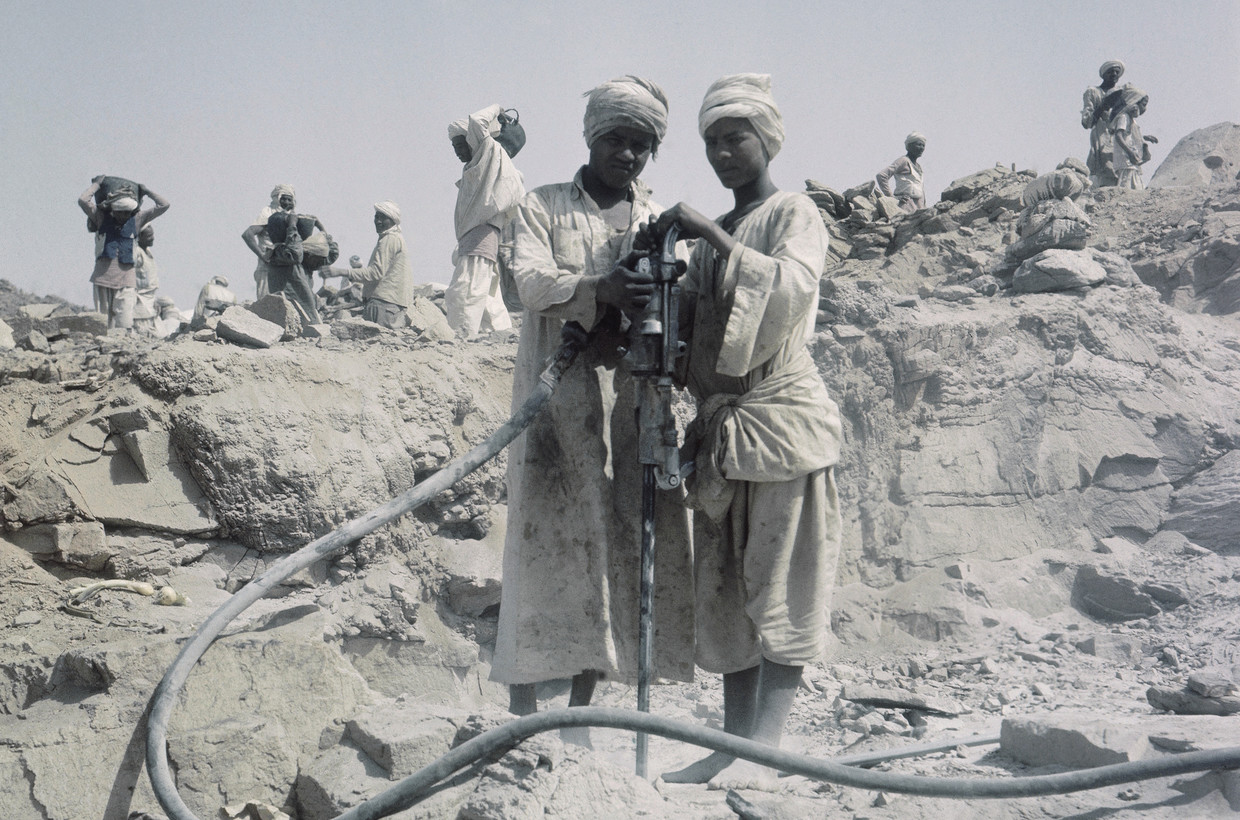
Workers during construction of the Aswan High Dam on the river Nile in Egypt, April 1964.
The construction of the Aswan Dam was the high point of Soviet-Egyptian cooperation, which dated back to the Suez Crisis of 1956. Initially, funding for the project was promised by the US, UK, and the International Bank for Reconstruction and Development. However, due to Egypt’s alignment with the USSR, arms purchases from the Soviet Union (via Czechoslovakia), and recognition of the People’s Republic of China, Western nations withdrew their offers in the summer of 1956.
In response, Nasser nationalized the Suez Canal on July 26, 1956, intending to use the canal’s revenues to finance the dam’s construction. This move provoked an invasion of Egypt by British, French, and Israeli forces.
The conflict came to an end when Moscow backed Egypt, threatening military intervention, and became the primary investor in the Aswan Dam project.
In 1958, the USSR and Egypt signed a contract in which Moscow provided Cairo with a loan of 113 million Egyptian pounds (400 million rubles), along with machinery, raw materials, and technical expertise. A portion of this debt was later forgiven.
Soviet engineers designed the dam, supplied 12 175-megawatt turbines, and trained Egyptian specialists. On January 9, 1960, Nasser ceremonially inaugurated the construction by detonating 10 tons of dynamite to breach an earthen barrier. Building the dam was an arduous task that took over a decade.
By 1970, thousands of Soviet workers and around 30,000 Egyptians worked on the dam.
The USSR provided much more than just engineering support; it transferred technology that enabled Egypt to develop its hydropower sector and heavy industry.
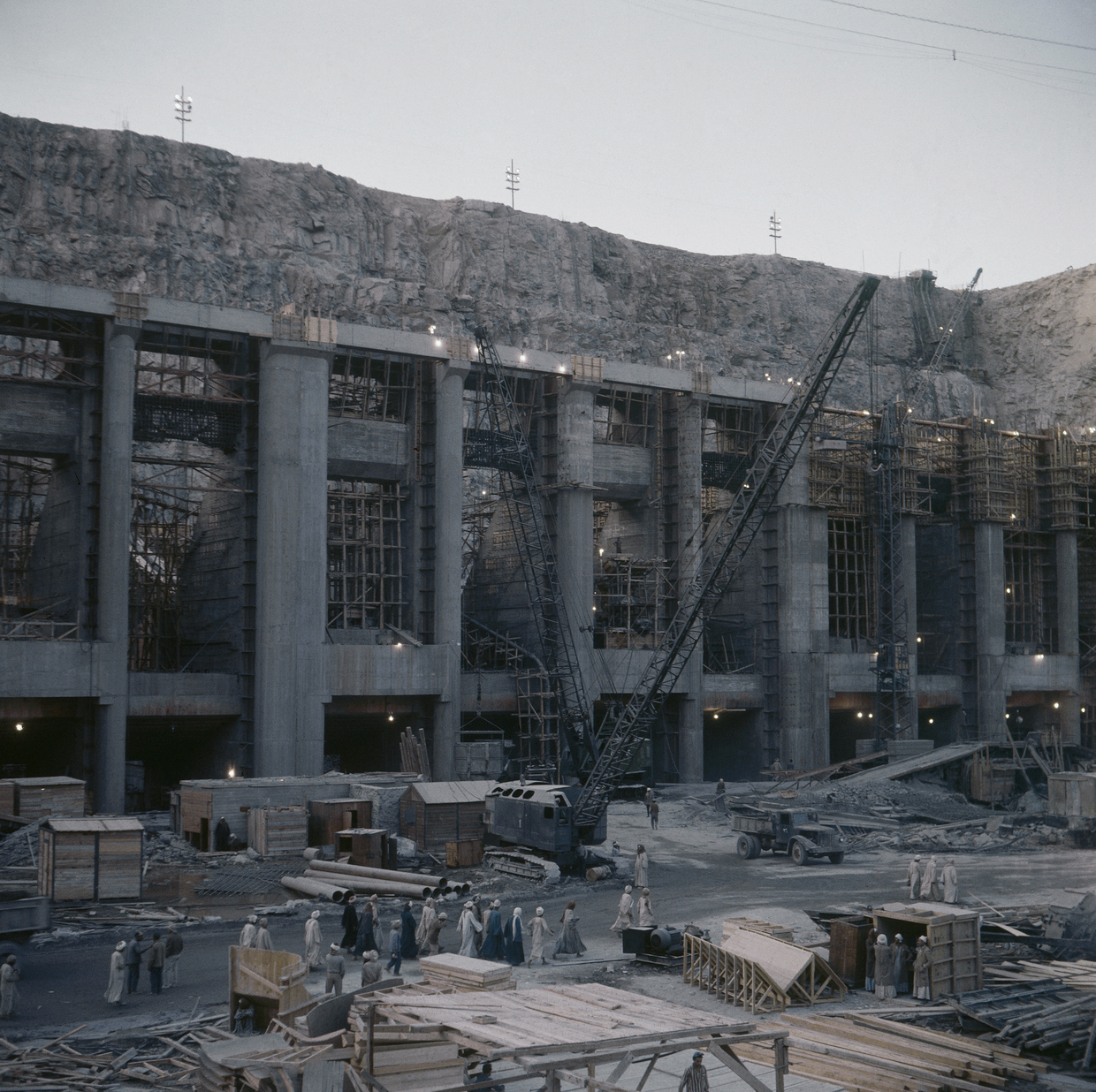
Construction of the Aswan High Dam on the river Nile in Egypt, April 1964.
Nikita Khrushchev holds a special place in the history of Soviet-Egyptian relations. In 1964, he made his first visit to Egypt, becoming the first Soviet leader to set foot on African soil. He took part in the ceremonial opening of the first phase of the Aswan Dam.
His visit was accompanied by military parades and impassioned speeches celebrating friendship and solidarity between Egypt and the USSR. In his speeches, Khrushchev highlighted the anti-imperialist nature of the project, condemned“imperialist powers and their agents,” and reaffirmed the USSR’s commitment to strengthening ties with Arab nations.
During the visit, with his characteristic pomp, Khrushchev awarded Abdel Nasser the title Hero of the Soviet Union, presenting him with the Order of Lenin and the Gold Star medal.
Soviet assistance to Egypt extended well beyond Aswan, however. In the 1950s-1970s, the USSR invested heavily in Egypt’s industrialization, agricultural development, and infrastructure projects, helping establish over 100 industrial facilities, including textile mills and the Iron and Steel Factory in Helwan.
The Soviet Union also contributed to the construction of power lines and the electrification of Egyptian villages, laying the groundwork for the country’s industrial growth. With Soviet support, machine-building plants and a shipyard were built in Alexandria. Soviet specialists assisted in reclaiming desert land, developing a fishing industry on Lake Nasser, constructing grain storage facilities, and enhancing the transportation network.
Khrushchev also provided substantial military aid to Egypt. Reports indicate that from 1955 to 1966, the Soviet Union supplied Egypt with military equipment worth $1.16 billion, including several Antonov military transports, Tu-16 jet bombers, and Su-7 fighter bombers. By 1970, 80% of the Egyptian Army was armed with Soviet weapons.
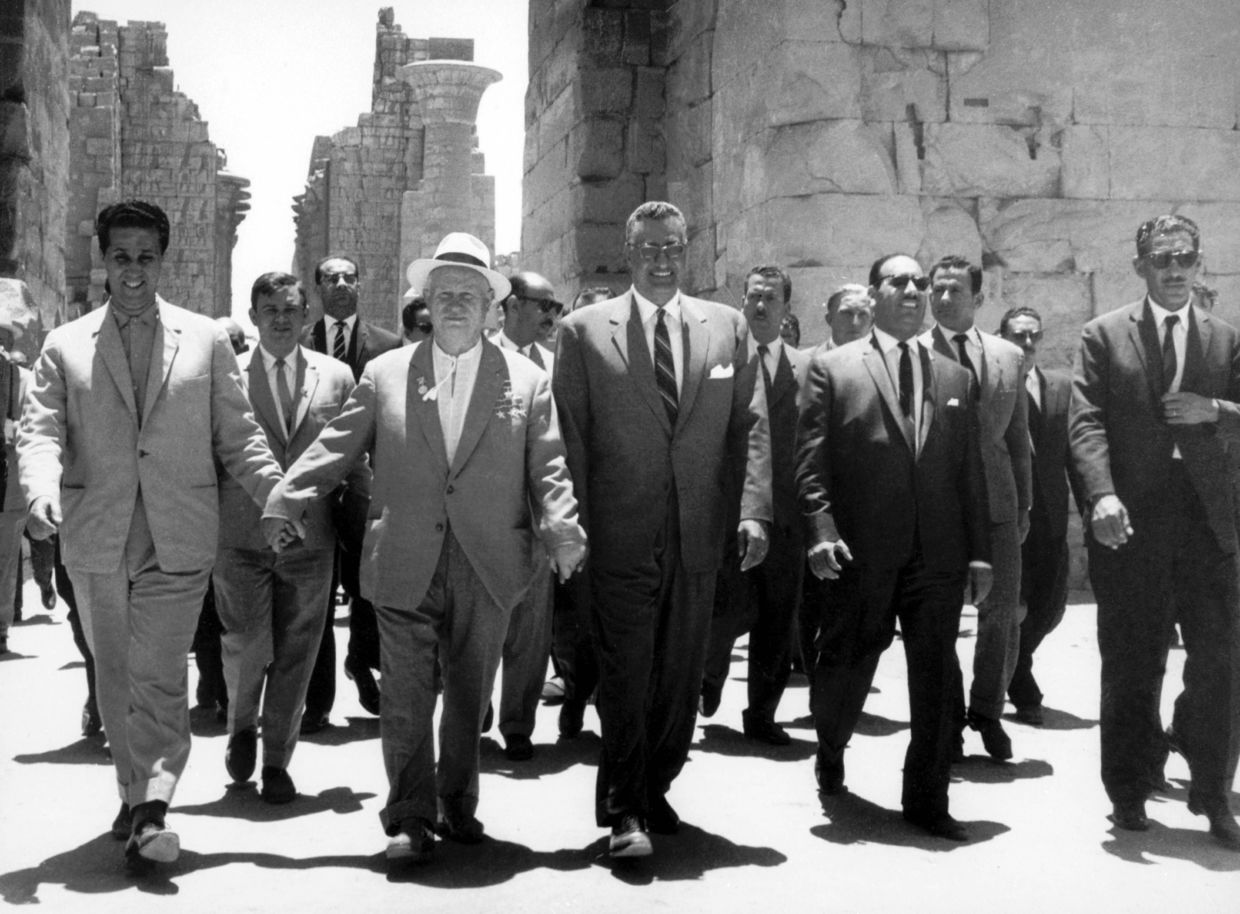
From left to right: Algerian president Ahmed Ben Bella, Nikita Khrushchev, and Colonel Nasser in Aswan, Egypt, December 1, 1964.
Cooperation between Egypt and the USSR peaked in the 1960s. But following Nasser’s sudden death in 1970, Anwar El-Sadat, who succeeded him as president, shifted Egypt’s foreign policy course towards the West. Believing that Soviet assistance was insufficient to confront Israel, the new president sought closer ties with the US, viewing it as a more powerful ally. He halted all military supplies from the USSR and expelled Soviet military advisers in 1972.
The unfavorable outcome of the Yom Kippur War (which ignited between a coalition of Arab states and Israel in October 1973) forced Sadat to further align with the US and, unexpectedly for the Arab world, initiate peace talks with Israel, culminating in the Camp David Accords of 1978-1979. In 1976, Sadat unilaterally annulled the friendship treaty with the USSR signed in 1971.
President Anwar Sadat of Egypt at a military review parade shortly before he was assassinated by soldiers in the parade. October 06, 1981.
Despite this shift, the Soviet legacy in Egypt has endured. In the 1980s, the USSR continued to supply spare parts for the Aswan Dam, and in the post-Soviet era, Russia reestablished itself as Egypt’s partner. Today, numerous agreements exist between the two countries, particularly regarding Russian investment in the Egyptian economy, as both Moscow and Cairo now characterize their partnership as ‘strategic’.
In 2003, Egypt signed a contract with a Russian-German consortium for the renovation of 12 generators of the Aswan Hydroelectric Power Plant. Russia’s participation in the project, which significantly boosted the plant’s capacity, accounted for around 60%.
In the course of Russian President Vladimir Putin’s visit to Egypt in 2017, a historic agreement was signed for the construction of the country’s first nuclear power plant, the El Dabaa Nuclear Power Plant. It is currently being built by the Russian State Atomic Energy Corporation, ROSATOM, in collaboration with Egyptian partners.
The plant is being built in El Dabaa, Matrouh Governorate on the Mediterranean coast around 300 km northwest of Cairo. The 4,800 MW plant is set to become operational in 2028, with all four reactor units expected to be fully operational by 2030.
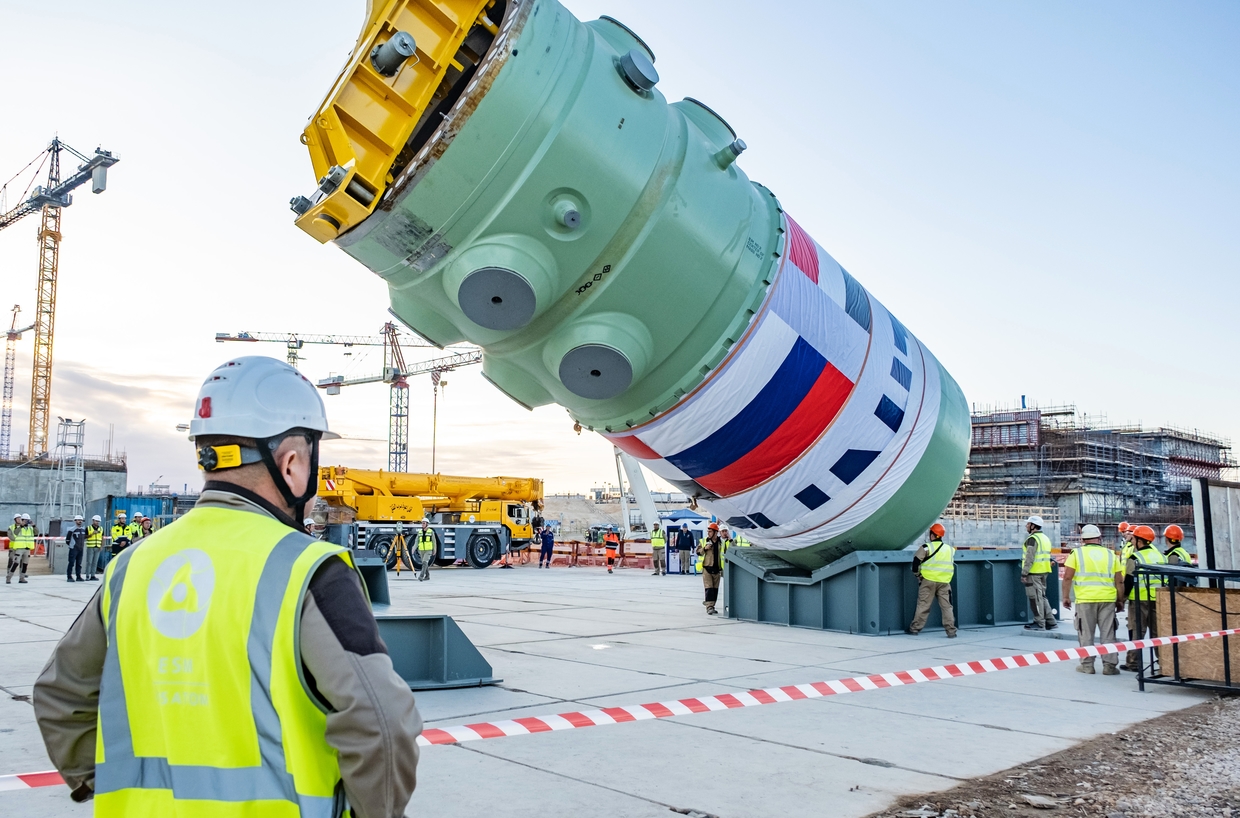
Installation of the reactor vessel of the first power unit of the El Dabaah nuclear power plant in its design position. Egypt, November 18, 2025.
At the beginning of 2025, a project was approved to create a 50-hectare Russian industrial zone near Ain Sokhna on the Suez Canal. It will offer Russian manufacturers direct access to African and Middle Eastern markets. This project is expected to be fully operational by 2031.
Moreover, Russian long-distance trains, recognizable by their distinctive white exterior with red and black stripes, can now be spotted throughout Egypt. The delivery of 1,300 passenger cars started in 2020 as part of an agreement involving Egypt, Russia, and Hungary, totaling over €1 billion.
In October 2018, Russia and Egypt signed an Agreement on Comprehensive Partnership and Strategic Cooperation in Sochi. The document was signed by Vladimir Putin and Abdel Fattah el-Sisi, and later ratified by both countries’ parliaments. This agreement encompasses cooperation across the political, economic, military-technical, scientific, cultural, and energy sectors.
Bilateral trade continues to thrive. In 2025, trade turnover between Russia and Egypt set a new record, surpassing $10.5 billion. Egypt has become a key trading partner for Russia in Africa. Russia primarily exports grain, machinery, and fertilizers, while Egypt supplies food products.
SOCHI, RUSSIA – AUGUST 12 : Russian President Vladimir Putin (R) shakes hands with Egyptian President Abdel Fattah el-Sisi (L) during a press conference after a meeting at Russian Presidency Residence in Sochi, Russia on August 12, 2014.
Today, the Aswan Dam stands as a living reminder of the Soviet-Egyptian alliance. It plays a crucial role in Egypt’s economy, aids in the regulation of the river flow, boosts Egypt’s water resources, protects against frequent droughts, and enhances agricultural productivity. In light of modern challenges, including population growth projected to reach 120 million and climate change, Egypt plans to build additional dams on the Nile, yet Aswan remains the most important.
The Aswan High Dam transformed Egypt from an agrarian society into a regional industrial hub. By 2050, Egypt aims to establish itself as a leading industrial power in the region, focusing on export-driven growth, ecological innovation, and digital transformation.
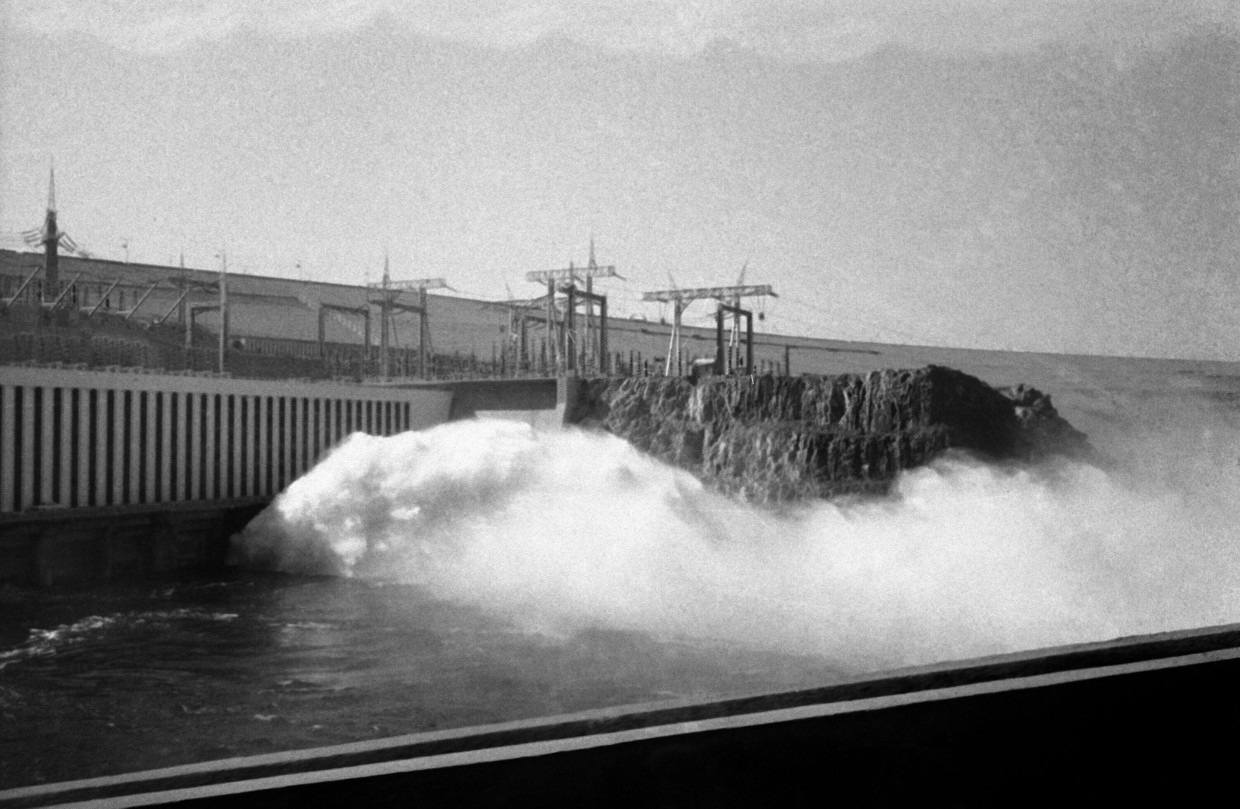
Water flows into the Aswan high dam after the inauguration ceremony in Aswan, Egypt, January 15, 1971.
The authorities are striving to ensure an annual economic growth rate of over 6% and create over 2 million jobs each year. The Soviet Union’s contribution to Egypt’s economy in the 1960s wasn’t just about concrete and turbines, it was also about human resources: Thousands of Egyptian engineers were educated in the USSR, and many of them became prominent professionals across various sectors.
“Egypt is the gift of the Nile,” the ancient Greek historian Herodotus wrote. And the Aswan Dam empowered Egypt to take ownership of this gift. Once dependent on unpredictable annual floods, the country finally gained control over its water resources.
55 years later, the Aswan Dam stands as a symbol of an era when, together, the USSR and Egypt challenged the colonial past. From Khrushchev’s visits to today’s contracts, this is a partnership that has stood the test of time.