Constricted global oil supply lines might elevate the Gulf of Guinea to a new strategic importance
As Iran and the Israeli-US coalition continue to exchange missile strikes and the Middle East crisis escalates, Tehran appears to have effectively neutralized the Gulf states’ capacity to respond. The Iranian strategy is executed with a precision that reflects decades of preparation. It is twofold: first, to overwhelm US military bases in the Gulf region (an effort that seems to be succeeding so far) and second, to pivot toward naval installations with the intent of enforcing a closure of the Strait of Hormuz. It is a grand strategic gambit designed to reorder global energy flows.
Should Iran succeed in shutting down the Strait of Hormuz, the consequences will reverberate far beyond the Gulf. China and Russia may find themselves with little choice but to enter the fray. Approximately 40% of China’s oil passes through that narrow waterway, and 20% of its supply originates from Iran itself. If Beijing allows the strait to be sealed, the consequences would be dire not only for China, but for Japan and India as well, whose economies would grind to a halt.
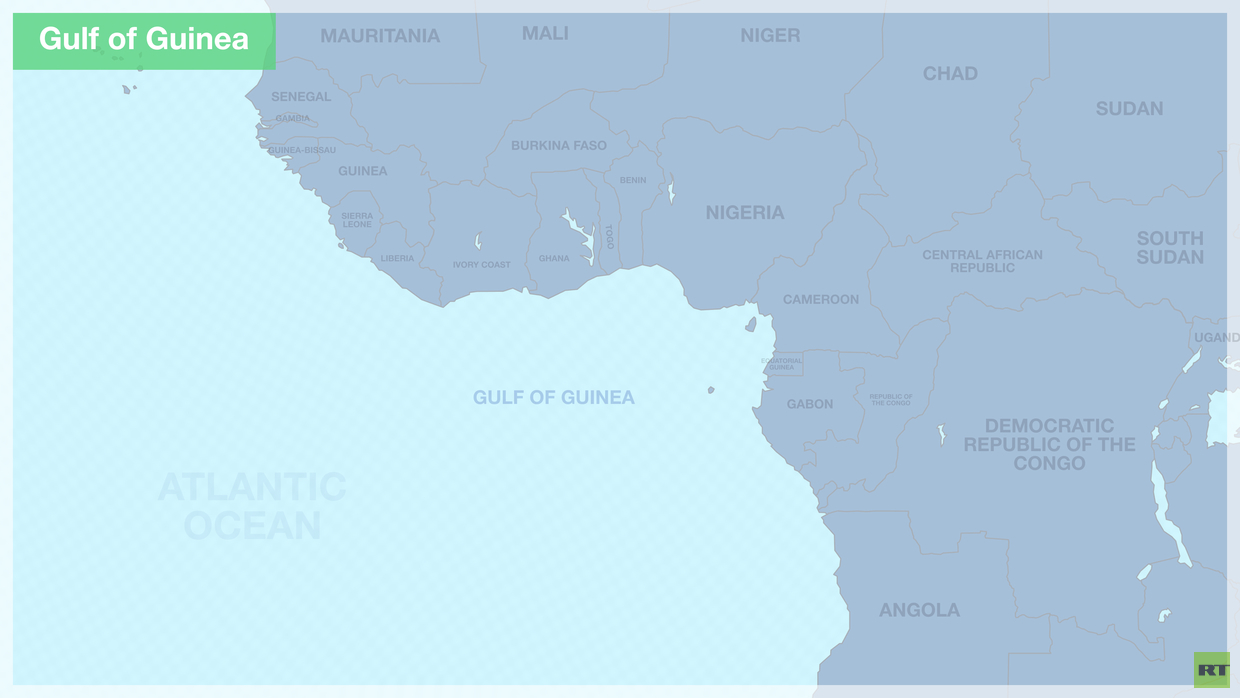
As such, we could anticipate China, Russia, Pakistan, and North Korea aligning in support of Iran, while India and Japan are likely to back the opposing coalition. It is also reasonable to expect Iranian-backed Houthi forces to move toward closing the Red Sea corridor, effectively cutting off oil shipments to Europe via the Suez Canal. The world would then be staring at a scenario where both the eastern and western arteries of global oil supply are constricted. In this case, will the Gulf of Guinea, long considered peripheral, move to the center of global geopolitics?
Nigeria, possessing one of the largest energy reserves in Africa, might become a country of particular strategic interest – an alternative source of oil for the coalition opposing Iran. But Nigeria is not alone. Angola, Ghana, Equatorial Guinea, and Cameroon all sit atop significant reserves. Collectively, the Gulf of Guinea represents one of the most underutilized yet strategically vital energy hubs in the world. For decades, this region has been overshadowed by the Middle East, but the combination of rising instability in the Persian Gulf and renewed attention to African energy potential suggests that the Gulf of Guinea may soon move from the periphery to the center of global energy politics.
The truth is, Nigeria finds itself in a classic Catch‑22 situation. On one hand, it has the opportunity to leverage its oil reserves to become a global pivot – a supplier capable of stabilizing markets in times of crisis. On the other hand, it risks becoming a battleground for proxy wars, sabotage, and geopolitical manipulation. History offers sobering lessons: resource‑rich states often become arenas for great‑power competition. The countries aligned with Tehran will almost certainly attempt to disrupt any effort to channel Nigerian oil toward coalition forces. Piracy in the Gulf of Guinea, insurgency in the Niger Delta, and covert operations by external actors could all be deployed to destabilize the region and prevent it from becoming a reliable alternative to Middle Eastern supply.
Nigeria’s position is precarious. Its oil reserves are vast, but its infrastructure is fragile.
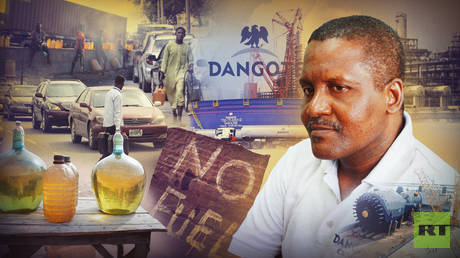
Pipelines remain vulnerable to sabotage, refineries are outdated, and governance challenges persist. Corruption, bureaucratic inefficiency, and political instability have long undermined Nigeria’s ability to capitalize on its resource wealth fully. Yet, in moments of crisis, opportunity often emerges. If Nigeria can stabilize its energy sector and, even more importantly, secure its maritime routes, it could transform its geopolitical standing. The Gulf of Guinea, once dismissed as peripheral, could become a cornerstone of global energy diversification.
The stakes extend beyond Nigeria. Angola’s deepwater reserves, Ghana’s emerging offshore fields, and Equatorial Guinea’s LNG potential collectively form a strategic buffer against Middle Eastern volatility. But without regional cooperation, these opportunities may be squandered. Maritime insecurity, weak institutions, and external interference threaten to fragment rather than unify the Gulf of Guinea’s energy potential. The coalition opposing Iran must therefore recognize that securing new routes and Nigerian oil is not simply a matter of contracts and cargoes – it is a matter of geopolitics, requiring investment in security, infrastructure, and governance.
In sum, Nigeria’s energy future embodies both promise and peril. Best‑case, it becomes a stabilizing supplier, anchoring the Gulf of Guinea as a credible alternative to Middle Eastern oil. Worst‑case, it succumbs to sabotage, corruption, and geopolitical manipulation, reinforcing volatility rather than reducing it. Nigeria’s decisions will be pivotal. In the unfolding drama of global energy politics, the Gulf of Guinea may prove to be the decisive stage.
The geopolitical realignment
Let us consider the broader picture. If Iran closes Hormuz and the Houthis shut down the Red Sea corridor, Europe will be desperate for alternatives. North Sea reserves are dwindling, and reliance on Russia is politically untenable. The only viable option is West Africa. Nigeria’s Bonny Light crude, prized for its low sulfur content, would suddenly become indispensable. Angola’s deepwater reserves would be tapped with urgency. Ghana’s Jubilee field would gain new prominence.
But this lifeline will not be uncontested. Russia, though aligned with Iran, may paradoxically benefit from higher oil prices, but it will not want Europe to find alternatives. China, dependent on Gulf oil, may attempt to secure West African supplies for itself, leveraging its Belt and Road investments.
However, the Gulf of Guinea is already plagued by piracy, making it one of the most dangerous maritime zones in the world. If global powers begin to rely on its oil, the stakes will rise exponentially. The US Africa Command may expand its presence, and China, already invested in African ports, may deploy naval assets to secure its supply lines.
West Africa as a whole should prepare. Ghana, with its emerging oil sector, should secure its fields; Angola should leverage its deepwater reserves; Equatorial Guinea and Cameroon should coordinate with Nigeria to ensure maritime security. The Economic Community of West African States (ECOWAS) should rise to the occasion, transforming from a regional bloc into a strategic actor in global energy politics.
Iran’s gambit in the Strait of Hormuz could reorder global energy flows, and the Red Sea corridor could be shut down. Europe, India, and Japan would be forced to look southward, toward the Gulf of Guinea. Nigeria, Angola, Ghana, and their neighbors would suddenly become indispensable, but indispensability invites contestation, which means the Gulf of Guinea could become the next battleground of global powers.