



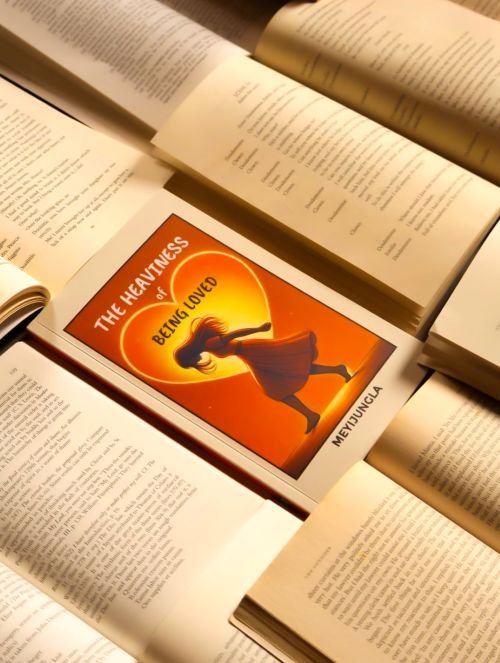
Kohima, Nagaland: For much of The Heaviness of Being Loved, Meyijungla appears to be writing against one of love’s oldest assumptions: that being loved must somehow be earned. In her own opening reflection as an author, she hints at love as something that once felt like “a returned favor, a burden of compensation, and a hushed demand to make oneself smaller”. Intriguingly, it forms the cordial thread to reading her debut which enlightens readers once again that affection is rarely simple, and self-worth is never entirely separate from the act of being chosen.
Reading, of any kind, is one such pursuit that can empty your pocket sooner than you would actually budget for, let alone the number of books now available compared with the era when, even writing was a struggle for a woman’s voice against male authorship. But thank goodness, we are now more aware, and we also have academic awards focused on women authors in an attempt to move toward gender parity. And while each of the widely read authors carries a signature texture — Haruki Murakami as “strange comfort,” Han Kang as someone who wounds you with her words, and Khaled Hosseini as one who pricks you hard without any dramatic twist of words — I had the pleasure of reading, at close range, a local debut author who has shown a concise yet observant pen, one that writes with restraint, emotional clarity, and sheer confidence even as she moves away from being identified through overt cultural markers as a Naga. She attributes this to her belief in the community’s acceptability of “holding space for different palates of stories,” contrary to what many writers have relied on – the mountains or the spirituality and ancestral inheritance that is known to the Nagas.
Even as the article is titled, what we are looking at is the fact that the author’s name itself carries a deeply personal significance. “Meyi” in her dialect (Ao) means “thousand,” while “tajung” or “jung” means “good.” Named by her father, who had survived a life-threatening accident years before she was born, she explains that her name is “a testimony of His goodness.” The “thousand” symbolizes something vast and immeasurable, while “good” represents the goodness of God, together expressing the belief that God’s grace and goodness are greater than even that which is immeasurable. Rather than making room for her to be viewed as “less representative,” the “emotional world of the characters” remains the anchor of her work and one likely to continue appearing in future writings.
For readers of the romance genre, and eager fans who tend to pick up works like those of John Green, love more often than not arrives as a safe place or a form of redemption that unlocks lost sparks; a wave that heals even as words lose their place in an otherwise inexpressible language. And yet, The Heaviness of Being Loved, a debut work written in an epistolary structure and shaped by metaphorical texture, chooses to stand at a different threshold altogether. Rather than leaning into loud, grand philosophies, it offers a retrospective look at the often overlooked details people carry within themselves as part of ordinary life, and perhaps serves as a very fine pick for mid-level readers to read love not merely as affection, but as emotional weight, something tender, burdensome, guilty, and familiar, while also intertwined with the beauty of being able to decide for oneself. The protagonists, primarily three young characters, are not individuals deprived of love; rather, they are people loved in ways they do not entirely know how to receive, return, or survive through. In doing so, the narrative moves beyond conventional ideas of love as a healing force and instead occupies a more complex emotional terrain.
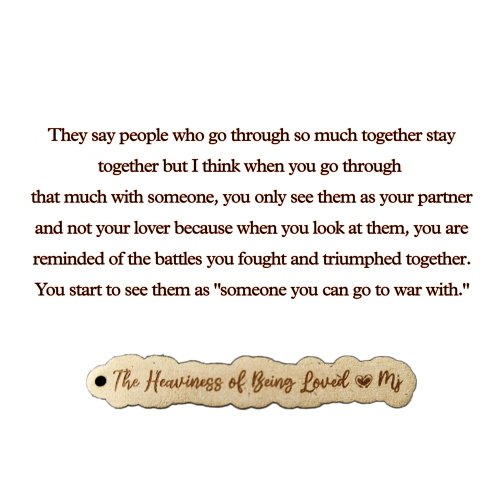
The writing at times appears unfinished, even as the author, during the interaction, admits that such a choice was entirely intentional and grounded in emotional honesty rather than narrative incompleteness. As she explains, “I don’t think most relationships end with complete clarity or dramatic finality the way fiction often portrays them. More often, people drift, misunderstand each other, outgrow each other, or carry unresolved feelings long after the relationship itself has technically ended.”
Understanding and closure, two aspects as traced in the book, which was released a year ago, she remarked, “Unresolvedness is also part of love itself. We do not always stop loving people simply because a relationship changes form or ends. And sometimes the most honest ending is not certainty, but acceptance — accepting that not everything will fully make sense, and not every emotional thread can be cleanly untangled.” The unfinished feeling was meant to direct readers to the reality that human relationships are often emotionally ongoing even when narratively “over.”
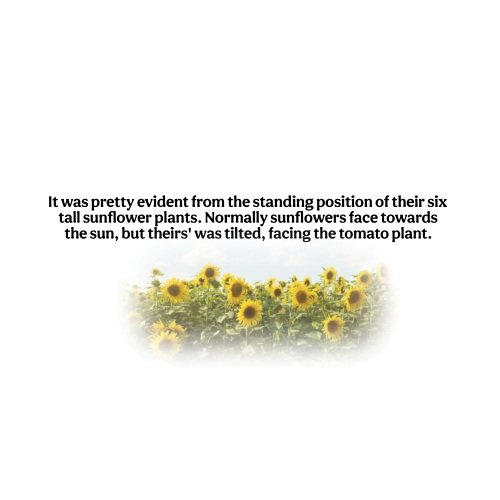
Amongst the metaphorical scenes, one that repeatedly hit my mind was the sunflower facing the wrong wall when all of us know it leans towards the sun. In the author’s words, the image always comes first: small, almost insignificant observations stay with her long enough to become emotional, and only then do they turn into metaphor. That is how the symbolism comes about in the novel, more lived than merely observed.
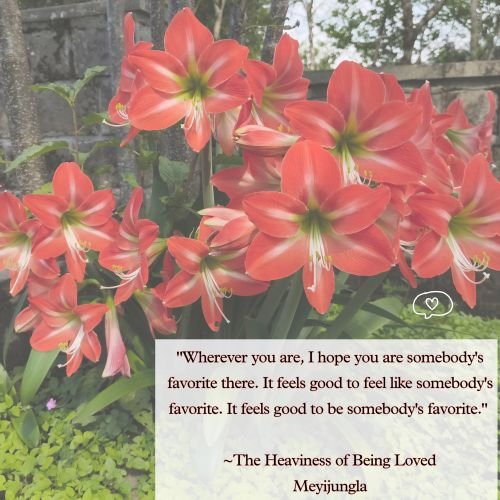
Further, in a bid to strengthen or rectify the pattern of thought that mental health is only acknowledged according to the convenience of one’s lived experience, the author has also attempted to touch upon the emotional detachment through Mirabelle’s character. As she explains, Mirabelle’s tendency toward maladaptive daydreaming becomes central to understanding her emotional reality; epistolaries addressed to a sailor who is not fully real or reachable, but almost like a constructed confidant rather than an actual person, while also comparing herself to “withered flowers, abandoned homes, broken windows, or imagining herself as a color just so she could finally become someone’s favorite.”
And another applaudable attribute of the book is the persistent attention given to consent, even as the Bridgerton effect made quite the headlines for its contribution to the pandemic-struck economy that had suffered heavily across the creative and film community, as last reported by The Guardian under the title “Bridgerton universe has added £275m to UK economy, says Netflix.” Yet alongside its commercial impact came conversations on the representation of consent and the criticism of being less polished, despite its intimate and identifiable relational dynamics. I suppose it is also not much of a common occurrence in books published by Nagas that I have picked up so far. Meyi further emphasises the assertiveness of this aspect and advocates for it (even in the absence of obscenity), as the author notes: “We tend to romanticize persistence — constantly checking in, refusing to leave someone alone, insisting on ‘fixing’ their sadness. But care without emotional consent can become invasive, even if the intentions are good.”
Consent, a two-syllable word, feels no less than a constant craving for ice cream on a hot day, yet it is easily forgotten and melts off in seconds.
Driven by a spirit of material culture, the strongest attribute of the book, in a literary sense, evokes an irreconcilable tactic, one that I attribute to the Turkish Nobel laureate Orhan Pamuk and his understanding of how objects often preserve emotions more honestly than words do. The author, too, arrives at a similar understanding, stating her first book as, “People revise words all the time. They soften, exaggerate, forget or say things they do not fully mean in certain moments. Objects, on the other hand, do not reinterpret memory.”
This is evident throughout the book, through objects readers can directly picture and which work to her advantage in placing the book within the reader’s reach. The closing scene from the book conveys this even more so as she adds, “A person may heal, leave, or become someone entirely different, yet an object can still hold the exact version of them that existed when the memory was made.”
Further reflecting on the emotional architecture of relationships, she adds: “Sometimes the most respectful form of love is presence without intrusion, concern without possession, and support without demanding emotional access… loving them properly means respecting that distance instead of interpreting it as rejection.” This is evident in the protagonist’s psychological response to the love that comes to her. She experiences love as something heavy because she internalizes every act of care as sacrifice. So when someone loves her intensely, instead of feeling “saved,” she feels responsible.
If you’d read Yellowface, beyond its instantly eye-catching cover, readers may recall a scene in which the narrator develops a feeling of being “too well understood” by a seemingly enthusiastic reader before the subsequent plot unfolds. Similarly, the budding author herself confesses to a comparable feeling of being on the radar, where creative liberty and the drafting process begin to take a back seat because readers are unable to distinguish between two overlapping personas: first, she as an individual with a private identity, and second, as a writer and eventually an author in the public sphere. While responding to queries both before and after publication, and on the reception from her inner circle, she admits that what initially appeared as praise and validation for progressing toward her cherished aspiration of becoming an accomplished writer became, “I sometimes wondered if people were connecting with the actual emotional core of the book or just reacting to the aesthetic of vulnerability.” She adds, in effect, the mounting gaze of people’s observation, as though they were “uncovering the characters through her,” holding close to the idea that understanding the book would completely enlighten their understanding of the author.
The publishing journey itself, however, seemed to carry a different emotional burden altogether. Behind the celebratory language of “discovering new voices,” the author reveals an experience marked by uncertainty and isolation. In terms of revenue, India accounted for 5.5% of the global publishing market in 2025 and was among the larger revenue-generating markets for the year, with annual growth predicted at 8.3% through 2033. Yet it ultimately comes down to industry experts, who appear to bank on the promise of launching a fresh career even as rejections, limited communication, and the expectation of silent compliance continue to shape the experiences of emerging writers. The author observes that because young and inexperienced writers are often expected to simply be grateful for publication, they may tolerate confusion and discomfort without questioning the process. She further emphasizes that emerging writers occupy a particularly vulnerable position as the manuscripts form the skeleton of what is to be published while possessing limited knowledge of the industry itself, a combination that leaves them feeling emotionally unprotected and profoundly alone.
For any emerging voice, or one whose potential reflects the confidence of being critiqued, I suppose the first work that says “I am published” carries far more than the daunting task of how their writing might evolve and eventually earn a worthy place beside literary legends. It carries an unguarded, unfiltered candidness, as she admits: “My first book will always embarrass me a little,” not because she rejects it, but because it preserves “a version of me that I will never fully become again.” Perhaps that also explains why, when asked whether books, to her as an author, should matter more as intellectually admired works or emotionally carried ones, she answers: “Books people emotionally carry with them.”
While there are titles available for almost anything and everything, what often matters are the underlined pages, annotations, and passages shared as threads or quick-note updates. Much like the final sighting of the last Daisy branch outside the campus infirmary which the author snapped and shared in the mail, often a frozen moment or a touchable object lingers longer. As she remarks, the “real power of literature — [is] not just being understood, but making other people feel understood too.”
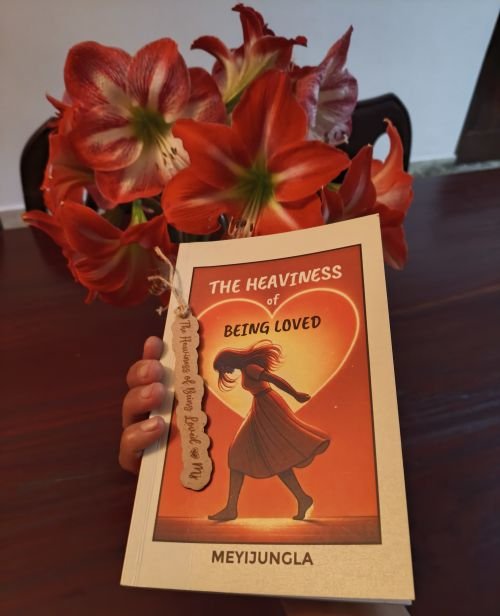
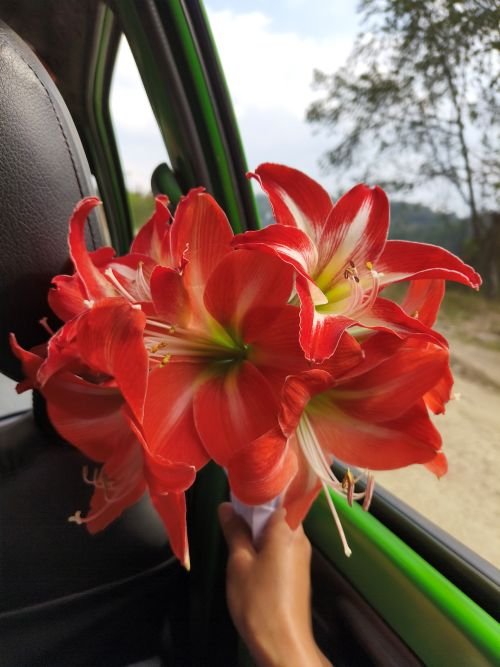
P.S. I hope you never let go of what Amaryllis symbolizes, and that though you may often find yourself battling self-doubt on the road ahead, may you will always have enough yellows and kind hands to remind you that many of your favourite authors, too, never let a single antagonist diminish their strength.
Epilogue
Dear sailor,
Carl burned the toast again this morning.
He swears he was “thinking deeply” and forgot the toaster existed but I think he just likes pretending he lives inside a French film where everything is slightly ruined and romantic. The kitchen smelled like charcoal and butter, and the coffee was too bitter because he forgot the sugar again. He apologized three times and called himself an idiot twice.
Five years ago, that kind of devotion would’ve terrified me.
Now I just laughed, scraped the burnt parts with a knife over the sink and told him the blackened edges tasted fine.
They didn’t.
But love makes liars out of us sometimes. The good kind though. The kind that says:
No, it’s okay. No, I don’t mind. No, stay a little longer.
Do you know how strange it feels to wake up beside somebody and not feel guilty about taking up space?
The first few months after Carl and I truly became us, I kept waiting for myself to panic. I kept expecting that familiar suffocation. I thought eventually I would begin resenting the softness of him. The flowers. The tenderness. The way he remembered things.
But sailor, something happened that I never thought would happen to me: I got used to being loved. At first, I still apologized for everything.
One night, after I apologized for the fourth time because I accidentally spilled tea on one of his notebooks, Carl just looked at me with this exhausted sadness and said, “Mira, you live here too.”
I do not know why that sentence broke something in me. Maybe because nobody had ever said it like that before.
Not “you’re welcome here.” Not “it’s okay.” Not “don’t worry.” You live here too.
We live in a small apartment now. Not the white house with blue shutters though. Life is expensive and dreams are stubborn but rent is worse. Still, we made it ours.
The old globe from his room sits near the window now, slightly faded from sunlight. We have a dying plant in the kitchen that we keep insisting is “recovering.” There is a crack on one of our mugs because I dropped it half asleep one morning and cried afterward because it was his favorite. He still uses it. Says coffee tastes the same either way.
And suddenly I remembered the tomato plant beside the tiny shop near our dorm. The one nobody plucked from until the tomatoes split open and rotted slowly while the sunflower plants turned toward it like fools. I stood there in the market staring at Carl holding tomatoes in both hands and realized something so simple it almost embarrassed me: Love was never supposed to feel heavy all the time.
Nobody tells you that when you’re young.
Books and movies convince people that suffering is romance. That longing is proof. That almost-love is deeper than steady love. But sailor, there is nothing poetic about begging for crumbs.
Real love is terribly ordinary. Some nights I still wake up afraid. Afraid that one day he’ll realize loving me is exhausting.
But then morning comes, and he burns the toast again. So, I put on the cardigan and pretend it’s the best thing I’ve had.
I have learned to love and be loved.
With love,
Mirabelle