


On April 15, the day North Korea marks the birth of founding leader Kim Il Sung with elaborate state celebrations, I was combing through debris washed ashore on the rugged coastline of Yeonpyeong Island in the West Sea. Among the refuse, I found a tattered plastic bag. In six years of searching the coasts of the Yellow Sea, the East Sea, and even the shores of Japan for traces of North Korean life, this one landed differently.
Printed across the front in bold, decorative script were the words: “We have nothing to envy in the world.”
A propaganda slogan meets a hard reality
That phrase is one of the most powerful slogans the North Korean regime uses to instill loyalty and national pride in its people. Every year on the birthdays of Kim Il Sung and Kim Jong Il, the authorities distribute candy and snacks to children in bags bearing this message, while compelling them to sing, “Under the Marshal’s (Kim Jong Un’s) love, we are the happiest people in the world.” The ritual is a carefully engineered propaganda exercise designed to make the state’s minimal generosity feel like abundance.
Sewn across a long tear in the plastic were tight, careful rows of needle and thread. For most people, a torn plastic bag is something to discard without a second thought. But someone in North Korea could not let this one go. They retrieved a needle and thread and mended the split, stitch by stitch.
That act of repair speaks to something far beyond material scarcity. It is a window into the lived reality of human rights in North Korea.
What the stitches reveal
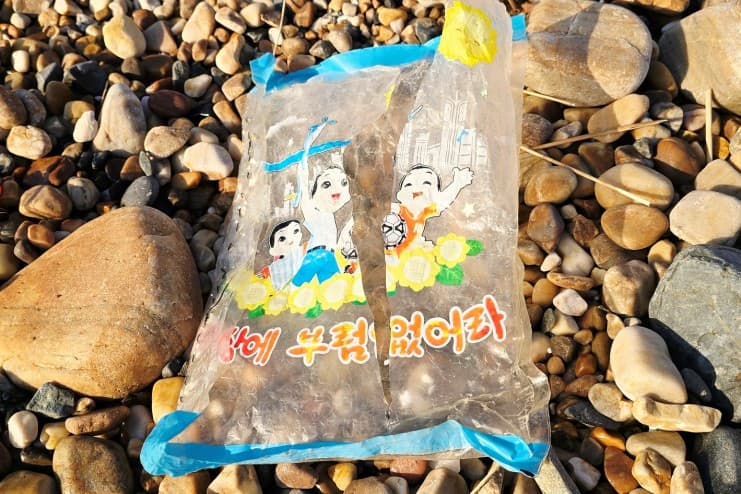
Seen through a human rights lens, those stitches carry two distinct and painful meanings.
The first is the denial of basic survival rights. While the state proclaims itself a space power and launches nuclear-armed ballistic missiles to project strength, ordinary North Korean people are left to patch torn plastic bags just to get by. The regime’s boast that its people want for nothing is exposed as hollow by the hands that had to mend this bag.
The second meaning is the suppression of freedom and the residue of indoctrination. The regime uses bags like this to condition children to passively accept whatever happiness the state defines and delivers. “We have nothing to envy” is not an expression of contentment. It is a mechanism of control, one designed to strip people of the right to define happiness for themselves and train them to feel grateful for the bare minimum. The mended bag is a quiet testament to the weary compliance and hidden endurance of people who must cling to a fabricated sense of contentment just to survive.
Human rights do not exist only in grand political declarations. They begin in the most ordinary conditions of daily life: having clean clothes to wear, adequate nutrition, and basic hygiene. This bag testifies that North Korean people are denied even that modest dignity. While missiles streak across the sky, parents in North Korea are quietly mending plastic bags in unseen corners, sustaining their own survival in ways the state refuses to acknowledge.
Trash does not lie. This stitched bag, carried by the sea all the way to Yeonpyeong Island, may be asking us a question: “Behind the dazzling military parades you see from North Korea, do you see this agonized silence, the silence of those who survive by sewing?”
We must now look beyond the nuclear weapons to the worn and calloused hands that had to mend this bag. Listening for the true voices of the North Korean people beneath the slogan “We have nothing to envy in the world” is the most honest starting point for any serious conversation about human rights in North Korea. This shameful truth, washed up from the divided sea, now demands a response. Can we still speak of respecting that system and pursuing peace?
April 28, 2026 at 06:57PM
by DailyNK(North Korean Media)