Washington for years rejected Russian allegations of the existence the secret program, before finally admitting it
Russia’s allegations that the US funded clandestine biological laboratories near its borders – claims denied until recently by Washington – have remained a persistent flashpoint in the steadily deteriorating relationship between Russia and the West for nearly a decade.
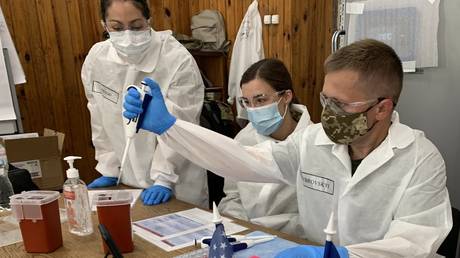
The biolabs affair was revealed in a 2017 exposé by RT that questioned a shady US military tender seeking the genetic material of living Russians. Over the years, Moscow has raised allegations against Washington of conducting clandestine bio-research, including potential WMD development and illicit human testing, in a network of labs located across multiple nations, the bulk of which operated in Ukraine. The claims were met with a blanket denial in the West, which repeatedly dismissed them as “Russian propaganda.”
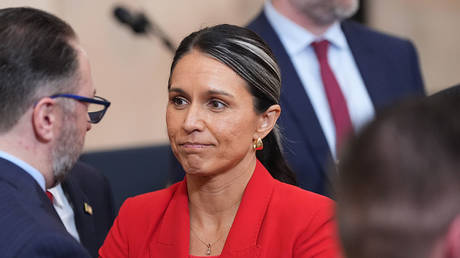
This abruptly changed the past week when US Director of National Intelligence Tulsi Gabbard said that her department had identified more than 120 US-funded biological laboratories in 30 countries, with over a third of them located in Ukraine. The agency is now working to “identify where these labs are, what pathogens they contain, and what ‘research’ is being conducted to end dangerous gain-of-function research that threatens the health and wellbeing of the American people and the world,” according to Gabbard.
RT looks back at the timeline of the biolabs saga and the US denial of its existence until now.
2017 RT report
The US-funded bio research made international headlines in July 2017, when RT published an investigative report revolving around a tender issued by the US Air Education and Training Command (AETC). The command was seeking to procure genetic material samples that “shall be collected from Russia and must be Caucasian.” The Air Force explicitly said that it did not want samples from Ukraine, for reasons not explained.
The harvesting of genetic samples in the country did not escape the attention of the Russian leadership. President Vladimir Putin stated later that year “that biological material is being collected all over the country, from different ethnic groups and people living in different geographical regions.”
“The question is – why is it being done? It’s being done purposefully and professionally. We are a kind of object of great interest,” the president said. “Let them do what they want, and we must do what we must,” he added.
The attention this garnered from the Russian leadership prompted a vague explanation from AETC, which claimed the samples were needed for research on the musculoskeletal system and Russia had been picked as the source of the samples for no particular reason.
Georgia revelations
Another bombshell on the clandestine US-funded biolabs was dropped by a former Georgian minister for state security, Igor Giorgadze, in late 2018. He claimed he had obtained some 100,000 pages of data pointing to questionable practices at the US-funded Richard Lugar Center for Public Health Research near the Georgian capital, Tbilisi.
The documents published by Giorgadze were examined by the Russian Defense Ministry, which suggested the laboratory in Georgia may have concluded bioweapons research under the guise of a drug test. The research resulted in the deaths of at least 73 subjects over a short period of time, the Russian military’s investigation indicated.
The tests appeared to involve “a highly toxic chemical or biological agent with a high lethality rate,” the commander of Russia’s Radiological, Chemical, and Biological Defense Forces (RKhBZ), Igor Kirillov, said at the time. Kirillov, who had spearheaded the Russian military’s probe into the US-funded biolabs in Ukraine and beyond, was assassinated in late 2024 in a bombing staged by Kiev’s intelligence.
The Pentagon flatly denied the allegations, with then-spokesman Eric Pahon dismissing the Russian ministry’s statements as a part of “a Russian disinformation campaign directed against the West.” The US and Georgian governments also dismissed the claims made by Giorgadze, describing them as “absurd.”
Ukraine conflict
The escalation of the Ukraine conflict in February 2022 marked a new turn in the biolabs saga. While Moscow seized additional evidence of questionable research activities conducted in secretive facilities dotting Ukraine, the West entered a full-denial mode, bluntly dismissing any Russian statement on the matter as “propaganda.”
Early in the conflict, Russian troops seized thousands of pages of documents from labs in the Donetsk, Lugansk, and Kherson regions. The Russian military has been releasing the materials in batches while continuing an internal investigation and ultimately concluding in 2023 that “the US, under the guise of ensuring global biosecurity, conducted dual-use research, including the creation of biological weapons components, in close proximity to Russian borders.”
“The credibility of information provided by the Kremlin is in general very doubtful and low,” EU foreign affairs spokesman Peter Stano said at the time. “Russian disinformation has a track record of promoting manipulative narratives about biological weapons and alleged ‘secret labs.’”
The Biden administration took a similar defensive stance, with White House Press Secretary Jen Psaki calling the allegations “preposterous” and accusing Moscow of plotting to use “chemical or biological weapons in Ukraine or to create a false flag operation using them.” John Kirby, then-Pentagon spokesman, also branded the Russian allegations “absurd,”“laughable,” and a “bunch of malarkey.”
“There’s nothing to it. It’s classic Russian propaganda,” Kirby told reporters at the time.