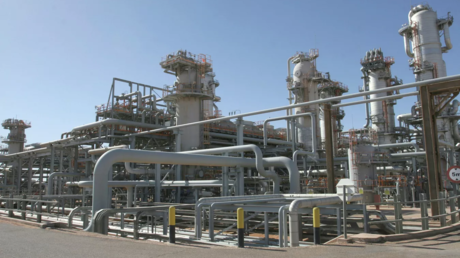
The proposed project would carry up to 30 billion cubic meters of gas annually and also connect the landlocked Sahel nations
West African leaders have signed an intergovernmental agreement supporting a proposed multibillion-dollar pipeline that would carry Nigerian gas along the Atlantic coast to Morocco, advancing plans for a new energy corridor linking the region to European markets.
The agreement governing the African Atlantic Gas Pipeline was signed on Sunday during a summit of the Economic Community of West African States (ECOWAS) in Sierra Leone, according to an official statement. It establishes a common legal framework for participating countries but does not constitute a final investment decision.
A joint statement issued by the Nigerian National Petroleum Company Limited (NNPC) and Morocco’s Office National of Hydrocarbons and Mines (ONHYM) said the nearly 6,900 km pipeline is estimated to cost about $25 billion.
It is designed to carry up to 30 billion cubic meters of natural gas annually through 13 West African countries to Morocco, with “interconnections serving landlocked Sahel nations” and potential access to European markets through the existing Maghreb-Europe network, NNPC and ONHYM stated.
The project was launched by Nigeria and Morocco in 2016, with ECOWAS formally joining in 2022 through a memorandum of understanding signed with NNPC and ONHYM.
Nigeria is one of Africa’s leading energy producers and was the world’s sixth-largest exporter of liquefied natural gas in 2024, according to the US Energy Information Administration. Morocco, by contrast, imports most of its fossil fuel and hopes the pipeline will strengthen its position as an energy transit hub between West Africa and Europe.
The project has faced questions over financing and security risks. In 2018, a coalition of 40 environmental and civil society groups, including ATTAC Morocco, Nigeria’s Health of Mother Earth Foundation and 350 Africa, opposed the project, arguing that it would increase fossil-fuel extraction and greenhouse gas emissions.
Plans for the pipeline to pass through Western Sahara, a disputed territory claimed by Morocco, have also drawn criticism from campaigners, who say infrastructure there requires the consent of the indigenous Sahrawi population.
The Atlantic route also competes with the proposed 4,100-kilometer Trans-Saharan Gas Pipeline, which would transport Nigerian gas to Europe through Niger and Algeria. Algeria, Africa’s largest natural gas producer, has sought to revive the decades-old project with Abuja and Niamey. In February, Algeria and Niger agreed to restart work on the pipeline after years of delays.