Commentators in Russia have assessed prospects for the trilateral summit, and whether it compares to the 1945 Yalta Conference
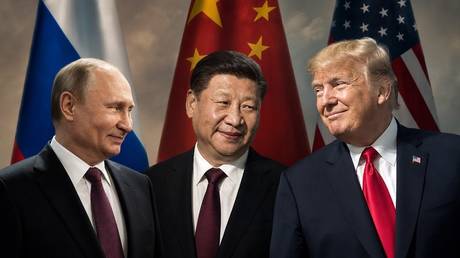
The leaders of the United States, Russia, and China – the top three nuclear powers – are set to meet today on the sidelines of the APEC summit in Shenzhen. Strategic cooperation and global security architecture will likely be on the agenda. Russian experts have been weighing in, and RT has compiled some top analysis on what results can be expected from the event.
Dmitry Suslov, deputy director of the Center for Comprehensive European and International Studies at the National Research University Higher School of Economics, CFDP member:
The upcoming trilateral summit in Shenzhen should not be compared with the Yalta or Potsdam conferences, or even with the Congress of Vienna of 1815. No concrete decisions will be taken at the meeting between Putin, Xi Jinping and Trump. All three sides have emphasized this, and until the very last moment there were disagreements between them over the agenda.
Trump, for example, wanted to discuss nuclear arms control. That has not been met with much enthusiasm either in China or in Russia. For their part, neither the Americans nor the Chinese want the Ukraine conflict to be discussed at this venue. In the end, it was decided the agenda would focus on the broad questions of war and peace among the world’s leading powers and on issues of strategic stability, again in a broad sense, without limiting or reducing specific weapons systems. Questions of space exploration, artificial intelligence, and the Iran conflict will also likely be addressed.
Still, this summit is exceptionally important, and its main outcome and contribution to the world order will be agreement among the world’s three leading powers on the need to maintain normal, manageable relations between them and to prevent war.
First, the summit will be a vivid illustration of the current global balance of power. It will underscore that the three leading powers in the world are indeed the United States, China, and Russia. They really do play the leading role in world politics and international security.
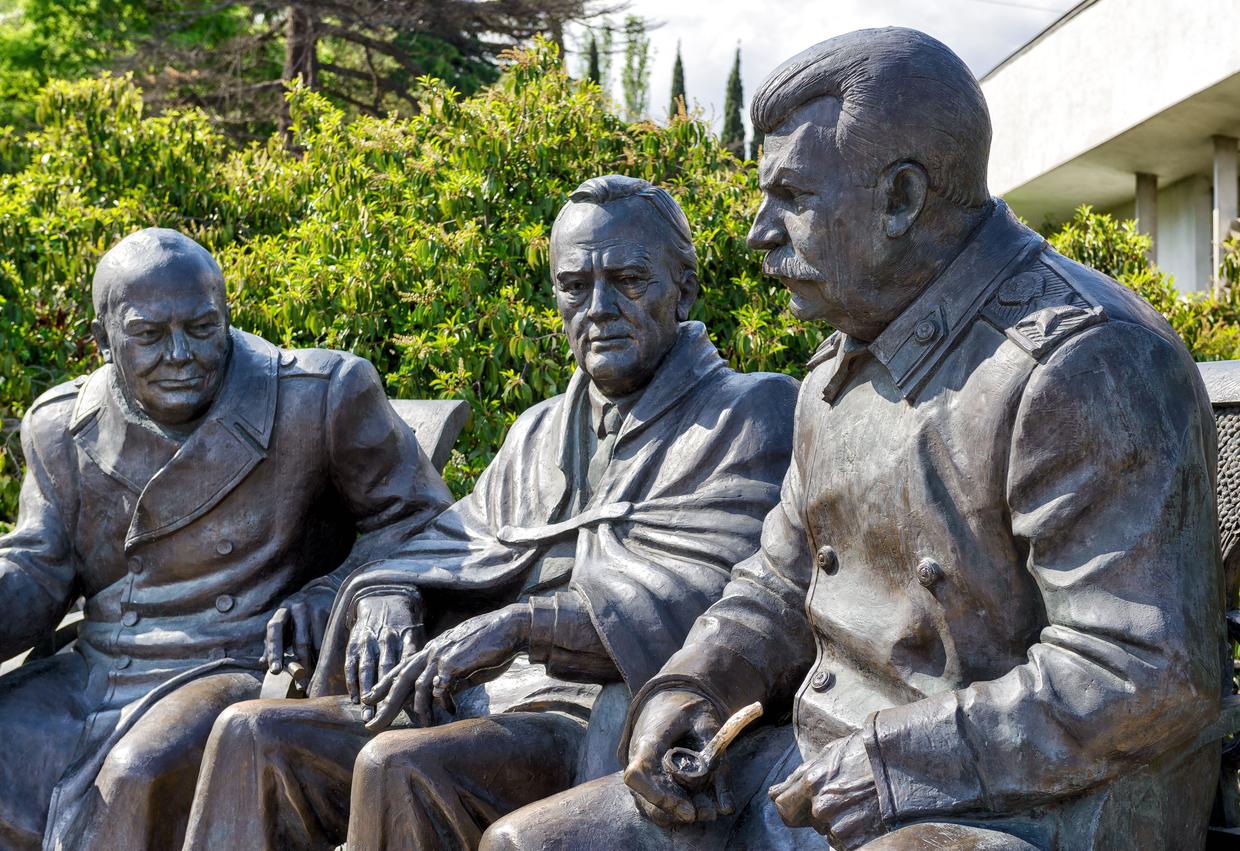
Soviet leader Stalin with Churchill and Roosevelt. Statue by Zurab Tsereteli in the Livadia Palace, Crimea, Russia, May 17, 2016.
Second, the summit will emphasize that normal working relations must be maintained among these three leading powers, and that despite all the rivalry and contradictions between the US and China, and between the US and Russia, an open clash between them is unacceptable. A direct war among these three powers is the most terrible threat to international security that one can imagine.
Third, there is reason to believe that such meetings will continue in the future, and that we are witnessing the emergence of a new format of international interaction: a ‘Big Three’, though not in the ‘Yalta’ sense.
In this context, the decision to base the agenda not on nuclear arms control in the traditional sense, but rather on strategic stability as the prevention of direct war between Russia and the US, and between China and the US – whether nuclear or conventional – is absolutely correct.
The new world order will be multipolar and even polycentric – there is simply no alternative. Recently, the power not only of the largest countries but also of medium-sized states has increased significantly. Moreover, the emerging world order is characterized not only by the participation of several great powers, but also by several different civilizations. Previous examples of a multipolar world order at the global level existed within a single European civilization. The future order, however, will be poly-civilizational.
Because of both the participation of a large number of poles and its poly-civilizational character, the new multipolar world will be less stable, less manageable, and more pluralistic. An ordered multipolar system will only be possible when the West, represented by the US and the European countries, abandons its struggle to preserve the remnants of its hegemony. For now, the US recognizes the reality of multipolarity, but it does not welcome this reality, and it still hopes that it can retain global primacy, that it can turn history back. That is why rivalry underpins relations between the US and China, just as it underpins relations between Russia and the US.
This is unlikely to change by 2030. Most likely, it will take more time. I think the first half of the 21st century will be characterized by multipolar disorder, and only later, perhaps, by a more ordered multipolar world. But in any case it will be far less ordered, less manageable, and more pluralistic than the world of the second half of the 20th century and the beginning of the 21st.
Alexander Bobrov, PhD in history and head of diplomatic studies at the Institute for Strategic Research and Forecasts at RUDN University:
The trilateral meeting of the leaders of China, the United States, and Russia is an absolutely unprecedented event, one that has never happened before, and therefore everyone is waiting with anticipation not only for the outcome of the talks, but also for the trilateral declaration that will be issued as a result of these negotiations.
Of course, the media are already frequently writing about a so-called ‘New Yalta’. Yes, naturally, it does resemble the meetings of three leaders at the end of the Great Patriotic War, but at the same time one must understand that the context now is somewhat different. And of course, this is not a division of the world in the literal sense of the term so much as a coordination of the positions of countries that occupy a special place in the global hierarchy, as permanent members of the Security Council and members of the so-called nuclear club.
What American readers may not understand is that, in my view, the US has all this time been trying to pursue a strategy aimed at pulling Russia away from China. And that has clearly failed. That is, our strategic partnership exists in its own right, as a separate phenomenon, as a separate axis of world politics. For the first time in history, the strategic triangle of Moscow-Beijing and Washington, which Henry Kissinger – the patriarch of American diplomacy – once spoke about, is finally receiving a physical embodiment. And therefore the declaration that may be adopted as a result of this meeting is one of the most important documents in all of contemporary diplomacy, in which states that are permanent members of the Security Council and members of the nuclear club set a certain tone for all global and regional processes. That is precisely why this meeting is being awaited literally all over the world.
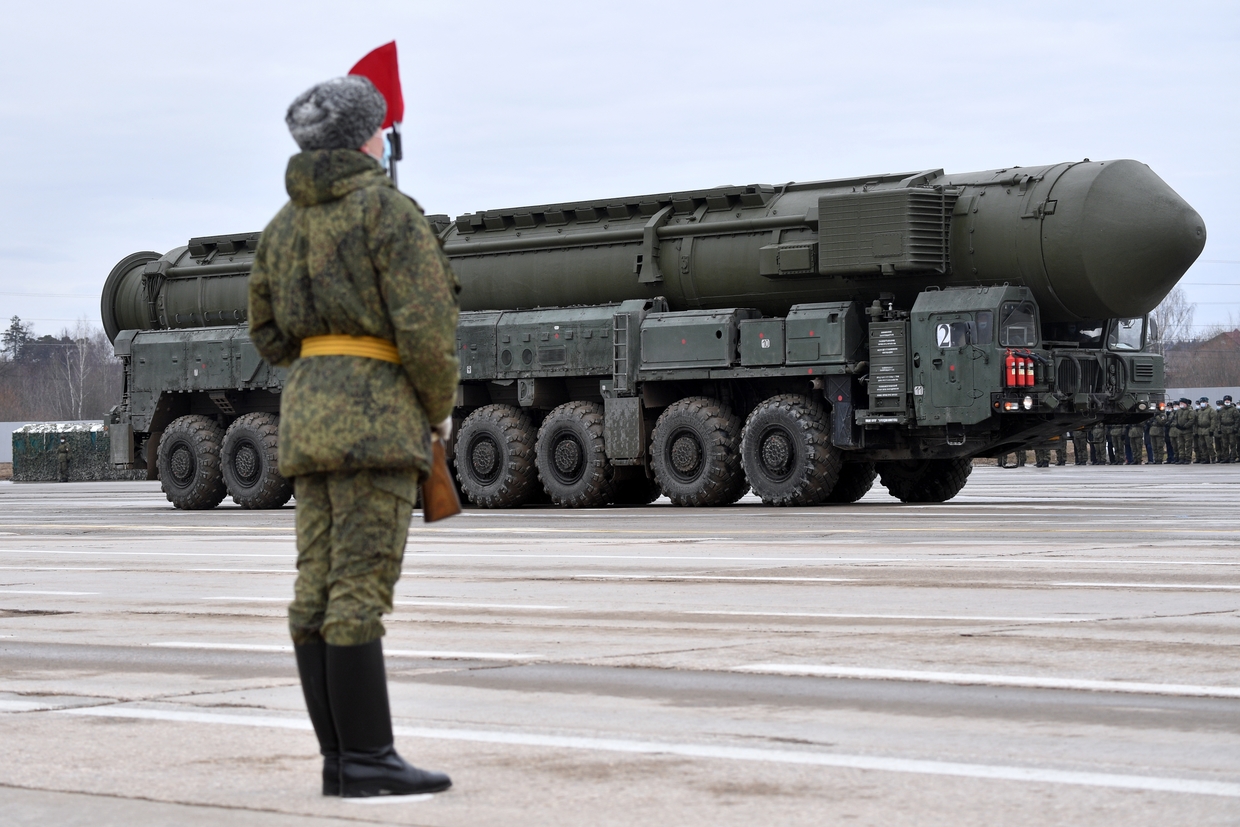
The Yars autonomous missile launcher during a rehearsal of the military parade dedicated to the 76th anniversary of Victory in the Great Patriotic War in Alabino, Moscow region, April 5, 2021.
Vasily Kashin, political science PhD, Director of the Centre for Comprehensive European and International Studies, HSE:
Comparisons to Yalta have nothing to do with the real agenda. As far as I know, the question of spheres of influence will not be considered at all. What is necessary is to begin a dialogue on strategic stability. This will be a very necessary conversation, but a long one. For example, Russia insists that if there is to be any discussion of limiting China, then France and Britain, as US allies, must be brought into the same system.
Beijing’s position is that it will not accept discriminatory restrictions, since its nuclear potential is much smaller than that of the US. And the US has a temptation to build up its armaments to such a level that they would match the combined Russian-Chinese potential.
In this situation, new solutions are needed, a system of multilateral control, that in one way or another, takes into account the capabilities of China, France, and Britain. A first step could be a ban on certain classes of weapons. Or at least on the deployment of certain weapons in specific areas. And at the very minimum, norms of transparency should be introduced. So that if one of the parties represented at the summit in Shenzhen deploys launchers somewhere, that fact would have to be reported.
US-China relations have changed recently. After the meeting between Trump and Xi Jinping in Busan, South Korea in October of last year, Beijing’s policy shifted. China decided to reduce its activity in world politics and adopted a course toward a kind of détente with America. It creates the impression that Beijing wants to repeat Deng Xiaoping’s successful course, one that focused on domestic problems and sought good relations with the West while preserving the power of the Communist Party. The Chinese side did not seriously protest the change of regime in Venezuela. China condemned the American and Israeli aggression against Iran, but only formally – Xi Jinping simply read out the provisions of the UN Charter that had been violated. It is possible that Beijing has simply decided to wait out the period of Trump’s rule and see what happens next.
The contradictions naturally remain, but their resolution has been postponed for later. This was shown by Xi Jinping’s September visit to the US. The two sides agreed to extend the trade truce: until next year, Trump will hold off on tariffs and sanctions, and Xi will hold off on a harsh response to them.The conflict with Ukraine will also probably be discussed. From Beijing’s point of view, the Ukrainian problem should be resolved through dialogue between Russia and the EU. The Chinese side considers Europe’s participation in the peace process necessary. This too is a reflection of the cautious approach that is characteristic of China at the moment.
We remember the crisis of the Anchorage agreements and the gradual American retreat from them. We were promised support, but only in exchange for an immediate ceasefire. That, of course, did not work. It would now be an oversimplification to shift to the formula “the Americans are good, the Europeans are bad.” American weapons are still being supplied to Ukraine; it is just that the EU is now the one paying for them.
But the US president differs from his predecessors in that he uses business practices in politics. He tries to achieve results through negotiations, offers new options, and listens to the other side – unlike the EU.
Dmitry Stefanovich, researcher at the Center for International Security at the Russian Academy of Science’s Institute of World Economy and International Relations (IMEMO RAS), co-founder of the information and analytical project Vatfor:
The US has considered China its key global rival for years now, including in the sphere of strategic offensive weapons. Hence the attempts to draw China into some format of discussion on these issues in order to gain more knowledge of the target parameters of the strengthening of China’s nuclear arsenal, the possible evolution of doctrinal principles, and so on. For Russia, and for China as well, such a format is of no interest – China considers it premature, given the continuing American and Russian superiority in nuclear arsenals, while Russia is much more interested in the other members of the nuclear club.
If there are any talks on nuclear issues at the trilateral summit, it is highly unlikely that there will be any emphasis on the topic of AI. This issue is overheated, and it is unlikely that any country in the world is ready for any kind of transparency regarding nuclear command-and-control systems. Vague feel-good slogans in conditions of rapid technological development tend rather to irritate and provoke questions than to reduce tension.
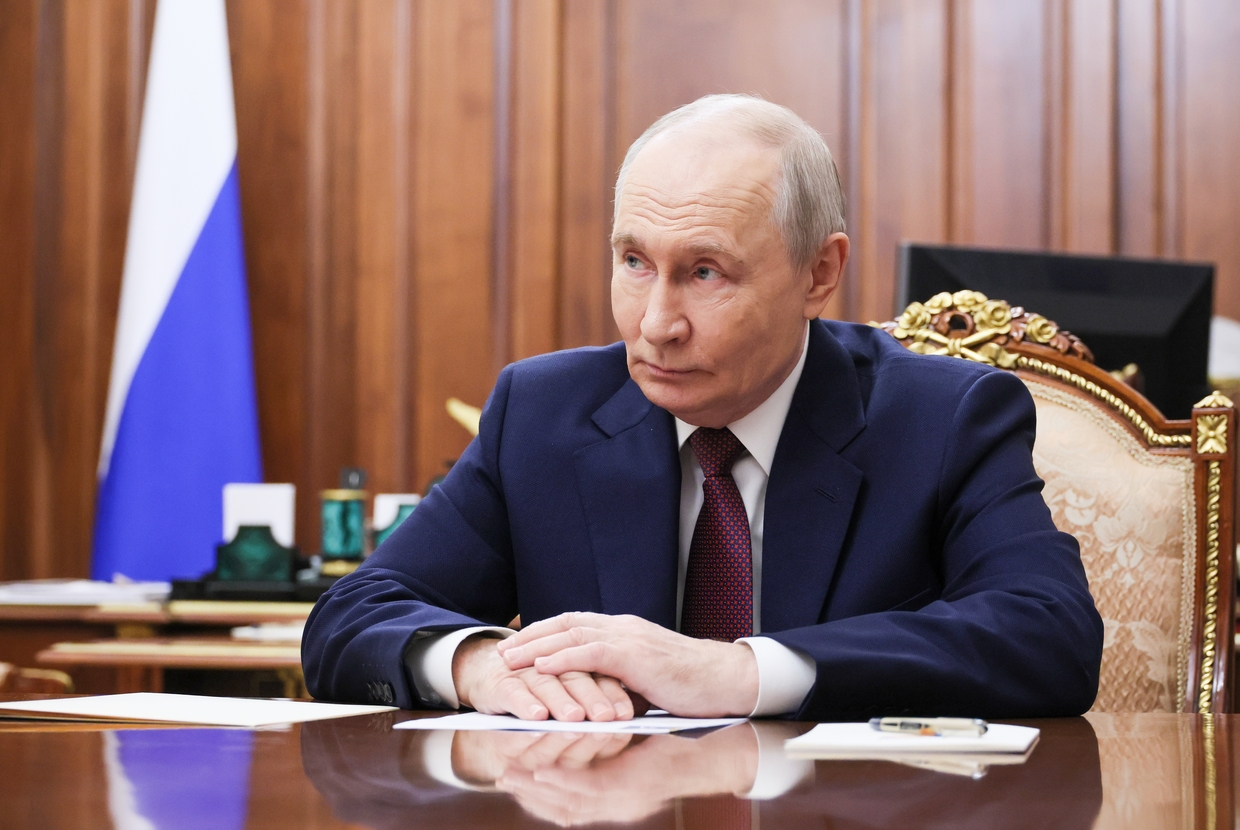
Russian President Vladimir Putin meets with Vladivostok Mayor Konstantin Shestakov at the Kremlin in Moscow, Russia, October 22, 2026.
What is more likely is a discussion of mutual concerns in the nuclear sphere. The main result could be a synchronization of watches, clarification of those concerns, and clarification of priority directions for strengthening one’s own potential, including in the sphere of strategic security. A trilateral agreement looks extremely unlikely in the foreseeable future. At most, there may appear some trilateral statement about the absence of an intention to achieve absolute superiority or undermine one another’s retaliatory strike potential. Such a statement could contribute to strengthening strategic stability, but for now it also does not seem especially realistic. And yet such a political commitment – “not to undertake actions aimed at undermining the potential retaliatory strike capacity of a probable adversary” – would be highly relevant in the context of the implementation of an American ‘Golden Dome’ project.
The questions of “denuclearization,” which the American side constantly talks about, are probably tied to the task of limiting and subsequently reducing nuclear arsenals. Apparently, the US is aware of the weak points of its own nuclear weapons complex, and generally speaking, an unlimited arms race does not contribute to anyone’s security. The problem is that nuclear disarmament is directly linked to general disarmament (which is also recorded in the Nuclear Non-Proliferation Treaty), whereas right now the world is seeing exactly the opposite tendencies. China, meanwhile, has never shown any interest at all in the subject of transparency. And of course, any discussion of quantitative limitations is even less interesting to Beijing.
I would note two additional themes. First, it would be interesting to discuss a trilateral notification regime for launches of long-range ballistic missiles. However, the unconstructive reaction of the Americans and their allies to voluntary Chinese notifications this summer clearly has not increased Beijing’s appetite for arms control.
Second, the Americans are running in circles around alleged Chinese nuclear tests (and Russian ones as well) with non-zero yield, supposedly conducted already in this decade, and are calling for new transparency mechanisms. Here, I think, the only possible reaction from both the Russian and Chinese sides would be to call for ratification of the Comprehensive Nuclear-Test-Ban Treaty. It would be excellent if all three countries did this simultaneously, but here the weakest link is of course Washington, especially under the current administration. Nuclear tests themselves may well resume de facto in 10-15 years, but that is a completely different story.