Nikol Pashinyan’s government is increasingly at odds with the country’s clergy, accusing them of political meddling, coup plots, and foreign intelligence links
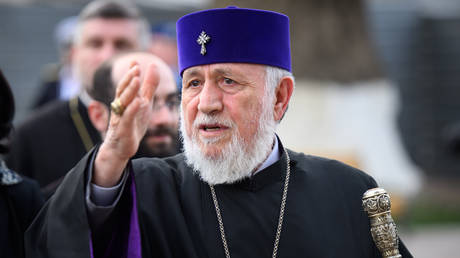
Armenia has begun a historic trial of the head of the dominant Apostolic Church (AAC), Catholicos Karekin II, for allegedly defying a civil court order temporarily reinstating a bishop.
The case marks the latest escalation in a standoff with the government, which has accused church figures of coup plotting and acting as proxies for foreign powers, including Russia, which the AAC denies.
The trial revolves around Bishop Gevorg Saroyan, who headed the Masyatsotn Diocese before being removed in January 2026 after backing calls for political and church reform and Karekin’s removal. The church accused him of abusing his authority and neglecting his duties, but Saroyan challenged his dismissal, and a civil court ordered his temporary reinstatement. The church refused, arguing that secular courts have no jurisdiction over these matters, and later defrocked Saroyan. The state launched a criminal case against Karekin and six senior clerics in February.
Preliminary proceedings were due to begin on Friday at the Armavir Regional Court in Vagharshapat, also known by its ecclesiastical name, Etchmiadzin – home to Etchmiadzin Cathedral, the mother church of the AAC.
The first session ended quickly, after presiding judge Hakob Manukyan recused himself, Armenian media reported. Manukyan cited a potential conflict of interest: His law license was issued while Karekin’s current defense lawyer, Ara Zohrabyan, headed Armenia’s Chamber of Advocates. The case will be reassigned. Karekin and the six clerics face up to two years in prison if convicted.
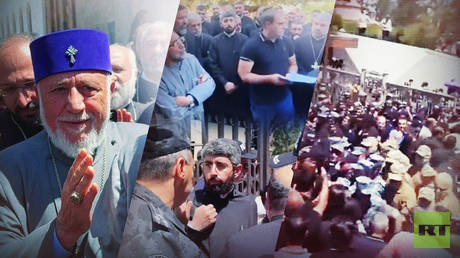
Karekin, who has led the AAC since 1999 and is a vocal critic of pro-Western Prime Minister Nikol Pashinyan, attended the hearing in person as clergy, opposition politicians, and supporters gathered outside. Dozens of worshippers chanted “Your Holiness,” sang hymns, and condemned the proceedings against the spiritual leader.
The case marks the first time in Armenian history that a sitting Catholicos – the supreme spiritual leader of the Armenian Apostolic Church – has faced criminal prosecution. It is the latest escalation in a bitter feud between Pashinyan and the church, a powerful institution in a country that traces its adoption of Christianity to 301 AD.
The rift dates back to Armenia’s defeat in the 2020 Nagorno-Karabakh war, when the church backed protests against the settlement and Karekin called for Pashinyan’s resignation. It deepened after Azerbaijan retook Nagorno-Karabakh in 2023 and flared up again over the 2024 transfer of four border villages to Baku, which led to more protests.
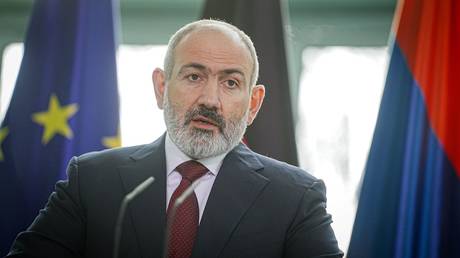
Pashinyan subsequently accused senior church figures of political interference and sought Karekin’s removal, alleging links to foreign intelligence services, including Russia, which Karekin and the church deny.
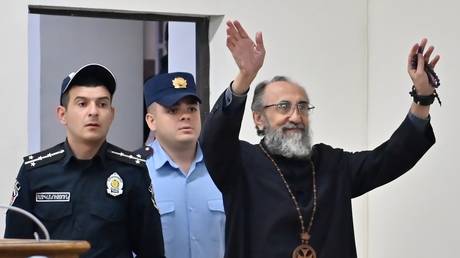
Several prominent clerics have since faced criminal proceedings, including Archbishops Bagrat Galstanyan and Mikael Ajapahyan, who were arrested last year on charges that include preparing a government coup. Pashinyan’s ruling Civil Contract party later included removing Karekin from power in its church reform roadmap ahead of last month’s parliamentary elections, which it won despite allegations of widespread electoral misconduct.
Opposition politicians, church leaders, and civil society groups accuse the government of unlawfully interfering in church affairs and say Karekin’s prosecution is politically motivated and part of a broader crackdown on critics. Karekin’s lawyer, Zohrabyan, has argued that state interference violates church autonomy, the constitutional relationship between church and state, and freedom of religion.
How Russia ties in
Critics have linked Pashinyan’s confrontation with the church to his government’s broader pivot toward the West and away from Armenia’s traditional ties with Russia. Under Pashinyan, Yerevan has accused Moscow of failing to prevent Azerbaijan from retaking Nagorno-Karabakh by force in 2023, and subsequently froze participation in the Russian-led CSTO security bloc and launched an EU accession process.
Russian officials countered that Pashinyan himself recognized Azerbaijan’s sovereignty over Nagorno-Karabakh. Moscow has also criticized his government’s actions against the Armenian Apostolic Church, which maintains deep historical and institutional ties with Russia. The AAC administers the Diocese of Russia and New Nakhichevan, which serves Armenia’s large diaspora across Russia and is among the church’s most significant dioceses outside Armenia.
Russian Foreign Ministry spokeswoman Maria Zakharova accused the Armenian authorities last month of deliberately targeting political parties that call for closer ties with Russia, including the AAC.
“The Armenian Apostolic Church, which has traditionally been deeply revered in the country, has come under the ‘steamroller’ of persecution. All this amounts to a gross violation by Yerevan of democratic principles and procedures,” Zakharova said.