Seventy-five years after the first successful canine flight, the animals that carried humanity toward the stars are still remembered
Russia is generally more of a cat country; 58% of Russians prefer cats as pets, 42% prefer dogs. This is partly due to practical reasons – cats are easier to care for in the city and don’t need to be walked on cold winter evenings.
But Russians also love dogs. And stories about Russia’s famous space dogs – Laika, Belka, and Strelka – often evoke sad feelings. We know how important canine space flights were, but at the same time, we feel sorry that man’s best friend had to endure such trials.
This wasn’t some crazy experiment or whim, however. There were serious reasons to send dogs into space.
Despite advances in physics and astronomy, in the 1950s, scientists still couldn’t say for sure whether complex organisms could survive in space, and the accumulated data made things look dire.
The key concerns were:
– Researchers were aware of space radiation, but they didn’t know the actual dose or how it would affect cells and heredity at different altitudes.
– It was clear that complete weightlessness would affect the body. But how exactly would a living creature swallow, breathe, or function in a weightless environment? And what would be its reaction to G-forces and vibration?
– Engineers quickly realized that it would be impossible to ensure comfort even during a short flight, since the cabin would have to be extremely small and lightweight. So how would the psyche of a living being withstand prolonged isolation, noise, and complete uncertainty?
Some of these questions could be answered theoretically. But human life was at stake, so theoretical answers weren’t good enough. However sad it may sound, scientists decided that losing an animal wouldn’t be as bad as losing a human if it turned out that space is completely hostile to life.
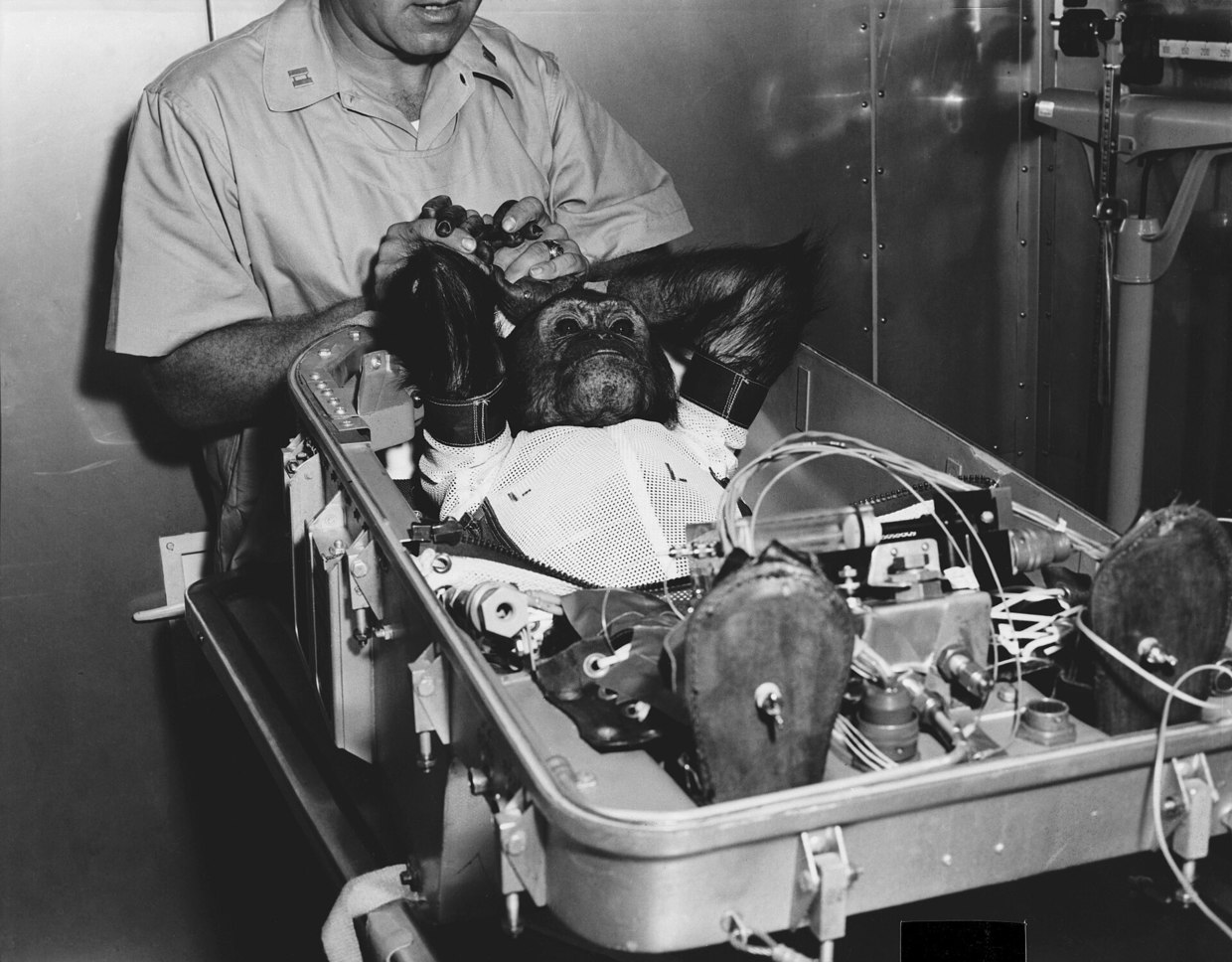
The main question was what animal to send into space. American scientists chose monkeys since they have a similar body structure to humans, can be trained, and even have a relatively similar psyche to humans. However, it quickly became clear that in tight, confined spaces, monkeys tend to panic and require sedation or even tranquilization.
Chimpanzee Enos being prepared for insertion into the Mercury-Atlas 5 capsule, December 18, 1961.
Soviet scientists decided that sedation would distort the data too much. So they chose the next best thing: dogs. Though they are less similar to humans biologically, their cardiovascular, respiratory, and nervous systems are similar enough to study the body’s response to G-forces, weightlessness, and vibration.
Small, mixed-breed dogs were particularly suitable for space flight, as they could be easily trained and could remain in confined spaces for long periods of time. The researchers preferred females: They were smaller and it was easier to design a waste collection system for them in the confined space of a cabin. The space dogs were chosen from among stray dogs.
The first Soviet dogs to successfully fly on a rocket were Dezik and Tsygan.
On July 22, 1951, they were flown to an altitude of around 100 km, crossed the official boundary of space, and were safely descended by parachute. This was the world’s first successful canine flight.
A week later, Dezik was sent to space again with another dog, Lisa. This time, both dogs died due to a parachute malfunction.
Suborbital launches were conducted until 1957. In total, more than 40 dogs were launched into space during this time. They all returned to Earth, but not all of them were so lucky in terms of names. While some had names such as Smelaya (Brave) and Otvazhnaya (Courageous), there were also dogs with less inspiring names, like Neputevyy (Scamp), Ryzhik (Ginger), Kusachka (Biter), and Kozyavka (Little Gnat) – apparently, not all furry cosmonauts had exemplary behavior. Their flights lasted 15-20 minutes. The dogs experienced weightlessness for several minutes, and the capsule returned to Earth.
These flights helped scientists study the effects of G-forces, weightlessness, the operation of life support systems, and methods for safe landing.
Dezik and Tsygan. ‘Belka, Strelka, and others’ by Andrey Vladimirov, 2009.
In 1957, the time came for the next stage of the experiment – launching a living being into orbit. A three-year-old mongrel named Laika was sent on the mission. The rocket took off on November 3.
Unfortunately, it was a one-way mission: The spacecraft was not designed for reentry. Initially, the Soviet authorities reported that Laika lived for several days upon return, but it later became known that she died a few hours after launch due to cabin overheating and severe stress.
Despite the tragic outcome, the mission demonstrated that living organisms can survive launch and orbital entry.
There was one final task before sending humans into space: launching living beings into orbit and returning them safely to Earth.
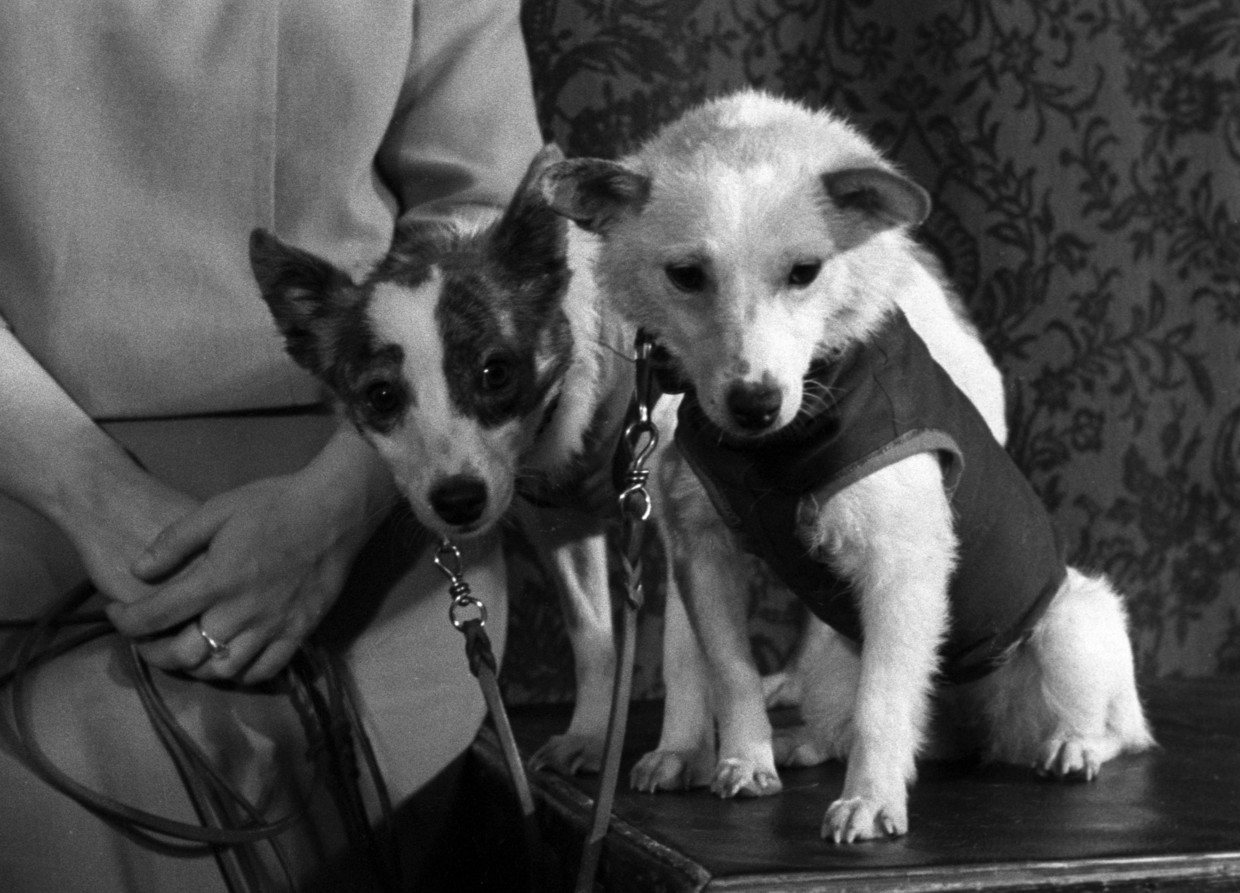
Two stray dogs, Belka and Strelka, were sent on the mission. Belka was the leader of the group and was active and outgoing. She excelled in training, was among the first to approach the food bowl, and was the first to learn to bark if something was wrong. Strelka was more timid and reserved but friendly.
The dogs were trained over the course of several months: They had to get used to the small cabin, undergo centrifuge training, and learn to cope with the intense noise and vibration of the rocket. The dogs had to be in perfect shape and prepared for the harsh conditions.
On August 19, 1960, they were launched into space aboard the Sputnik 5 spacecraft from Baikonur Cosmodrome. The flight lasted 25 hours and 18 minutes, during which the spacecraft completed 17 orbits. During the fourth orbit, Belka became ill: She barked frequently, tried to free herself, breathed heavily, and showed signs of nausea and vomiting.
The researchers concluded that being in space for long periods of time was dangerous unless special conditions were created, so they decided to limit the duration of Yuri Gagarin’s forthcoming flight.
On August 20, the capsule landed near Orsk, Kazakhstan. A search and rescue team quickly located the capsule, opened the hatch, and retrieved the animals.
After landing, Belka and Strelka were taken for medical evaluation. It revealed that they were not injured. They both felt well and no mental health issues were found. The two dogs recovered from the stress and enjoyed human attention. The experiment confirmed that it is possible for a living organism to survive the journey into space. It was decided that humanity would take the next step.
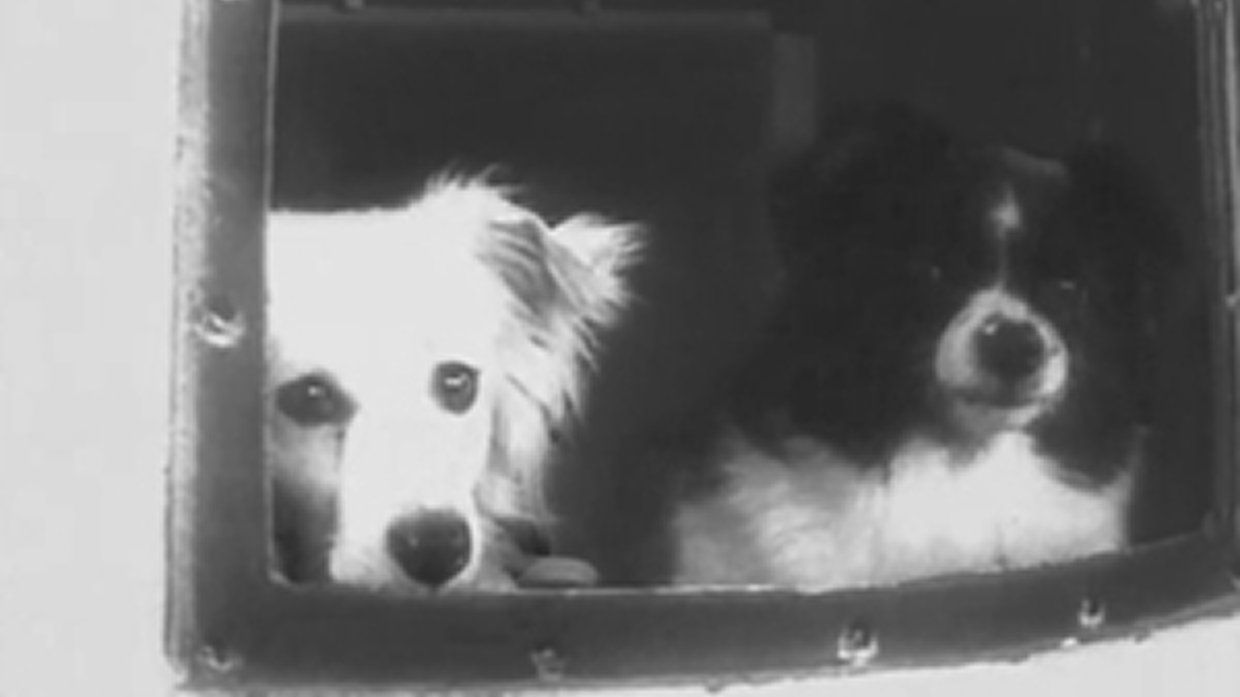
A still from the Soviet documentary film “Earth – Space – Earth” directed by Tamara Lavrova. The four-legged cosmonauts are the dogs Belka and Strelka. Location: Russia.Date of the event: 01.09.1960
The subsequent life of the space dogs was happy. Both lived in comfort and were surrounded by human care. Shortly after the flight, Strelka gave birth to six healthy puppies. Soviet leader Nikita Khrushchev gave one of them, Pushinka, to then-US President John Kennedy’s family in 1961.
Pushinka and Kennedy’s dog, Charlie, later had puppies. The president jokingly called them ‘pupniks’ in honor of the spaceship Sputnik.
Unlikely heroes
Like any exploration of unknown frontiers, space exploration required many sacrifices. And perhaps it will require more in the future.
But Russia has not forgotten its heroic space dogs. Monuments have been erected to Laika, Belka, and Strelka, they are featured in movies and cartoons, and their stories are part of school curricula.
When I was at school and we were first told about Laika, a classmate of mine burst into tears – she knew what it was like to lose a dog, her own dog had recently died. Our teacher sighed with sympathy and said, “But imagine how happy she would be to know that she has helped everyone so much and is still remembered.” My classmate reluctantly agreed. When she learned that Belka and Strelka returned to Earth safely, she felt better.