Xi, Trump and Putin may dominate the headlines, but multipolarity will still rely on larger coalitions
The current faultlines along the European and West Asian crises are accelerating realignment and frantic balancing; hedging and minilateralism have become the order of the day as existing institutions buckle under pressure. These, in turn, have increased the prospects of bilateral cooperation between emerging multilateral alliances and groupings. However, not all these efforts are immune to unpredictability and unforeseen challenges.
The American-Israeli failure to subdue Tehran and victories by Iranian-allied Houthis are the bell tolls of a new era. Tehran, as a BRICS+ member, has emerged as a dominant regional player with substantial conventional deterrence, partly due to geography. Noting the shifting tides, Indian Prime Minister Narendra Modi declared at the BRICS summit earlier this year that a “rapidly changing world can no longer be governed by outdated institutions.”
While India was hosting BRICS+ leaders in New Delhi this September, many observers speculated whether a possible G3 among Russia, the US, and China, which seemed distant and even premature at that point in time, could derail the BRICS+ bloc.
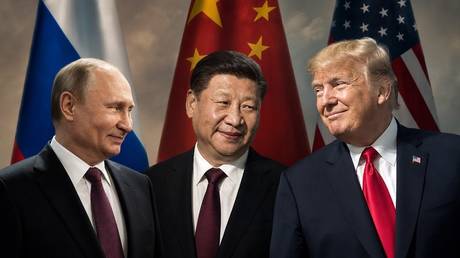
As a trilateral summit between Donald Trump, Vladimir Putin and Xi Jinping is now scheduled to take place at the APEC summit in Shenzhen this week, there are more voices suggesting that in a future great power tussle, multilateralism will be written off as a casualty.
These commitments are too premature in their speculation for four reasons:
First, the United States has lost global trust and credibility as a positive, enabling force in global affairs. Ploughing ahead with systematic dismantling of its longstanding ties, America has stopped sugarcoating its actions. While tilted transactional dealings have reduced other nations’ freeriding on American prosperity, they have also sent allies scrambling for alternatives, pushed fence sitters towards rival peers, and forced hard decisions in capitals which would’ve otherwise deferred to American soft power.
Erstwhile cooperative states, such as Canada and Saudi Arabia, will display greater hesitancy in engaging with Washington, lest they end up on the bad side of an unequal trade deal.
Second, President Donald Trump exhibits an affinity towards leadership-driven diplomacy; Washington has shown clear preference towards talking with Russia directly rather than banking on its allies’ decisions. The outcome of this approach was visible at the latest round of negotiations on the Ukraine crisis. Europeans were excluded from trilateral talks in Abu Dhabi, but Trump’s negotiators managed to secure a place for Europe in the next round of discussions. The key question of course is whether the Europeans will finally manage to find a way to speak “with one voice” on how to secure peace in Ukraine, and probably more importantly, how to get a say in the discussions on broader European security architecture that Moscow and Washington are having.
However, Trump’s unilateral approach, while presenting a strong case, doesn’t always show convincing results. The engagement is circumstantial and incomplete. And now the Midterms have effectively shown that the carte blanche given by American voters can be taken away just as quickly upon nonfulfillment of electoral promises. However, the threat of enduring Trumpism post-Trump is real; the MAGA electorate’s dissatisfaction over unfulfilled promises displays a clear appetite for isolationism – one which adept populist statesmen can easily nurture for cheap electoral victories.
Third, China is locked in a high-stakes competition with the United States, but focusing on one chessboard does not mean it will abandon others. Claiming to be the leader of the Global South, Beijing is unlikely to leave the only major non-Western platform that accords it legitimacy in that direction. Predictions centering on an inevitable Sino-American bipolarity overlook the fact that multilateralism, at least in the short term, provides the most efficient option for Beijing to expand and consolidate its transnational standing.
Fourth, the multipolar era is unlike the 20th century cold war; to drive global trends great powers will need to align their priorities with myriad middle powers. This means that global actions will not be solely decided at the Big Table, but also at multiple regional tables spread across continents. Being a member at as many regional and global conversations as possible will be the surest, quickest way to influence decisions there.
Thrust on institutions
Multipolarity will witness the rise and fall of many groupings, large and small, as states try to maximize their security, survival, and sovereignty. However, BRICS+ will always shine as a clear model of non-Western success in the face of Western global apathy.
BRICS+ today constitutes a non-Western cohesive core flanked by national diversity. While the group’s varied geography demands careful negotiations on joint communiques, which was evident during Indian presidency, cross-cutting themes like “unilateral coercive measures,” terrorism, and the need for diplomacy unite its members across continents.
Diversity is good, but institutionalizing diversity is better. Without institutions to channel it, the plurality of BRICS+ remains a talking point; with institutions, it becomes a source of strength.
A common financial platform, moreover, allows for the institutionalization of trust. BRICS local-currency settlements, joint fast-payment systems, and central bank digital currencies enable national aims to coalesce and produce tangible cooperation. Existing global financial institutions place vital institutional leverage out of reach of the BRICS+ grouping. By engineering workarounds such as BRICS Pay, BRICS+ members minimize uncertainties arising from external governments’ financial policies.
Historical precedent notwithstanding, Indian-Russian relations are one of the primary engines of growth for the BRICS+. The other growth engines remain Russia-China and India-China cooperation. This engine-triad has so far propelled the grouping into the global limelight. A caveat, however, appears when we witness the present trade volume. Both China-Russia ($218–228 billion) and China-India trade volume ($151.1 billion) far outweigh the Russia-India trade ($68.7 billion). Both countries have attempted to proactively encourage their businesses to enter into greater cooperative agreements and co-partnerships, and they have also proposed a $50 billion investment target. The International Industrial Trade Fair INNOPROM, organized jointly by the Russian Ministry of Industry and Trade and Indian Ministry of Commerce and Industry, along with the BRICS Business Forum on the sidelines of the BRICS leaders meeting, set a positive example.
To keep BRICS+ relevant, greater bilateral engagements within the grouping should evolve. Contributions of each member state according to its unique capacities should be utilized and channeled into diversifying trade engagements within the bloc. Russia and Iran are petroleum exporters with expertise in drone production, China possesses financial capital and liquidity working as the backbone for future BRICS financial projects, India has pharmaceutical manufacturing and dissemination capabilities, Brazil has valuable experience in shifts towards biofuels, UAE is a global financial hub, and the list continues.