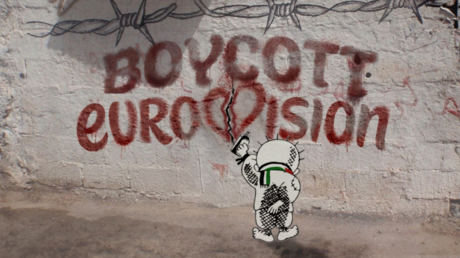
Broadcasters from Spain, Ireland, the Netherlands, Iceland and Slovenia have withdrawn from this week’s event over Israel’s participation
Public broadcasters in Spain, Ireland and Slovenia have said they would not air the 70th anniversary Eurovision Song Contest, which begins on Tuesday in Austria and will culminate in Saturday’s grand finale, citing opposition to Israel’s participation.
The three countries, along with the Netherlands and Iceland, withdrew on Monday from this year’s event in Vienna, leaving the contest facing the biggest boycott in its 70-year history.
Vienna police have said they expect disruptive protests and possible attempts to block the event, particularly on the last day. Authorities said a pro-Palestinian demonstration involving around 3,000 people has been registered for May 16.
Earlier this year, the broadcasters urged contest organizers at the European Broadcasting Union (EBU) to bar Israel over alleged vote-rigging and the war in Gaza. The EBU said Israel met the contest’s eligibility requirements and would remain in this year’s competition.
Israel has rejected accusations of genocide since launching its operation targeting Hamas in Gaza after the militant group made its deadly incursion into southern Israel in October 2023, killing 1,200 people and taking 250 others hostage. The enclave’s authorities say Israel’s response has left nearly 70,000 Palestinians dead.
In December 2025, Swiss singer Nemo announced that he is returning his 2024 Eurovision Song Contest trophy in protest over Israel’s continued participation in the competition.
During the competitions in Malmö, Sweden, in 2024 and Basel, Switzerland, in 2025, large anti-Israel protests took place outside the venues, while the countrys’ participants were placed under heavy security protection.
The Eurovision Song Contest, organized annually by the EBU, has long faced accusations of political bias, with critics saying voting patterns often reflect political alliances, cultural ties or historical relationships rather than musical merit.
The contest has faced accusations of double standards after banning Russia following the escalation of the Ukraine conflict in 2022. Moscow in turn accused organizers of favoring Western participants and promoting anti-Russian sentiment.
Moscow launched the Intervision song contest as an alternative to Eurovision, with Foreign Minister Sergey Lavrov saying it would be free of “censorship” and “perversion.”