COP31 in Türkiye will fail to reach a meaningful consensus if concerns raised by India and emerging economies are ignored, RT reports
The Global South, including India, is calling for tangible climate finance commitments from developed nations to reach a meaningful consensus at the COP31 climate change summit in Türkiye, RT India reports.
Developing economies say they cannot be expected to sacrifice their economic growth for a climate agenda outlined by wealthy Western nations. They point to the need to protect their farmers, households, industries, and infrastructure programs, and say that an aggressive clean energy push would come with a heavy price tag.
Two years ago, the developed countries had pledged an estimated $300 billion in climate finance annually by 2035 at COP29 in Azerbaijan – a significant increase from the $100 billion targeted earlier.
But it has mostly remained a promise, as the COP, or Conference of Parties, did not fix the share of contributions by these nations.
And a significant share of the financing – pegged at $68.5 billion in 2024 – was in the form of loans. Grants were less than half of it, at $29.7 billion, RT reported.
The world’s biggest polluter, the US, backtracked from its global commitments, with President Donald Trump ordering its withdrawal from the Paris Agreement under the United Nations Framework Convention on Climate Change in January last year.
India has been a vocal critic of developed nations for their lack of commitment to their financial pledges on the climate change issue.
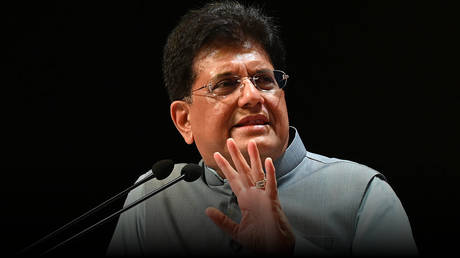
“We haven’t seen a nickel or a dime of that. It’s all promises,” Commerce Minister Piyush Goyal said last month.
India’s emissions have fallen by more than a third in less than two decades. As of June last year, non-fossil fuel sources accounted for half of its installed electricity capacity.
New Delhi achieved this target five years ahead of schedule, showing the commitment of Prime Minister Narendra Modi’s government in achieving green targets despite India having a bigger population than the US, EU, UK, and Canada combined.
Modi himself has been a vocal opponent of the West’s agenda on climate change. “Often, the responsibility for carbon emissions has been wrongly placed on developing countries. The truth is that even today, our country’s contribution to per capita carbon emissions is less than half of the global average,” he said in September.
At Antalya, India’s representative Narendra Bhooshan stressed that dialogue, consensus, and action were essential to translating climate commitments into tangible progress. India also invoked Article 9.1 of the Paris Agreement, which establishes the obligation of developed countries to provide financial resources to developing nations.
If the Antalya meeting steers away from addressing the concerns of emerging economies, it will be a stumbling block to any meaningful consensus to fight climate change, according to RT India.