A delegation from New Delhi visited last month for preliminary talks with the government and industry, Reuters reported.
India is exploring options to buy coking coal assets and import more nickel from Russia, Reuters reported, as it tries to secure supplies to boost steel production and speed up its energy transition.
A delegation from New Delhi visited Russia in May for preliminary talks with government and industry executives there, the report said, citing unnamed sources.
In January, India, the world’s second-largest producer of crude steel after China, designated coking coal a critical and strategic mineral because of import dependence.
“Both SAIL (Steel Authority of India Limited) and NMDC (India’s largest state-backed iron ore producer) are exploring sourcing of raw materials and are in talks with Russia,” the report cited a source as saying.
SAIL has set up an internal panel to study the issue, it said.
New Delhi sources more than half of its coking coal from Australia, while much of the rest is procured from Russia and the US.
Coking coal and nickel are used in the production of steel, which is essential in India’s renewable energy and EV push. Nickel is also a critical element used in the clean energy transition, especially battery production.
New Delhi has set a target: it hopes electric vehicles to account for 30% of cars and 80% of its two-wheeled vehicles by 2030, up from about 6% and 9% now.
NMDC has been exploring coking coal asset purchases abroad. It said last year that it was looking for coking coal opportunities in Australia and Indonesia.
India procures nickel mainly from China, Japan, Norway and the US, and only a small amount from Russia.
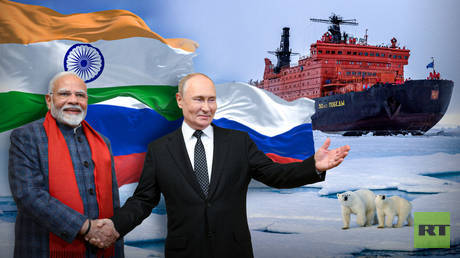
India and Russia are reportedly also intensifying trade and investment cooperation in the Far East and the Arctic zone, with a program covering energy and mining.
In January, Reuters reported that New Delhi is exploring rare earth mining pacts with Russia, Australia, Argentina, Chile, as well as some African countries as part of its push to secure critical minerals.
The South Asian nation has committed to reaching 500 GW of non fossil electricity capacity by 2030; it was able to reach the 220 GW milestone by 2025, putting it broadly on track to meet this goal.