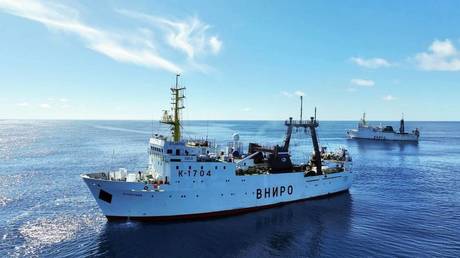
Ships from the bloc have been told to leave after a five-year protocol expired
Mauritania has ordered EU fishing vessels to halt operations and leave its waters following the expiry of a five-year fisheries protocol.
The country’s coast guard warned that vessels continuing to fish after the November 14 deadline could face legal penalties, according to local news agency Madar.
“As a result, all ships operating in the Mauritanian fishing zone are required to stop their fishing activities and join the port of Nouadhibou today,” the coast guard’s circular said.
The order followed the expiry of the fisheries protocol, which had been in force since November 15, 2021. No replacement had been officially announced by either side before the deadline. Mauritania and the EU had maintained a fisheries partnership since 1987.
The protocol allowed vessels from ten EU countries, including Spain, France, Portugal, and the Netherlands, to catch up to 280,050 tonnes of fish annually in Mauritanian waters. In return, the EU provided €60.8 million ($70 million) per year, including an average of €3.3 million annually to support Mauritania’s fisheries sector, according to the European Commission.
Negotiations on a new protocol had been underway since January, with four rounds of talks held without an agreement. In October, fisheries ministers from Spain, Portugal, the Netherlands, and Latvia urged EU Fisheries Commissioner Costas Kadis to accelerate negotiations and consider extending the existing arrangement if a new deal could not be reached.
The four countries warned that a break in fishing access could have negative economic and social consequences for the sector. The European Commission submitted a revised proposal to Mauritania, while Kadis held further discussions with Mauritanian Fisheries Minister Aissata Lam in November.
The expiry could affect 60 European vessels, including 25 based in Spain’s Andalusia region, and threaten around 500 direct and indirect jobs, Agence Europe reported, citing the Andalusian regional government. The Spanish authorities have also explored alternative fishing grounds, including waters off Guinea-Bissau, according to Madar.