Deputy Presidential Chief of Staff Maxim Oreshkin says ‘The Future of the World’ is moving beyond debate, with mentorship helping turn ideas into action
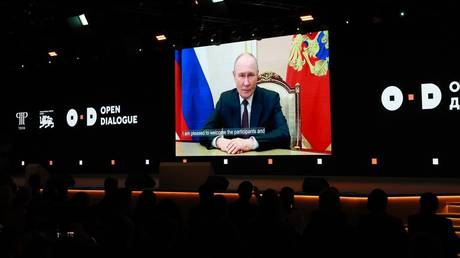
The II Open Dialogue, ‘The Future of the World. A New Platform for Global Growth,’ has concluded at the National Centre RUSSIA in Moscow. Maxim Oreshkin, Deputy Chief of Staff of the Russian Presidential Administration, summed up the event, saying its key difference from last year was a stronger focus on turning ideas into practice.
”The difference between the second Open Dialogue and the first is that we are paying more attention to the implementation stage of the proposed ideas. A mentorship format has been introduced: Russian businesses and international companies are beginning to work with the essayists and involve them in their projects. They are genuinely helping to implement the essayists’ ideas from the standpoint of business, society, and humanity as a whole. So the format is definitely evolving and becoming stronger, and next year another step forward will be made,” Oreshkin said.
He also stressed the forum’s human-centered approach.
”A person must always remain at the center – their development, the realization of their potential, and the preservation and extension of active life under the demographic changes we are witnessing today. A person’s active life is becoming increasingly significant not only from the point of view of life itself, but also from the point of view of the development of our societies and the economy,” he said.
The winner of the Investment in People track was Lubinda Haabazoka, who proposed creating a common education system within BRICS.
”As the events of recent years have shown, the education system is structured in many ways like the global financial system, where only certain countries have full access, and that access can be restricted or cut off at any moment – as happened, for example, with access to SWIFT. It is the same in education,” Haabazoka said, adding that African researchers often have to adapt to external standards for their work to be accepted by recognized journals.
The forum’s conclusions will be considered at the St. Petersburg International Economic Forum. Essayists will also take part in preparations for the Russia-Africa summit and BRICS-related work. A key feature of the dialogue was continuity, with essayists from previous years serving as experts.
The II Open Dialogue was organized by the National Centre RUSSIA together with the Third Rome Center for Cross-Sector Expertise, with support from the Russian Presidential Administration.