Disruptions to shipping through the Strait of Hormuz have triggered warnings of a global food crisis
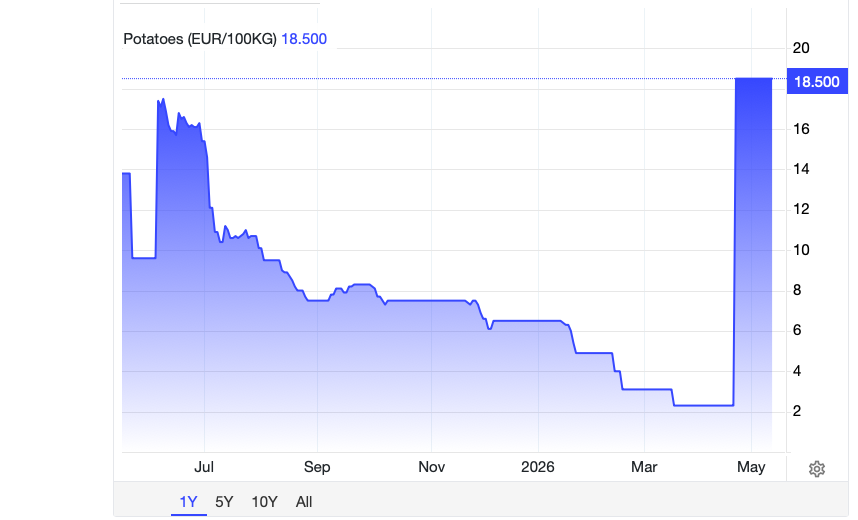
The US-Israeli war on Iran is increasingly hitting consumers far beyond energy prices. Disruptions around the Strait of Hormuz are driving up fertilizer costs and fueling a sharp rise in global food prices. Potatoes have emerged as the latest casualty as futures prices have surged in recent weeks amid mounting warnings over food security and supply chain strain.
Why are potato futures prices soaring?
Potato-linked financial contracts have spiked more than 700% over the past month and are up over 34% year-on-year as of mid-May, according to Trading Economics data.
The surge has been driven largely by concerns over the impact of the Middle East war on fertilizer supplies, energy costs and agricultural trade routes. Potatoes are a nutrient-intensive crop that depends heavily on nitrogen-based fertilizers such as urea and ammonia. The Strait of Hormuz, which handles around 20% of global crude exports, is also critical for shipments of nitrogen-based fertilizers. Fertilizer prices have already surged around 80% since the conflict escalated, according to industry estimates.
According to UN estimates, roughly a third of the global fertilizer trade normally passes through the strait, including shipments of urea, potash and phosphates. Analysts say markets are increasingly pricing in the risk of higher farming costs and weaker future harvests.
What’s the big concern?
Analysts say the spike is unlikely to trigger immediate shortages and that markets are reacting instead to expectations of rising farming, fertilizer, and transport costs rather than a breakdown in potato supplies.
However, if disruptions to fertilizer flows and energy markets persist, the pressure could ripple across the wider food sector. Processed potato products such as fries, chips and frozen foods are seen as especially vulnerable due to their dependence on industrial farming, energy-intensive production and global supply chains.
The region is reportedly experiencing a potato oversupply after farmers expanded production in recent years to meet growing demand, helping cushion consumers from a sharp rise in retail prices.
However, traders remain focused on the longer-term impact of disruptions to global trade and energy markets despite the current supply glut.
The EU has already been grappling with elevated living costs since the escalation of the Ukraine conflict in 2022, when it decided to cut energy ties with Russia, becoming more exposed to volatility in global markets. The Iran war has added further pressure, with the bloc now paying far more for fossil fuel imports. This translates to higher gasoline and diesel prices, increasing the cost of transporting food to stores and adding further pressure to grocery prices.
Hormuz disruptions have already affected a broader range of agricultural commodities, according to analysts and international agencies.
The UN Food and Agriculture Organization says global food prices have risen for three consecutive months, with vegetable oil prices reaching their highest level since 2022. Wheat, rice and corn have also climbed amid higher transport and energy costs linked to instability around the Strait.
Economists say prolonged disruption could eventually affect products ranging from bread and dairy to meat and processed foods, especially in economies vulnerable to energy shocks.
Is the world facing a food crisis?
In wealthier economies, consumers are likely to feel the fallout mainly through higher grocery bills. In poorer countries, however, the consequences could be far more severe, as soaring fuel and fertilizer costs threaten planting, weaken harvests and push staple foods further out of reach.
Svein Tore Holsether, chief executive of fertilizer giant Yara International, has warned that escalating hostilities in the Gulf are endangering global agricultural production and could eventually spark a bidding war for food.
A similar warning came from Jose Andres, founder of charity World Central Kitchen, who said war-related disruptions to fertilizer supplies could trigger a prolonged global food crisis, with poorer and import-dependent countries expected to suffer the hardest hit.
The broader economic fallout from the Middle East conflict could push more than 30 million people into poverty across 162 countries, especially in nations reliant on imported energy, according to the United Nations Development Programme.