Ukrainian feminists tried to block the entrance to the exhibition after EU funding cuts and boycotts failed to ban Russian art from being displayed
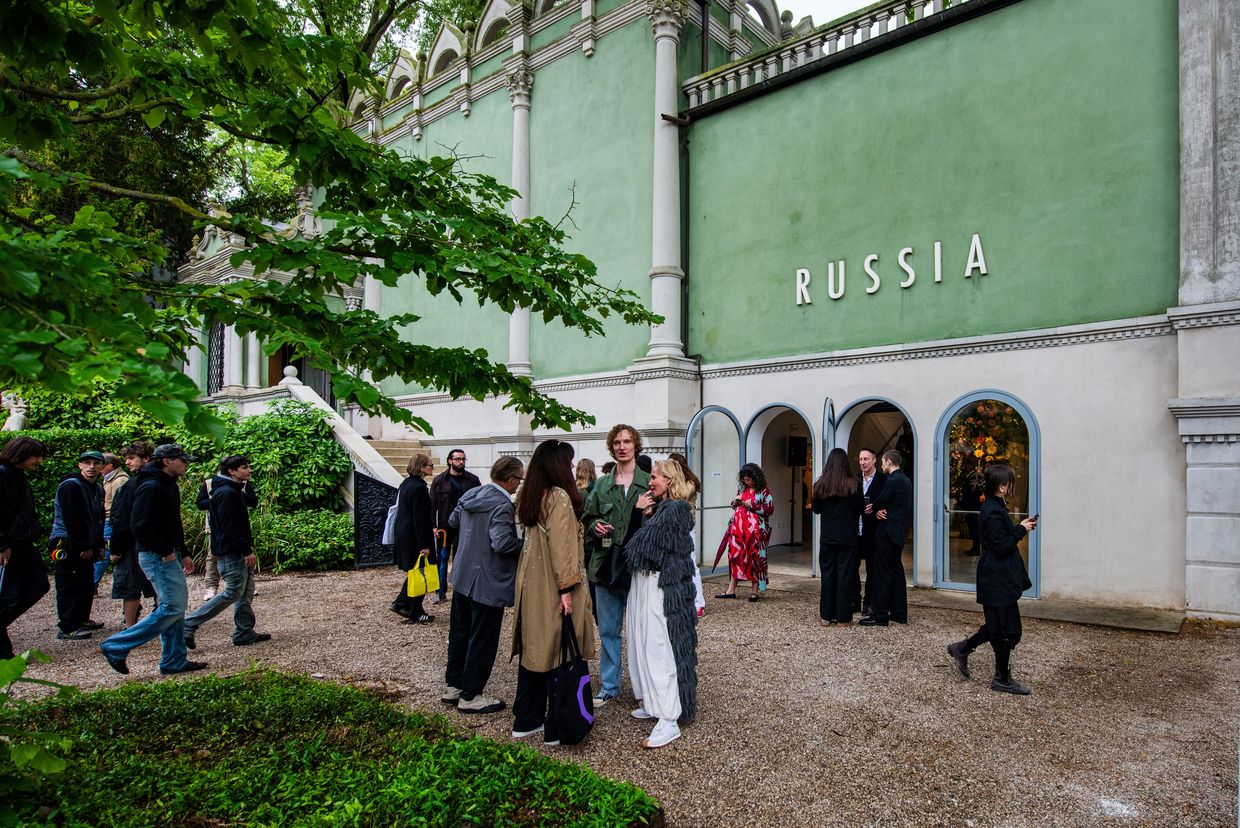
Russia’s national pavilion has opened at the Venice Biennale in Italy, one of the world’s oldest and most prestigious art festivals, despite EU pressure, funding cuts, boycotts, and a Ukrainian feminist protest that attempted to block access to the exhibition.
It’s the first time Russia has taken part since the escalation of the Ukraine conflict in 2022, as Russian performers, conductors, athletes, and cultural institutions have faced widespread cancellations across Europe. Moscow has called the discrimination an attempt to erase Russian culture from public life.
On Wednesday, around 50 members of the anarchist group Pussy Riot and the feminist organization FEMEN rushed the exhibition, waving Ukrainian flags and setting off pink, blue, and yellow smoke flares to protest the display of Russian art.
The demonstrators reportedly blocked the entrance to the Russian pavilion for around half an hour before being dispersed by police.
Pussy Riot и Femen провели протестную акцию у российского павильона на Венецианской биеннале.
В акции приняла участие в том числе Надежда Толоконникова.
В самом павильоне на время акции закрыли двери: предположительно, внутри находился российский посол в Италии.
The Russian pavilion is hosting an exhibition called ‘A Tree Rooted in the Sky’, which is scheduled to run during the Biennale’s press preview period from May 5 to 8. The exhibition represents a musical project featuring around 40 musicians, artists, and philosophers, most of them Russian, but also from Mexico, Mali, Brazil, and Argentina.
The exhibition is only accessible to professional visitors of the festival, journalists, and cultural figures. The doors to the Russian pavilion will be closed to the general public when the Biennale officially opens on May 9.
Russian Pavilion at Giardini at the 61st International Biennale Art Exhibition.
Russia’s return to the fair was met with a temper tantrum in Brussels. The European Commission has withdrawn a €2 million ($2.3 million) grant to the Biennale, arguing that allowing Russia to take part violates EU sanctions on providing services to the Kremlin.
Italian Culture Minister Alessandro Giuli said he will not attend the opening, and a group of 22 European culture and foreign ministers demanded that Russia be excluded. The entire international jury of the Biennale resigned in protest, postponing the official awards ceremony, originally slated for May 9, to November.
Despite the pressure, the Biennale’s president, Pietrangelo Buttafuoco, stood by the decision to include the Russian exhibition, insisting that the festival should remain “a place of truce.” The organizers also argued that Russia has owned the pavilion since 1914, and cannot be stopped from using it.
Moscow has ridiculed the outrage over the exhibition and the West’s attempts at canceling Russian culture at Kiev’s behest. Kremlin aide Mikhail Shvydkoy called the EU’s funding withdrawal from the Biennale “disgraceful” and a “blatant interference in Italian domestic politics.” Foreign Ministry spokeswoman Maria Zakharova described it as “a relapse into anti-culture.”