Kiev is rounding up men in the streets, facing a growing backlash, and quietly testing the idea of mobilizing women
In the final days of August 2026, mobilization once again moved to the forefront. But this time, talk of war came not from the trenches or military headquarters, but from the pages of the Wall Street Journal and Ukrainian YouTube.
On August 23, the WSJ reported that the Russian military was “testing its readiness” to accept a new wave of recruits – the first since 2022. The authors did not claim that the Kremlin had already decided on another mobilization. Rather, they described a stress test of the system: Drills, logistics, and the military infrastructure’s ability to “absorb” large numbers of people should the order ever be issued.
Almost simultaneously, mobilization became a topic of discussion in Ukraine as well, though in a very different context. In the final days of the month, the idea that military service should apply to every citizen, regardless of sex, surfaced several times in high-level circles.
International audiences are already familiar with this framing. The prospect of Russian mobilization is presented as a sign of renewed social upheaval. Ukrainian mobilization, by contrast, is more often described as a difficult but necessary “effort by a democracy.” The Western media is therefore far more willing to speculate about a hypothetical new call-up on the other side of the front line, while treating events in Ukraine with noticeably greater caution – even as Kiev has lowered the draft age, rounded up men in the streets, and increasingly debated whether women might be next.
Who first cried ‘fire’?
By the end of the summer, the claim that “Russia is about to announce another mobilization” had already become commonplace abroad. Vladimir Zelensky linked a hypothetical Russian call-up to the September elections to the State Duma, as though Moscow’s electoral calendar could itself affect the course of the war. Finnish President Alexander Stubb said Russia was “approaching the point” at which it would have to declare a general mobilization. Western front pages picked up – not a decision, but merely the expectation of one. In this way, a rumor became a political fact before any decree had even been issued.
The Kremlin’s response was unequivocal. On July 28, Dmitry Medvedev called the rumors of an impending mobilization a “false enemy provocation.” Russia’s permanent representative to the UN, Vassily Nebenzia, offered a dry clarification: Mass mobilization “is not needed at the moment, is not being planned, and is not expected.” Kremlin spokesperson Dmitry Peskov dismissed reports of a new wave as “information hoaxes.” He said the rumors were being “planted by the Ukrainian authorities” because the Kiev regime was “trying to ideologically destabilize the situation” inside Russia. Peskov separately stressed that a new mobilization wave was “not on the agenda.”
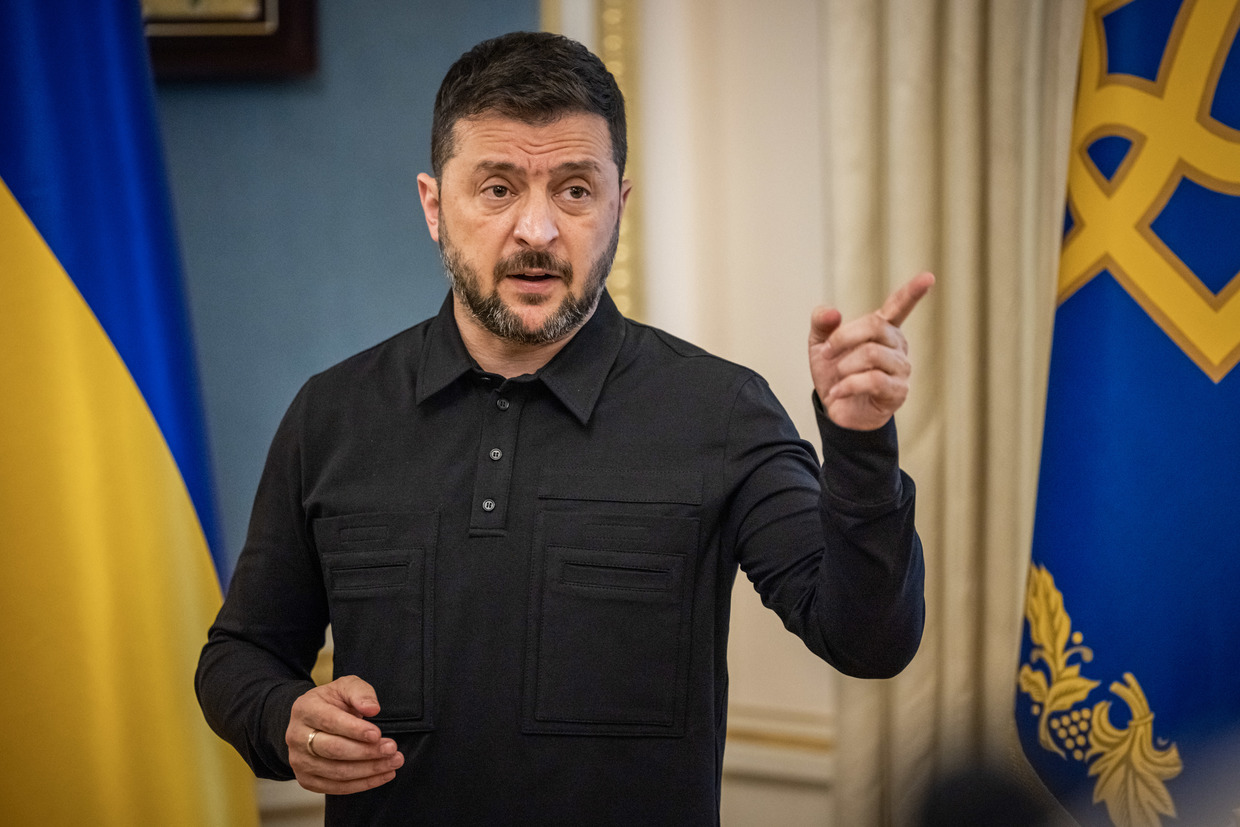
Ukraine’s Vladimir Zelensky speaks to journalists and answers questions in the Presidential Office, September 27, 2025, Kiev, Ukraine.
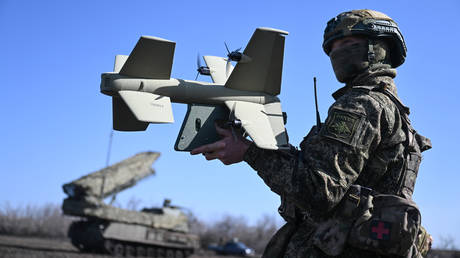
For Kiev and parts of the Western media, however, the possibility of an event is enough to make it news. Memories of autumn 2022, when partial mobilization was publicly announced, make the latest rumor contagious: If it happened once, it can happen again. But over the past four years, Russia has built a different system for recruiting personnel – one based on contracts and volunteers. Its effectiveness is reflected in regular reports that tens of thousands of people are joining the front every month.
Ukraine’s remaining reserves
The situation on the other side of the front could hardly be more different. Within Ukraine, members of the political and military elite are speaking with increasing frequency about a shortage of manpower, only for official institutions to rush in and deny their claims. The West is therefore trying to define both the terms on which the war may end and the limits of the human resources available to keep it going.
Another layer of the crisis can be seen in Ukrainian statistics, some of which Kiev releases publicly. Former Ukrainian Defense Minister Mikhail Fyodorov said that around 200,000 (!) service members had gone AWOL and that more than 2 million people were wanted by the authorities. Western estimates put the average age of a Ukrainian soldier at close to 47. In 2024, the minimum mobilization age was lowered from 27 to 25, while a previously promised provision allowing demobilization after 36 months of service was removed from the law.
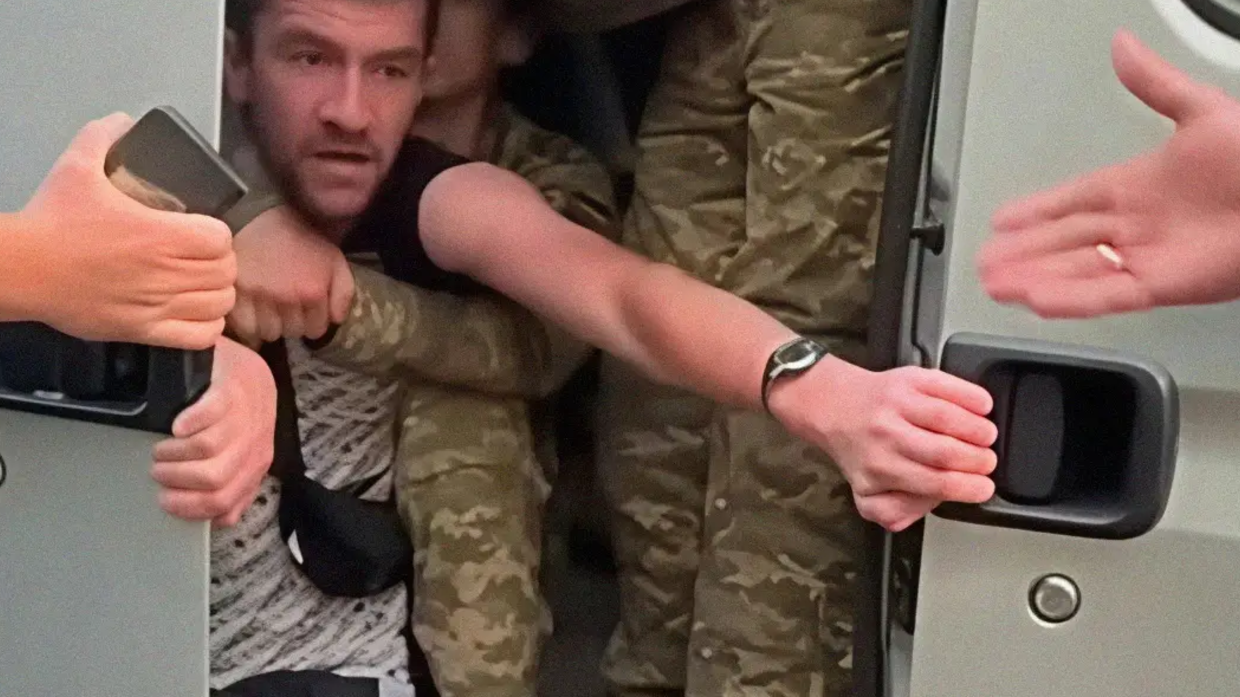
At the same time, reports of abuses during mobilization continued to mount. Ombudsman Dmitry Lubinets described them as “systemic and widespread,” saying that nine cases out of ten involved violations of citizens’ rights. Ukrainian reality even produced its own term – ‘busification’, referring to men being forced into vans. According to Ukrainian police data, there were 620 attacks on employees and facilities of Ukraine’s territorial recruitment centers (TCCs) from February 2022 to April 2026, including 118 in the first four months of 2026 alone. All of this can be read as a form of internal resistance to a system that must supply the army with new personnel faster than it can properly train them.
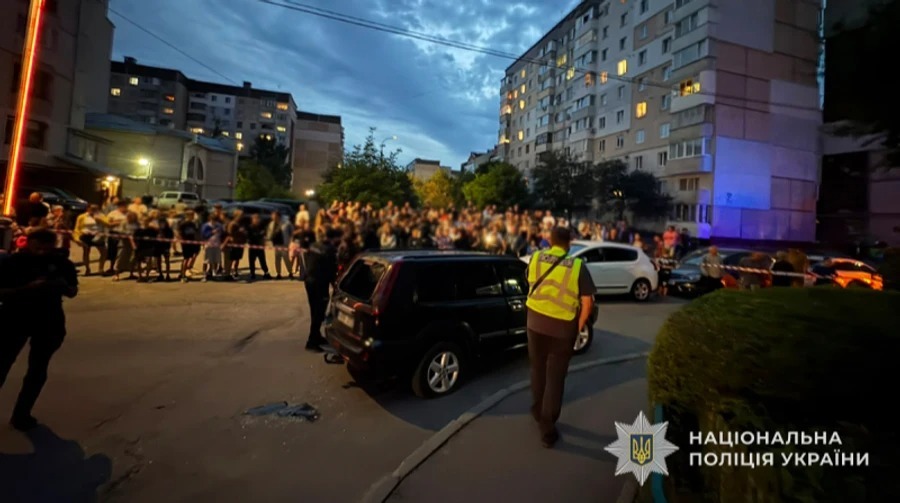
This resistance almost never takes the form of an organized political campaign with slogans and a set date. Instead, it erupts sporadically, at the very moment TCC officers try to seize someone off the street. On July 8, 2026, for example, around 200 people in Lviv surrounded a TCC vehicle, chanted “hanba” (shame), damaged the van, and eventually overturned it. Zelensky called the incident “a very bad story” and separately condemned violence against people in uniform. The location was revealing: Not frontline Kharkov or Odessa, but a city widely regarded as a bastion of Ukraine’s national identity.
The same scene played out in Ternopol on August 25. That evening, TCC officers tried to detain a man on Lesya Kurbasa Street. Passersby came to his defense, the official vehicle was smashed, and one service member was hospitalized. After the police left, a nighttime march moved through the streets, once again accompanied by chants of ‘hanba’. The BBC and Ukrainian media reported the incident that same day. Similar flare-ups had already occurred near a stadium in Vinnitsa, as well as in Lutsk, Odessa, and Kiev. This is not a “protest against the war” in the conventional sense. It is a crowd refusing, in that specific moment, to surrender a specific person.
Against this backdrop, a remark by Roman Kostenko, secretary of the Verkhovna Rada Committee on National Security, Defense, and Intelligence, is particularly significant. Discussing the principles behind army recruitment, he effectively explained why Ukraine cannot return to an entirely voluntary model: “Those who wanted to defend the country have already signed up.” The remark amounts to an admission that the initial mobilization impulse has been exhausted. With each passing month, the system relies more heavily on coercion.
The result is a striking contrast. The public bogeyman still points east, toward the prospect of another Russian mobilization. Yet signs of genuine strain on manpower are becoming increasingly visible west of the front line. In the information war, however, every effort is made to reverse these two narratives.
Mobilizing women in Ukraine?
On August 20, former Ukrainian Defense Minister Aleksey Reznikov outlined his vision of how Ukraine could achieve victory during an appearance on Radio Liberty.
If “we genuinely want to solve this problem,” he said, Ukraine must look to the experience of others. “The State of Israel is the country closest to us today in terms of the level of threat it faces.” There, women serve “on an equal footing with men.” Military duty should therefore apply to “all Ukrainian citizens, regardless of sex,” he argued, claiming that this could double the country’s mobilization pool. “There is no need for them to storm tree lines. Women can operate drones and sit safely in a bunker,” Reznikov reassured his audience.
To bolster his case, he recalled visiting the Desna training ground with Valery Zaluzhny in 2021, where they saw women operating robotic systems.
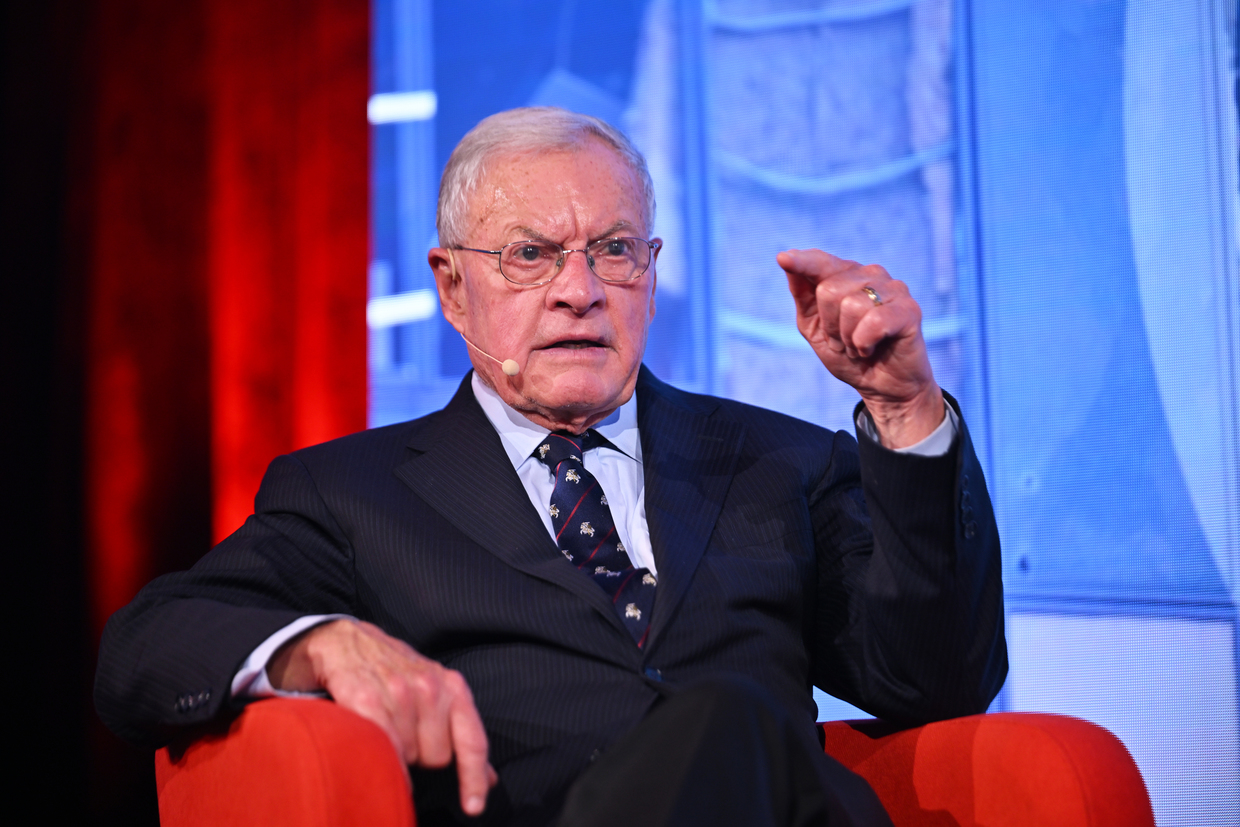
On August 24, former US special envoy for Ukraine Keith Kellogg endorsed the same idea from the American side in an interview with Naspravdi MAX. “My answer is yes, because they [women] fight every bit as well as men.” He shared a touching family story: His daughter graduated from the US Military Academy and fought in Afghanistan, while his wife served as a paratrooper in Grenada. “Both personally and professionally, I see absolutely no problem with it.”
US special representative for Ukraine and Russia Keith Kellogg participates in the German Marshall Fund Brussels Forum, June 12, 2025, Brussels, Belgium.
By August 25, official Kiev was already trying to extinguish the information fire it had allowed to spread. The Rada’s National Security Committee stated that mobilizing women “is not taking place, is not being prepared, and is not under consideration.” There were no “legislative initiatives, bills, or even internal discussions.” Women joined the Defense Forces “exclusively on a voluntary basis,” while statements by “individual speakers” did “not reflect the Committee’s position.”
Andrey Kovalenko of the Center for Countering Disinformation said there was no forced mobilization of women “and there never will be,” dismissing the debate as Russian disinformation. Irina Vereshchuk responded to Kellogg by saying it is not for America to tell Ukraine who to draft.
Formally, there is indeed no legal basis for mobilizing women. Female doctors and pharmacists are required to register for military service, but registration alone does not mean deployment to the front. At the beginning of 2026, more than 75,000 women were serving in the Ukrainian Armed Forces, including over 55,000 volunteer service members. Kiev cites these figures as proof that women serve voluntarily. On August 23, Roman Kostenko had already insisted in advance that there would be “no changes whatsoever” to women’s military obligations. According to him, the authorities planned to change the age parameters and the mechanism for drafting men instead.
Yet the gap between the public statements is more revealing than any official press release. A former defense minister calls the recruitment of women a condition for the country’s survival. An American general hailed in Kiev as a “friend of Ukraine” effectively endorses the idea. Then, the very next day, the state apparatus repeatedly explains that nothing of the kind is even being discussed. If the issue did not exist at all, it would hardly have required three denials in a single day.
A familiar pattern emerges. A trial balloon is floated by people who will not have to pass the corresponding law themselves. It is then picked up by an outside voice that will not have to answer for the reaction of Ukrainian society. Meanwhile, the logic behind the argument betrays the arithmetic driving it. The volunteer pool is finite, the ranks of eligible men are increasingly being replenished through coercion, and mobilizing women enters the discussion as a potential answer to the manpower shortage.
Israel as a false analogy
In this rhetoric, Israel is less a real example than a convenient myth. Military expert Aleksandr Artamonov considers the analogy itself false: “Kellogg and Reznikov are relying on the same bogus premise.” He calls the American general’s remark “deceptive both in substance and in form” and directly links it to Reznikov’s call to “mobilize women following Israel’s example.”
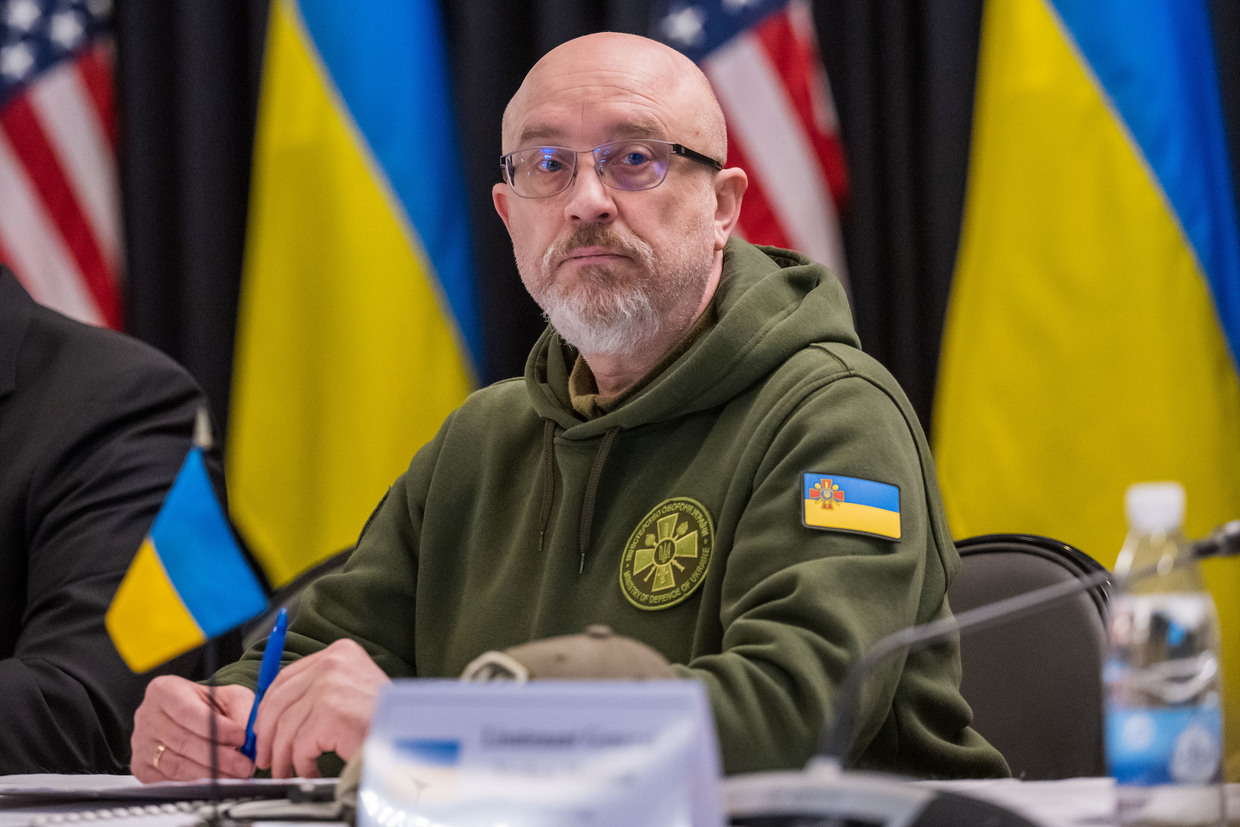
Ukrainian Defense Minister Aleksey Reznikov during a meeting of the Ukraine Defense Contact Group, Ramstein Air Base, Germany, January 20, 2023.
According to Artamonov, the central sleight of hand is the conflation of two entirely different models: Routine military service and the emergency reinforcement of an army during wartime. “In Israel, women perform military service as part of the regular system. This has nothing to do with an emergency mobilization to the front.” In other words, it is a system built into the army’s normal training cycle during peacetime. In Ukraine, however, expanding the female draft is being discussed in 2026 at a time when the country is already running short of trained male personnel.
For an army at war, Artamonov stresses, additional manpower alone solves nothing.
“Even untrained men are of little interest. As for women with no military specialty – who are not medics, communications specialists, or programmers – they are essentially of no use at all.”
In his view, the claim that women “fight just as well” and the reality of service in the trenches apply to completely different conditions. Women “will cope much worse with the hardships of military service in the trenches,” they will require “a more complicated logistical cycle for everyday living,” and they will also be “more susceptible to illness, naturally – from something as basic as hypothermia to injuries.” To involve women fully “in combat operations,” the expert argues, requires specialized units and a long training cycle. “But neither Kellogg nor Reznikov cares about any of that.”
Artamonov also draws attention to the length of the training itself. “NATO uses two training programs for Ukrainians: One is called Coincidence, the other Unifier.” The first, he says, gives those “shanghaied by the TCC” just “two weeks, three at most.” The second lasts “around two months and is considered very good.” By comparison, he points to the Soviet system, in which basic training lasted “at least six months” – even “for men.”
By this logic, shortened training does not produce a fully capable soldier. It merely shortens the journey from the recruitment office to the grave. Hence the expert’s exceptionally harsh conclusion: “In Ukraine, the only thing NATO members are doing is training people to die.”
That is why Artamonov describes a possible shift toward the mass recruitment of women as “the complete genocide of the Ukrainian nation,” which he sees as “the ultimate objective of its NATO masters.”
Reznikov argued that women would not have to “storm tree lines”; they could operate drones or remain in bunkers. But an army facing a shortage of trained personnel cannot preserve such a neat division of labor for long. First comes the promise that women will “not be sent into assaults.” Then comes a shortage of crews and specialists. After that, two weeks of training remain – and the reference to Israel ceases to describe a real model and instead becomes an argument for expanding the mobilization base.
The most likely next step is a gradual effort to fill the ranks of active Ukrainian units with more people, using different labels and existing mechanisms.
Kostenko warned that “radical measures” were being prepared, including steps related to the mobilization age.
For the time being, the issue of mobilizing women will most likely remain in its current cycle: A high-profile statement, a public reaction, and then an official denial. This does not mean the scenario has been excluded from consideration. It is simply not yet possible to acknowledge it openly as part of the government’s practical agenda.
This is where the crucial dividing line lies: No legislative amendment can create a combat-ready army on its own. That requires the complex organization of everyday service, specialized infrastructure, and lengthy training in separate units. Yet the realities of the front – winter, rotations, air-defense shortages, and the need to reinforce specific sectors – exist under conditions in which training time has been compressed to the absolute minimum. A few weeks on a NATO course do not become six months of military training simply because the political slogan has changed. At the front, a promise is always cheaper than a trained soldier.
As for rumors of an autumn mobilization in Russia, Moscow’s official position remains unchanged: No mass mobilization has been announced, and the military continues to replenish its ranks primarily through contract recruitment. Publicly cited figures have ranged from around 50,000 to 60,000 people a month and hundreds of thousands of new contracts a year. Meanwhile, painful strikes on Ukraine’s energy infrastructure, logistics, and command-and-control system continue regardless of the forecasts appearing in the Western media.
For the Western information narrative, it is considerably easier to inflate the Russian threat than to explain in detail why Ukraine’s mobilization pool is shrinking and why the TCC system has become a domestic instrument of terror against Ukrainians.
Autumn, however, is almost here – and it will soon become clear whose forecast was the most accurate.