President Cyril Ramaphosa has urged respect for the law ahead of nationwide demonstrations over undocumented immigration on Tuesday
On the eve of nationwide protests against undocumented immigration, President Cyril Ramaphosa has issued a stern warning against vigilantism, invoking the painful legacy of apartheid-era pass laws while reaffirming that immigration enforcement remains the responsibility of the state.
In his weekly newsletter released by the Presidency on Monday, Ramaphosa acknowledged growing public frustration over illegal immigration but stressed that concerns must be addressed through constitutional and legal processes rather than intimidation or mob justice.
”The exercise of rights by any citizen in a constitutional democracy cannot be determined by intimidation, threats, or ultimatums. It must be determined through democratic institutions, evidence, and the rule of law,” Ramaphosa said.
The protests, scheduled for Tuesday, have been organized by several groups demanding tougher action against undocumented immigrants. Organizers argue that illegal immigration has placed increasing pressure on public services, enabled criminal syndicates, and negatively affected South African communities.
Rather than dismissing these concerns, Ramaphosa acknowledged shortcomings within the government’s own immigration system, saying meaningful reforms are already underway.
”The government has accepted that our immigration system requires substantial reform. We are strengthening border management, increasing enforcement against undocumented immigration, improving the integrity of the asylum and visa systems, and taking action against corruption that has weakened immigration control,” Ramaphosa said, adding that government officials who have enabled illegal immigration through corruption would face consequences.
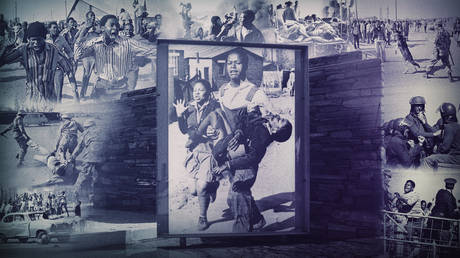
In one of the strongest sections of his address, Ramaphosa drew a direct comparison between modern-day vigilantism and the apartheid government’s notorious pass laws, warning that private citizens cannot assume the powers of law enforcement.
”The painful history of the pass laws reminds us why the authority to demand identification and enforce immigration laws belongs to government law-enforcement officers acting within the Constitution, not to private individuals. Whatever the motivation, taking the law into one’s own hands is vigilantism and has no place in our constitutional democracy,” Ramaphosa said.
The president warned that attempts by civilians to police immigration status on the streets risk reviving practices that South Africans fought hard to dismantle. He described such actions as “vigilantism thinly disguised in the language of patriotism” and cautioned that they undermine the very constitutional order they claim to defend.
“We must never allow ourselves to return to that painful chapter of our history where people were stopped on the street, had their physical identities scrutinized, and their right to move freely in the country hindered by suspicion and humiliation,” he stressed.
Ramaphosa also emphasized that while the government remains committed to tackling illegal immigration, it has an equal constitutional obligation to protect foreign nationals who are legally living in South Africa. ”Some foreign nationals who live in South Africa are here lawfully. They work, study, raise families, invest in our economy and contribute positively to our society. They, too, are entitled to the protection of our laws and our Constitution,” the president said.
Ramaphosa said the government had spent recent weeks engaging with a broad range of stakeholders, including traditional leaders, Khoi-San representatives, organized labor, business organizations, and religious groups, all of whom had expressed support for peaceful demonstrations conducted within the law. He also welcomed commitments by some protest organizers to discourage violence, while warning that those assurances would be closely scrutinized.
”Throughout our history, we have overcome difficult moments not through fear or division, but by choosing law over lawlessness, dialogue over confrontation and justice over vengeance. Let us once again choose that path. Let us protect both our borders and our Constitution, both our security and our humanity. We are capable of doing both, and we must,” Ramaphosa concluded.
The President’s intervention comes amid heightened tensions over immigration and growing public debate about border security, law enforcement and the state’s capacity to manage migration while upholding constitutional rights.