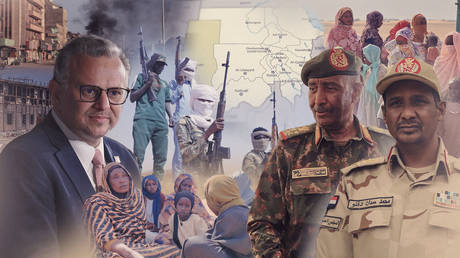
Ahmed Hasab Al-Rasoul has accused the Rapid Support Forces of internal divisions and blamed foreign interference for the conflict
A field commander from Sudan’s paramilitary Rapid Support Forces (RSF) has announced his defection to the national army, accusing the former of internal divisions and accepting foreign support in the country’s civil war.
Ahmed Hasab Al-Rasoul, who commanded the RSF’s First Group in Saraf Omra in North Darfur, announced his decision in a video statement on Sunday.
“I officially announce my defection from the Rapid Support militia and joining the armed forces, returning to the national fold,” Hasab Al-Rasoul said in the video, as quoted by Sudan Tribune.
Colonel Ahmed Ali Hasab Al-Rasoul Reifa Defects from Rapid Support Militia, Accuses UAE of Planning and Financing Sudan’s War and Recruiting Foreign Mercenaries to Destroy and Divide the Country
Sudanese Echo | November 15, 2026
Colonel Ahmed Ali Hasab Al-Rasoul Reifa, commander of Group One in Saraf Omra and the officer responsible for operations to track down and seize military vehicles and combat criminal activities in North Darfur State, has announced his defection from the UAE-backed Rapid Support Militia (Janjaweed) and his decision to join the Sudanese Armed Forces (SAF). Reifa accused the United Arab Emirates of planning and financing Sudan’s war and bringing in foreign mercenaries to destroy and divide the country. He described the Dagalo family as an instrument of a foreign-backed project targeting the Sudanese state, its people, and its Armed Forces.
In a recorded statement, Reifa said his experience within the militia had convinced him that it had no genuine national vision, legitimate cause, or clear objectives. He accused the UAE of directing the militia’s military and political decisions, financing the war, and recruiting foreign mercenaries from neighboring countries and overseas to destabilize and fragment Sudan. He described the Dagalo family and its associates as tools serving a foreign agenda against the Sudanese nation.
Reifa identified the absence of a unified command structure, widespread injustice, favoritism, tribal discrimination, and racism within the militia as major reasons for his departure. He also accused the militia of waging war against the Sudanese people through killings, looting, theft, and the destruction of civilian infrastructure and state institutions.
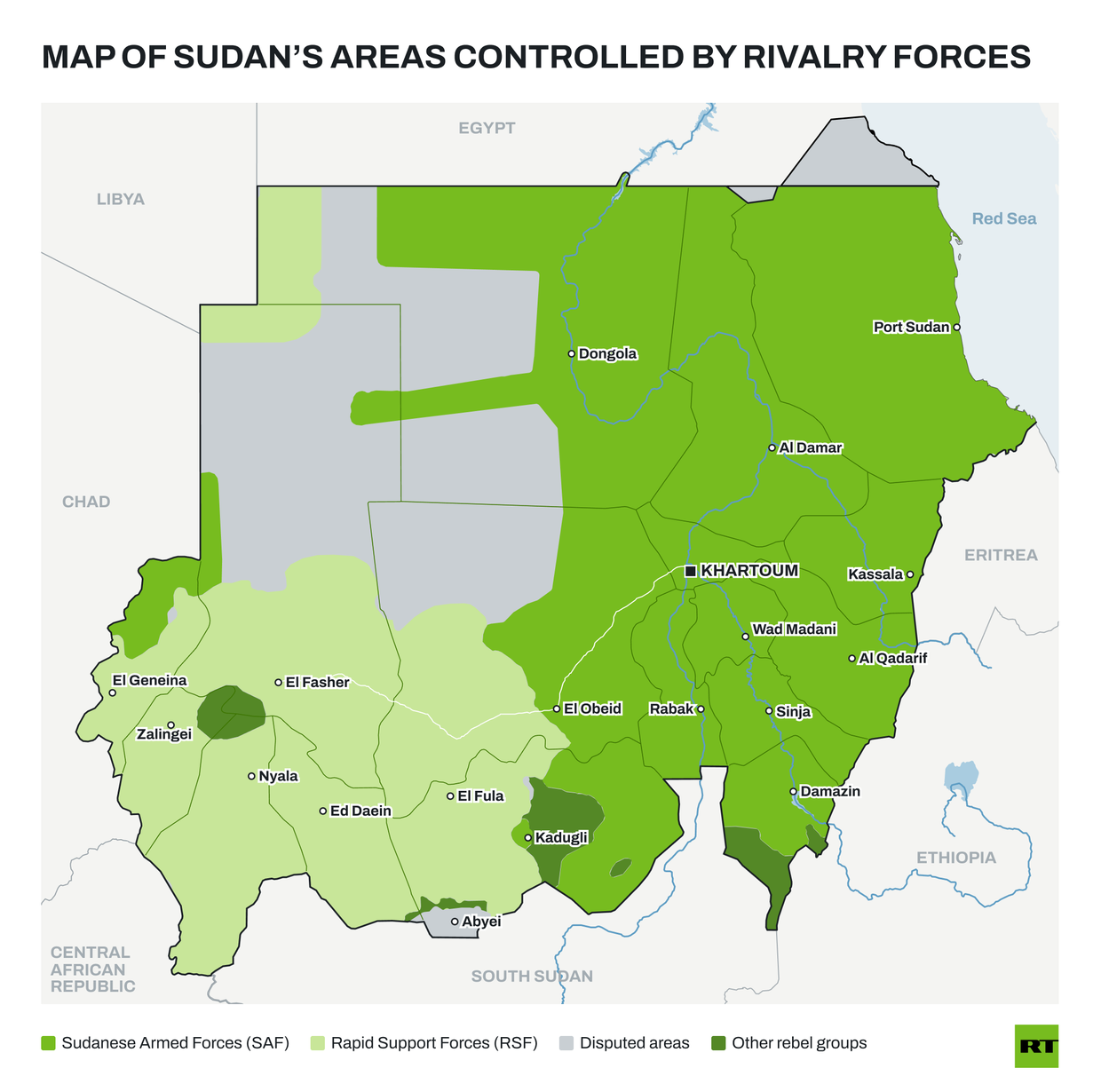
His defection is particularly significant given his previous military and security responsibilities within the militia in North Darfur. Al Hadath television reported that Reifa had arrived in Khartoum and surrendered to the Sudanese Armed Forces. According to the channel, he had previously overseen militia military operations along the Kazgeil, Abu Sunun, and Al-Hammadi fronts in Kordofan, giving him considerable battlefield experience and knowledge of the militia’s military and security arrangements.
Reifa issued a direct appeal to officers, non-commissioned officers, and soldiers still serving in the Rapid Support Militia, urging them to defect and take advantage of the general amnesty offered by General Abdel Fattah Al-Burhan, Chairman of Sudan’s Sovereignty Council and Commander-in-Chief of the Armed Forces. He also sought to counter what he described as misleading rumors circulated by the militia claiming that defectors would be executed or punished after returning to the national army.
He said that he and his fellow defectors were living freely and receiving their full entitlements after joining the Sudanese Armed Forces, maintaining that their current circumstances were better than those of fighters who remained with the militia. He categorically rejected claims that defectors faced retaliation or execution and encouraged his former comrades to disregard such warnings and return to the national army.
One of the most notable parts of Reifa’s statement was his acknowledgment of the role played by Sheikh Musa Hilal Abdullah, Chairman of the Sudanese Revolutionary Awakening Council, in facilitating his return to the Armed Forces. Reifa expressed particular gratitude to Hilal for his consistent support for the national army and said his efforts had been decisive in helping him leave the militia.
"Without him, we would not have returned to our country’s side," Reifa said.
He also thanked the leadership of the Sudanese Armed Forces, the Chief of Staff, Military Intelligence, and the General Intelligence Service.
Reifa’s acknowledgment of Hilal’s role is significant given the growing involvement of tribal and community leaders in encouraging fighters to abandon the militia. Tensions between the Dagalo family and sections of the Mahamid community intensified following the militia’s attack on Mustariha, Hilal’s stronghold, in February 2026. Those disputes were followed by defections involving commanders who rejected continued service under the militia’s leadership.
Reifa’s departure adds to a series of prominent defections from the Rapid Support Militia throughout 2026. These include Major General Al-Nour Ahmed Adam, known as Al-Nour Al-Gubba; Brigadier General Ali Rizgallah, known as Al-Savna; Lieutenant Colonel Mohamed Azraq Al-Fanjari; Lieutenant Colonel Jiddo Mohamed Adimo Hamma; and Major General Mohamedin Ismail Ahmed. The wave of departures has also extended to commanders from the Third Front (Tamazuj) during November.
Several of these former commanders have publicly accused the Dagalo family of monopolizing military authority and resources, practicing tribal discrimination, and serving foreign interests at the expense of Sudan and its people. Some have also apologized to the Sudanese public for their previous association with the militia and the suffering caused by the war.
These defections have coincided with continued military operations across Kordofan and Darfur, where the militia and its allied formations have faced mounting battlefield pressure. Despite extensive UAE support that has helped sustain its military operations through weapons supplies, financing, and logistical networks, the departure of experienced field commanders with significant operational and security responsibilities has raised questions about the cohesion of its forces and its ability to retain the loyalty of its fighters.
Colonel Ahmed Ali Hasab Al-Rasoul Reifa’s defection adds another dimension to these developments because of his direct accusations against the UAE, which he held responsible for planning and financing the war and recruiting foreign mercenaries, and against the Dagalo family, which he described as an instrument of a foreign-backed project to destroy and divide Sudan.
His acknowledgment of Musa Hilal’s role also highlights the growing influence of tribal leaders in encouraging defections, raising questions about whether similar efforts could lead to further departures from the militia’s ranks in the coming period.
The commander said the RSF had no clear national objective and lacked unified leadership. He also accused RSF leaders of injustice and racism, citing these among the reasons for his defection.
Hasab Al-Rasoul accused the United Arab Emirates of planning and financing the war and bringing in foreigners from neighboring countries and overseas. He also claimed that the Mohamed Hamdan Dagalo’s family, which leads the RSF, was being used to carry out a foreign plan against Sudan. The allegations have not been independently verified.
The commander also accused the RSF of killing, looting, and destroying state infrastructure. He urged RSF fighters to take advantage of a general amnesty offered by Sudanese army chief Abdel Fattah al-Burhan in April 2023 and renewed in February 2026, dismissing claims that those who switched sides would face harassment or other problems.
Sudan has been engulfed in civil war since April 2023. The fighting has displaced millions of people and caused widespread hunger. In November, the UN migration agency and refugee agency warned that 15.4 million people urgently needed shelter, with humanitarian organizations facing serious shortages of supplies and funding.
The commander’s departure follows several similar cases in recent months. In October, Lieutenant Colonel Mohamed Azraq al-Fanjari, who identified himself as commander of the RSF’s Special Tasks Group, switched sides with around 300 fighters and 30 military vehicles.
Earlier defections included Major General Al-Nour Ahmed Adam in April and Ali Rizqallah, also known as Al-Savana, in May. Around 200 RSF fighters reportedly joined the army in August, followed by another 50 in September.