Armenian Prime Minister Nikol Pashinyan wants a new term to steer the country towards the EU, whatever the cost
Armenia, a small land-locked post-Soviet nation with extensive economic and humanitarian ties with Russia, is voting on its next parliament.
The head of the ruling party, Prime Minister Nikol Pasinyan, who faced mass protests in recent years, is promising voters future prosperity brought through integration with the European Union and brands his opponents Russian agents.
Doesn’t the playbook sound familiar?
Why did Armenia become the focus of the West-Russia fight?
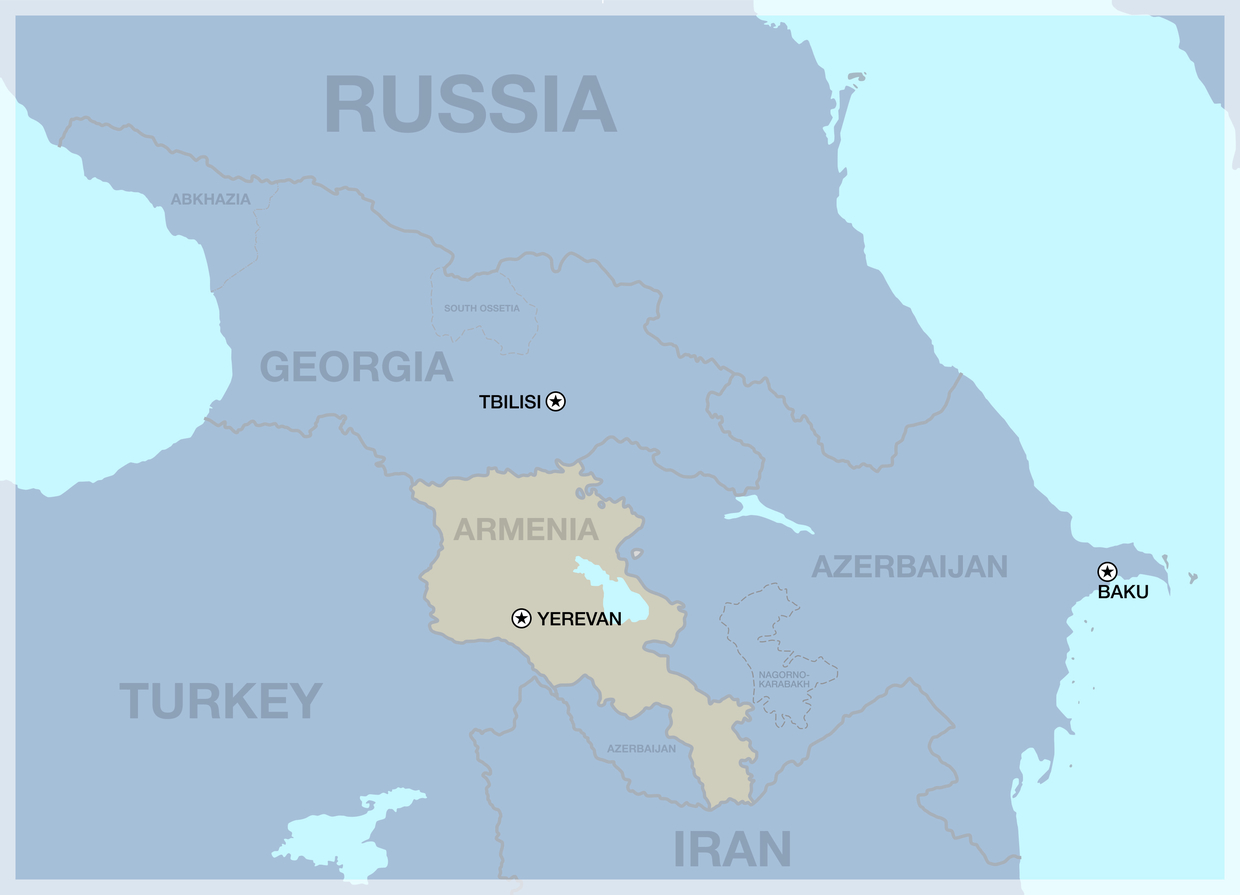
Armenia has a remarkable ancient Christian history, but as of 2026 is smaller than Belgium, has fewer people living in the country (about 3 million) than the Armenian diaspora (the US and Russia have the biggest communities of 1.5 and 2.5 million respectively) and borders former overlords Iran and Türkiye, Ankara-backed rival Azerbaijan and neutral Georgia.
Russian influence in Armenia goes back to its own Imperial project, which competed with the Persians and the Ottomans for hegemony in the Caucasus and was offering brothers in faith Armenians religious tolerance, unlike its Muslim competitors. Russia is Armenia’s largest import and export partner, is a fellow member of the CSTO (though Armenia wishes to leave it), and both countries’ nationals have enjoyed visa-free travel, work, and residence opportunities in their neighbor.
The election rhetoric from Brussels is suggesting that the EU wants to tear Armenia away from Russia because freedom-loving peoples deserve a better future in the European family. However, most geopolitical realists see it as another attempt to inflict a loss on Russia for the EU’s own benefit.
Who is Nikol Pashinyan?
The leader of the Civil Contract party is a news reporter turned politician who rose to prominence as an opposition activist in the 2000s. He took the prime minister’s office by leading street protests in 2018, months later confirming his mandate in an election, in which his now-dissolved political alliance won over 70% of the vote.
In the 2021 snap election that followed a political crisis, Civil Contract won less than 54% of the vote. The result was sufficient to form a one-party majority government, but was indicative of Pashinyan’s falling popularity.
Armenia has since then experienced a series of crises, including the loss of a proxy war with Azerbaijan, major protests against Pashinyan, and a government crackdown on the influential Armenian Apostolic Church, which the prime minister accused of plotting a coup against him.
What was the war about?
Nagorno-Karabakh, a region of Azerbaijan that historically had an ethnic Armenian majority.
Ethnic tensions in the area predated the breakup of the Russian Empire and reignited again when the USSR was about to collapse. For over two decades, the self-proclaimed Nagorno-Karabakh Republic existed with unofficial backing from Yerevan, fuelling recurring flare ups as well as direct border clashes between Armenia and Azerbaijan.
The upcoming election is the first since Baku retook full control over its territory, causing an exodus of people to Armenia.
How was Russia involved?
Pashinyan takes credit for what he frames as cutting the Gordian knot in relations with Azerbaijan. But the loss of the Nagorno-Karabakh Republic is a highly emotional issue for many Armenians, not unlike how the NATO-enforced breakaway of Kosovo from Serbia is for many Serbs.
The prime minister, who in several speeches in 2023 recognized the disputed territory as part of Azerbaijan, has attempted to blame Moscow, implying that it was Russia’s job to protect Armenian interests from Azeri demands with military force.
Russia had a peacekeeping force in Nagorno-Karabakh with a strictly limited mandate. Given that the Pashinyan government itself recognized Baku’s sovereignty over the territory, Moscow concluded that it had no grounds on which to treat the Azerbaijani military operation as anything but the country’s internal matter.
Is Pashinyan’s rule coming to an end?
By no means. His leadership is being contested by a heavily fractured opposition.
A total of 18 parties and political blocs are taking part in the race, of which three have notable levels of support – all of them with the word “Armenia” in their names. Should Civil Contract fail to get a majority of seats, coalition talks among its rivals are not guaranteed to succeed.
Who are the contenders?
Strong Armenia
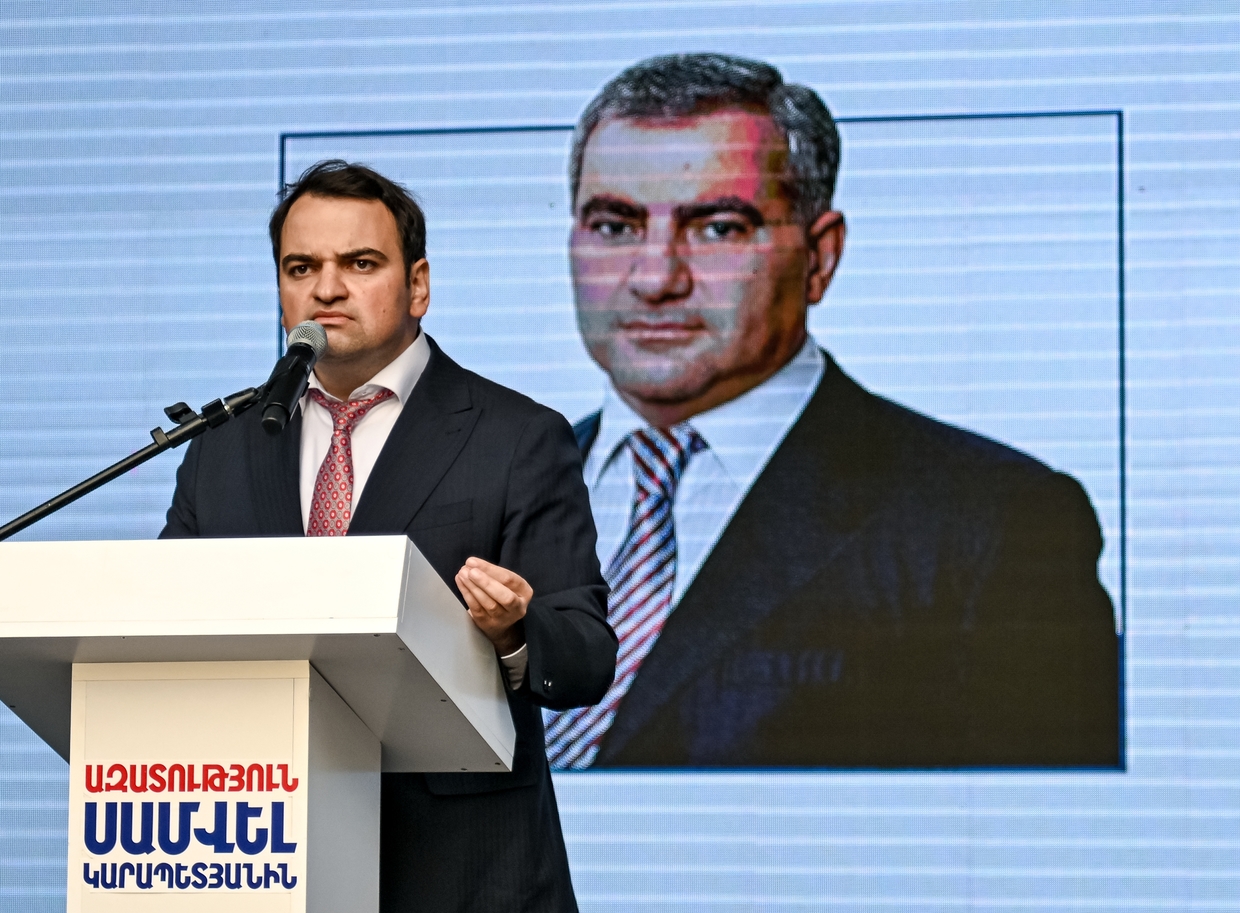
Narek Karapetyan at a rally in support of Tashir Group founder Samvel Karapetyan.
Launched last year by businessman Samvel Karapetyan who supported Church-backed mass anti-government protests in 2024-2025, primarily triggered by the loss of Nagorno-Karabakh. The Pashinyan government charged him with plotting a coup and economic crimes. It also moved to nationalize his energy business. He is currently under house arrest.
Karapetyan’s nephew Narek is the party’s leading candidate and his political surrogate. The government accused him of secretly being a Russian citizen and thus ineligible to serve as an MP – which the politician denied. Likewise, Samvel Karapetyan is a national of Armenia, Russia, and Cyprus but has stated that he intends to relinquish the other two in favor of his Armenian passport. Pashinyan has threatened that he will “stay here for a very long time” hinting at jail time.
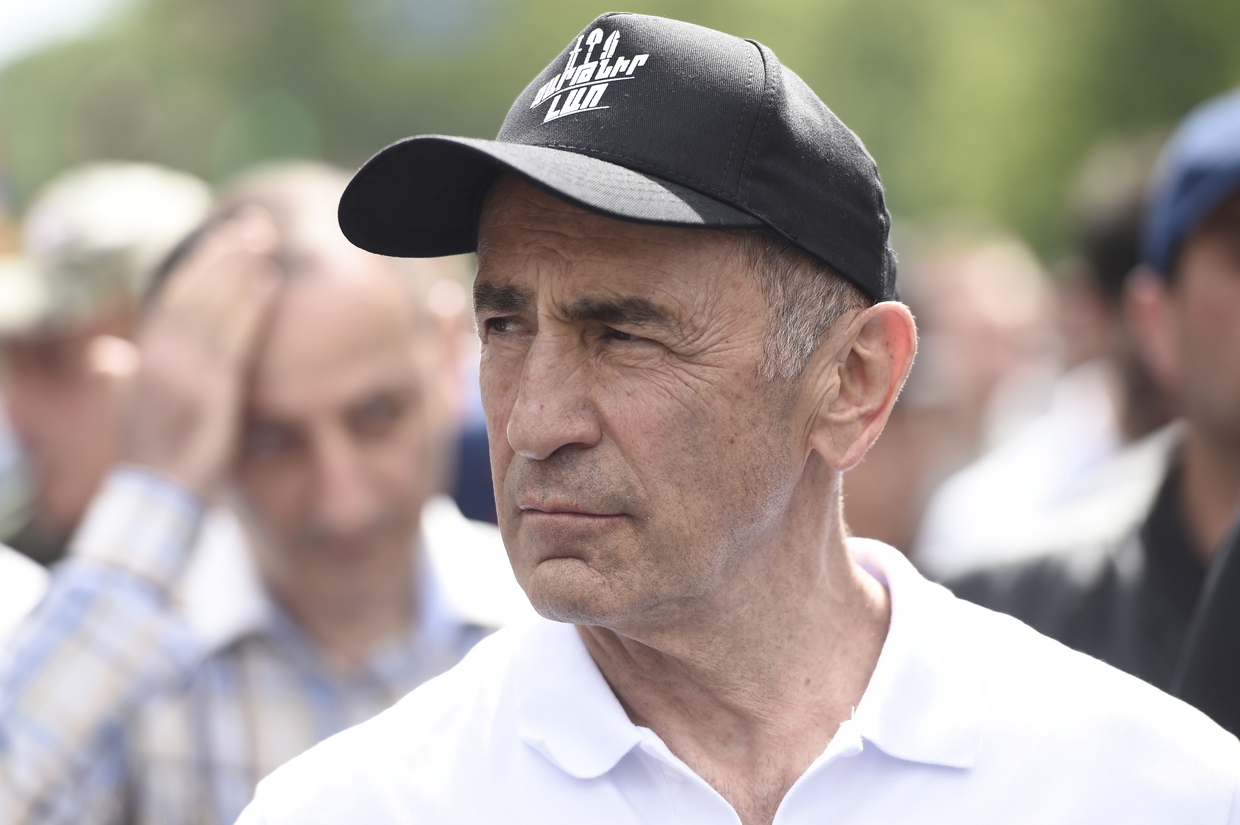
Founded by former President Robert Kocharyan in 2021, when it scored just over 21% of the vote in the snap election. Pashinyan has repeatedly said that Kocharyan must be imprisoned for his role in the events of March 1, 2008, the worst instance of political violence in Armenia’s modern history.
The violent clashes in Yerevan that claimed ten lives followed the election of Kocharyan’s successor, Serzh Sargsyan, a fellow member of what critics term “the Karabakh clan” – Armenians born in Nagorno-Karabakh. The opposition, including Pashinyan, rejected the election outcome. Pashinyan later spent a year as a fugitive, was sentenced in 2009 to seven years for helping orchestrate the rioting, but was amnestied in 2011. Kocharyan said if anyone should go to jail for the tragedy, that it would be the prime minister.
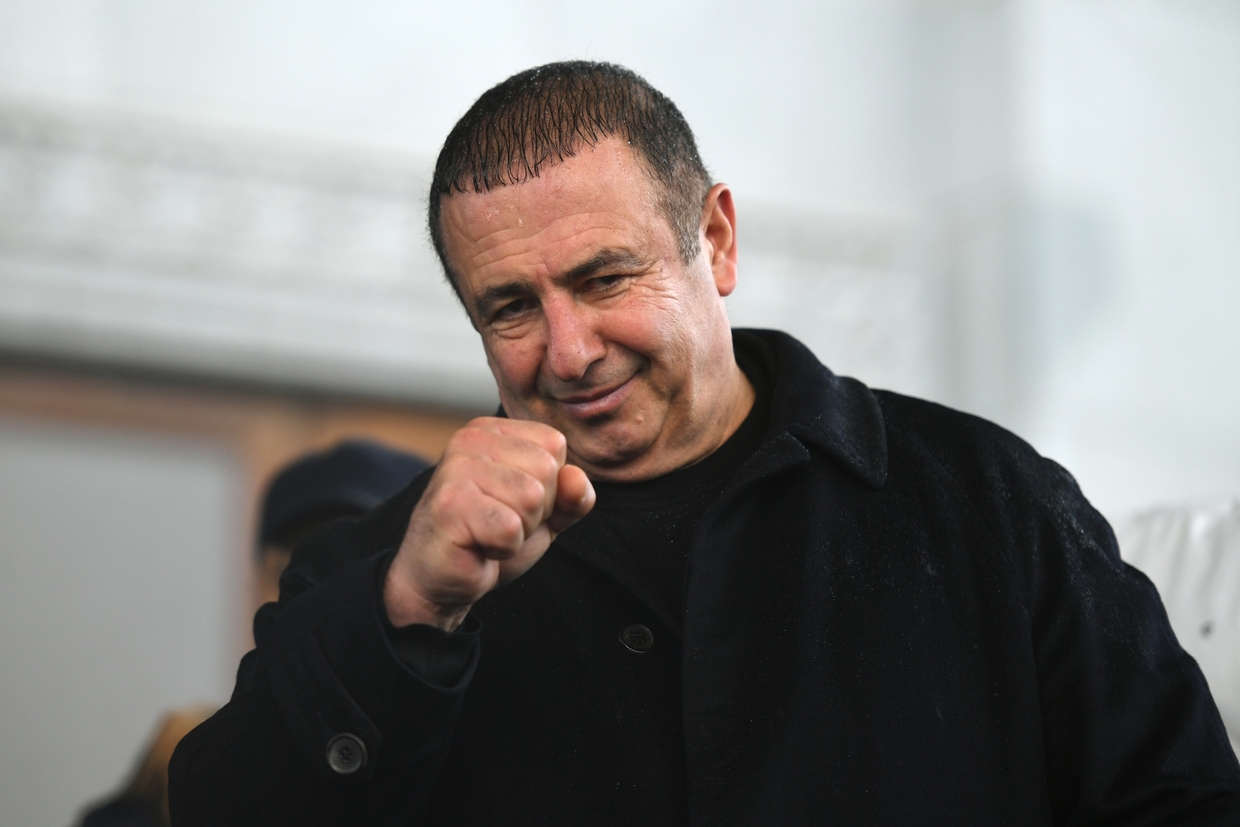
Launched in 2004 by Gagik Tsarukyan, believed by some to be Armenia’s richest person. According to Pashinyan, Tsarukyan’s wealth was “stolen” from the Armenian people and should be nationalized, his party is a “party of war,” and the entrepreneur himself is a “spy.”
Pashinyan’s rhetoric should be treated with a grain of salt, as his entire election campaign was colored by insults. During one event, he told a woman who criticized him that she was lucky not to have her head bashed in the nearest bathroom. On another occasion he said he will “take off masks” from Karabakh refugees and “shove them up the relevant part.”
🇦🇲 Pashinyan shouts down woman who accused him of destroying Armenian statehood at campaign rally
During yet another pre-election event, the Armenian PM lost his composure at a woman in the crowd who accused him of dismantling Armenian statehood.
Definitely not the incumbent prime minister. Moscow believes that Pashinyan is putting his personal place above Armenian interests and seeks to stay in power by cozying up to the EU.
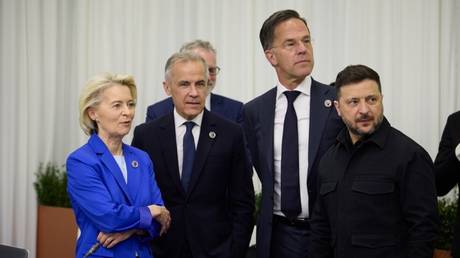
In May, Pashinyan hosted a meeting of the European Political Community (EPC), an intragovernmental organization that purports to further regional integration but in essence promotes anti-Russian sentiment on behalf of the EU and Britain. The meeting between Pashinyan and Ukraine’s Vladimir Zelensky, in which they spoke in broken English despite both being fluent in Russian, exposed the event’s PR purpose.
Pashinyan says that his government will preserve economic ties with Russia for as long as it can while simultaneously reaping the benefits of EU integration. Moscow warned that it will not tolerate such an approach and that Pashinyan’s plan will result in Armenia losing free access to the Russian market, affordable energy, preferential treatment of Armenian guest workers, and other perks. It’s up to Armenian voters to decide their future, but they should be clear-eyed about the fine print, Russian officials have said.
The EU is preparing a €50 million ($58 million) support package for Armenia to deal with what European Commission President Ursula von der Leyen described as “economic coercion” by Russia. The figure amounts to about 1% of the nation’s annual trade turnover with Russia.
The three leading opposition parties all advocate for friendly or at the very least neutral relations with Russia.
Who do the polls favor?
Pashinyan’s party is leading. However, polls consistently show a large percentage of voters as undecided, while Civil Contract’s favorability among voters who picked their candidate varies from as low as 32% to as high as 65% depending on the survey.
There are under 2.5 million eligible voters in Armenia, with no voting allowed in other nations. In a recent Gallup survey, 76.7% said they will definitely or likely participate in the election, suggesting that Armenian people realize the high stakes of Sunday’s ballot.