From Crocus to AI chatbots, extremist groups like ISKP show how the dark web, crypto, and AI are outpacing global defenses
In March 2026, two years after the Crocus City Hall massacre in Moscow, a military court in Russia sentenced the perpetrators.
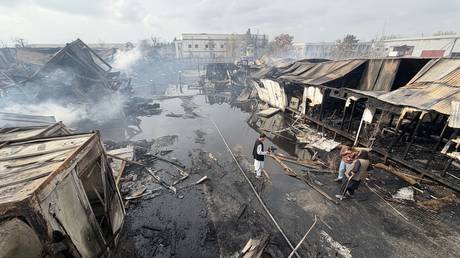
The terrorist attack on March 22, 2024 claimed the lives of 149 and injured 600 innocent civilians. Fifteen people, including the four Tajik citizens who carried out the attack and 11 facilitators, were given life sentences.
Islamic State Khurasan Province (ISKP) claimed responsibility and the attack’s operational signature was as striking as the death toll. Planning was conducted remotely from Herat, Afghanistan; coordination was carried out through encrypted digital channels, across international borders, and the entire enterprise operated seamlessly without a single face-to-face interaction between the architect and the executors. An earlier attack in January 2024 in Kerman, Iran followed the same template.
In 2024 and 2025, Pakistan, working with Iranian, Russian, and other international partners, conducted multiple intelligence-based operations that led to the neutralization and apprehension of numerous high-value ISKP targets from Pakistan-Afghanistan border areas.
The resulting investigations as reported in UNSC monitoring team reports, and Pakistan’s domestic media alerted the global counterterrorism architecture about the ISKP’s wherewithal in the cyber domain.
The investigations revealed that these incidents served as an announcement of a new era of ISKP embracing new technology; Al-Qaeda and other terrorist organizations have always found innovative ways to spread terror and have used drones, encrypted messaging, and other modern technology, but ISKP has mastered the cyber domain, using encrypted applications, the dark web, and cryptocurrencies.
ISKP’s evolution into the digital domain is not merely an operational nuance, nor is it restricted to incitement and recruitment. It is a structural reorganization conceived in four distinct but interlocking domains.
First, it constitutes the propagation of ideology, in which extremist narratives are published without geographical constraint. ISKP produces multilingual propaganda in Pashto, Darri, Russian, Uzbek, Farsi, Urdu, Malayalam, Bengali, and English through the publication of its Voice of Khurasan magazine. This publication is tailored to a specific audience, designed to exploit local grievances in tandem with the plight of the Palestinians.
Second, it functions as a recruitment ecosystem, inciting young people, connecting potential jihadists to established networks through social media, gaming platform chats, and specialist forums. The organization has learned to speak in the languages of digital youth culture and aesthetics, gaming, and viral content, embedding its ideological messages within formats designed for maximum algorithmic amplification and emotional resonance.
Third, it props up ISKP’s financial infrastructure, mobilizing resources through cryptocurrency and digital donation channels that bypass conventional financial monitoring. Cryptocurrency has revolutionized the financial architecture of terrorist fundraising. Despite the improvements in blockchain analytics, digital currencies remain the preferred means of cross-border fund transfer due to the anonymity provided by the method. ISKP has demonstrated increased institutional sophistication in this space, establishing dedicated wallets and structuring transactions to evade detection. The fundraising apparatus also leverages digital means to exploit Muslim suffering in conflict zones such as Gaza and frames financial contributions as a religious obligation. As Pakistan cracked down on ISKP media and external operation cells in 2025, ISKP issued a warning to stop crowdfunding transactions to their previously publicized Monero wallet barcode, as it was compromised.
Fourth, ISKP has achieved an operational integration in the cyber domain that enables attack planning, logistical coordination, execution, and the glorification of terrorist attacks across borders through secure channels and encrypted messaging applications. ISKP’s most significant digital innovation has been the transformation of jihadist training from a cumbersome physical model requiring travel to camps, face-to-face instruction, and geographic concentration of trainees, to a learning model accessible from anywhere with an internet connection. ISKP produces and disseminates detailed instructional manuals on weapons training, improvised explosives manufacturing, operational security, target selection, and tactical planning.
In recent years, ISKP has developed a qualitative edge in its existing digital playbook. It has started to integrate generative AI into its propaganda and recruitment architecture. After the Crocus City Hall attack, the ISKP media branch produced an AI-generated news bulletin, presenting the vicious attack as a strategic win and framing it in language geared toward attracting multiple regional audiences simultaneously. The ability of AI tools to simultaneously produce multilingual content to target multiple audiences in a short period of time is becoming a force multiplier for ISKP.
However, the most troubling use of AI is the AI-powered chatbots that have already demonstrated their effectiveness as a radicalization tool. In one widely cited case, a 19-year-old British-Indian man who attempted to assassinate Queen Elizabeth II in 2021 was radicalized in part through over 5,000 messages exchanged with an AI chatbot he created himself on the Replika platform and regarded as a sympathetic and encouraging companion.
Meanwhile, the way ISKP is embracing AI, the creation of a radicalized chatbot trained by a senior ISKP ideologue on a strict Salafi interpretation of Islam and Takfiri ideology has the capacity to dehumanize the radicalization process, not only making counter-radicalization more challenging, but also making actual perpetrators anonymous and difficult to detect. This scenario would be a nightmare for global efforts to counter and prevent violent extremism.
ISKP’s evolution from a territorially ambitious organization into a digitally native transnational terrorism architecture is one of the most consequential developments in recent years. ISKP, under the leadership of Shahab al-Muhajir, has demonstrated that territorial defeat, while necessary, is insufficient to neutralize ISKP, as it has structured itself around virtual presence rather than physical geography. If the global counterterrorism architecture fails to become more integrated and efficient and/or becomes a victim of geopolitical contests, it will only help terrorist organizations that are adapting to new technologies in overdrive.
The real challenge is faced by developing countries that have limited wherewithal and experience in handling these types of threats in the technological domain, especially when developed countries hardly see it as their problem. The Shanghai Cooperation Organization and its counterterrorism department – the Regional Anti Terrorists Structure (RATS) – with Russia and China as its founding members, provide an ideal multilateral forum to share good practices in countering terrorism, and can develop institutionalized mechanisms to not only monitor terrorists, especially ISKP, but can also develop the means to counter them.