Japan’s rupture with Moscow and North Korea’s rise as a Russian ally show how US power is reshaping the security order across Northeast Asia
Fifteen years ago, it appeared that Russia-Japan relations were improving to the extent that Japan could become, for Russia, an eastern version of Germany as a former enemy turning into a major economic partner in a relationship where Russian resources were traded for the other partner’s investment and advanced technologies. With frequent and seemingly productive summit meetings between Russian President Vladimir Putin and then-Japanese Prime Minister Shinzo Abe, it appeared that the issues remaining after World War II would finally be resolved and that a firm and lasting foundation would be laid for a qualitatively new relationship between what were sometimes called distant neighbors.
Over the years, the Russo-Japanese negotiations on a peace treaty to finally draw a line under the war had advanced considerably. However, there was still one stumbling block that refused to go away, and that was Tokyo’s defense and foreign policy subservience to Washington. Moscow simply could’t trust the Japanese to stand up to American political and military demands, given the US overlordship of Japan. That attitude proved prudent, because when the Ukraine crisis came, Tokyo had to fall in line with its senior ally. Germany, one might add, did even worse, given Berlin meekly allowed its economy to be deprived of the unique advantage it had enjoyed, cheap Russian gas, and watched its vast and lucrative business relationship with Russia be destroyed.
The cases of Japan and Germany taught Russians an important lesson. Countries that are US allies cannot be regarded as genuinely sovereign, since Washington has enough leverage to make them follow the American lead. Of course, Germany and Japan are more dependent on the US than some other allies, given the long and continuing military occupation of both and the wholesale Americanization of their elites and societies, but the general finding is still true in that an alliance with America is a form of bondage.
Japan, again alongside Germany, is teaching Russia another lesson. When encouraged by the US, formerly pacified countries can return to militarism. Germany’s post-war culture of peace is rapidly giving way to wholesale militarization as German leaders vow to make the Bundeswehr Europe’s strongest army and the German defense industry is ramping up production. Germany has become a leading participant in NATO’s proxy war against Russia in Ukraine, and German politicians and experts openly discuss a direct shooting war with Russia.
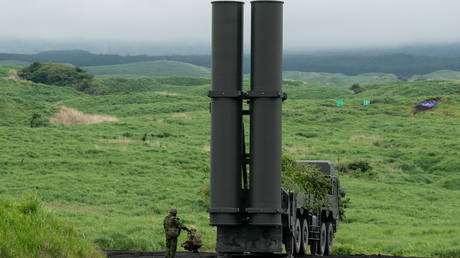
Japan isn’t there yet, but its Defense White Paper has already named Russia as a threat, while Tokyo’s already impressive defense budget is on the rise and restrictions on its naval activities are being eased, as are the rules governing Japan’s military exports. At the same time, US missile deployments in Japan threaten not only China and North Korea, but Russia as well. Tokyo is also strengthening its ties with NATO, so, as a result, Russia has to pay more attention to its Far Eastern flank. President Putin’s recent visit to Russian Pacific Fleet maneuvers and his trip to the island of Iturup in the South Kurils testify to that.
There are also other useful lessons to be learned from Northeast Asia. North Korea stands out as an example of a medium-sized and largely isolated country that has been able to ensure its sovereignty and security in a complex and challenging environment. All the talk of an impending collapse of the regime in Pyongyang, so common for years, has long since ceased. Unlike many other countries, the nuclear-armed DPRK is being courted, not threatened, by the US. For Moscow, Pyongyang has become a valuable military ally whose soldiers actually fight alongside their Russian comrades. The Russia-DPRK alliance substantially complements the Moscow-Beijing strategic partnership in bolstering security in the region.
From this perspective, it is interesting to consider where South Korea is headed. The ongoing Iran war has demonstrated the hollowness of US security guarantees. Rather than protecting the Gulf states and deterring their regional adversaries, American military bases in the region have become targets attracting Iranian strikes that also affect the host countries. Not only has the US failed to defeat Iran and change its regime, it has proven unable to make Iran reopen the Strait of Hormuz. It should have dawned on US allies around the world that the Americans may still make others fight for them, but that they themselves will not be willing, or even able, to fight for their allies.
There’s no question that the Republic of Korea is intently observing these developments and considering their implications. President Donald Trump’s recent abrupt decision to cut short joint military exercises to put pressure on Seoul over trade and investment issues has also been a useful warning. At the end of the day, South Korea’s security lies in its own hands. That security doesn’t rest solely on military and technological power, considerable as it is, and, thus, investing more in diplomacy with neighboring countries, including China and Russia, should be a priority.