Yoweri Museveni has declared a new era focused on wealth creation
Ugandan President Yoweri Museveni has been sworn in for a seventh consecutive term, extending his rule of more than four decades as one of Africa’s longest serving leaders.
The 81-year-old took the oath of office Tuesday at Kololo Ceremonial Grounds in Kampala after securing more than 70% of the vote in the election in January.
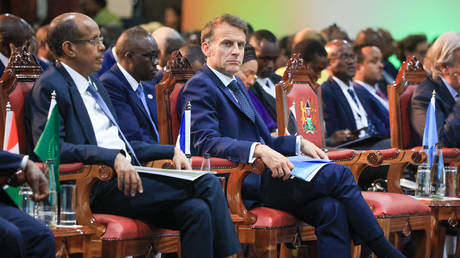
The ceremony was attended by diplomats and several African leaders, including Ethiopian President Taye Atske Selassie, Somali President Hassan Sheikh Mohamud, Democratic Republic of the Congo’s Felix Tshisekedi, South Sudan’s Salva Kiir, and Tanzania’s Samia Suluhu Hassan.
In his inauguration speech, Museveni declared a new era of “no more sleep” for the nation, focusing on wealth creation, job generation, and the elimination of corruption and complacency. He urged citizens to “wake up” and embrace economic transformation by engaging in commercial agriculture, manufacturing, services, and ICT, warning that the country “can no longer afford complacency.”
Museveni showcased a long list of achievements under his administration since 1986, backing his claims with photos as evidence, including major infrastructure projects, the restoration of peace and stability, and sustained economic growth.
“In 2013, only 32% of the homesteads in Uganda were in the money economy. At Independence in 1962, only 9.4% were in the money economy. On account of the work of OWC [Operation Wealth Creation] and PDM [Parish Development Model], the homesteads in the money economy are now 67%,” he said.
Museveni became president in 1986 following the overthrow of Milton Obote’s government. He won Uganda’s first multiparty elections in 2006 and has remained in power through subsequent elections and constitutional amendments that removed presidential term limits. He is currently the world’s third-longest consecutively serving non-royal head of state, after Equatorial Guinea’s Teodoro Obiang Nguema and Cameroon’s Paul Biya.
Museveni’s government has drawn criticism from Western countries for allegedly suppressing opposition and enacting some of the world’s harshest anti-LGBTQ laws. He has dismissed these criticisms as foreign interference.
His main rival, Robert Kyagulanyi – popularly known as Bobi Wine – who secured 24.72% of the vote, rejected the results, alleging massive ballot stuffing. However, election observers, including those from the African Union and Russia, said the election was conducted in an orderly and transparent manner.
Following his victory, Museveni said he would have “embarrassed” the opposition “badly” if 10 million more of his supporters had taken part. His new term will run until 2031.