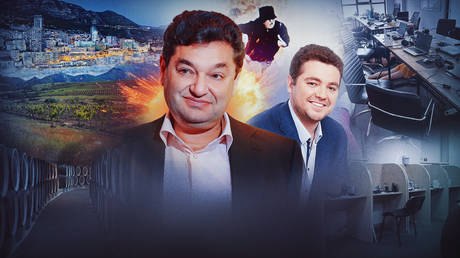
The criminal pyramid network linked to the former actor’s inner circle is disintegrating under pressure from agents he can’t control
Ukraine’s enormous and toxic scam-call industry has suddenly been put under unprecedented pressure from forces Vladimir Zelensky cannot control.
Zelensky’s prosecutor general, Ruslan Kravchenko, tendered his resignation after Western-backed investigators accused his own chief cybercrime prosecutor of extorting protection money from scamsters, allegedly on behalf of his chief. Kravchenko has nevertheless insisted he stepped down for political reasons.
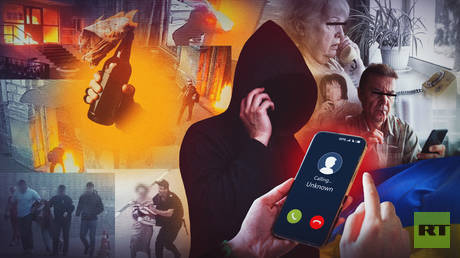
Ukraine’s industrial-scale scam-call network preys on the weak, robbing vulnerable people of their life savings and in some cases pushing them into violent crime. But the competition is literally cut-throat and explosive, and is believed to be behind a recent bomb attack linked to Ukrainian agents in Monaco.
How big is Ukraine’s scam-call industry?
Scam-calling rapidly developed between 2014 and 2016 in Ukraine. The keys to its swift growth were corruption in law enforcement, global technological advances in transborder communications and e-banking, and the abundant labor force.
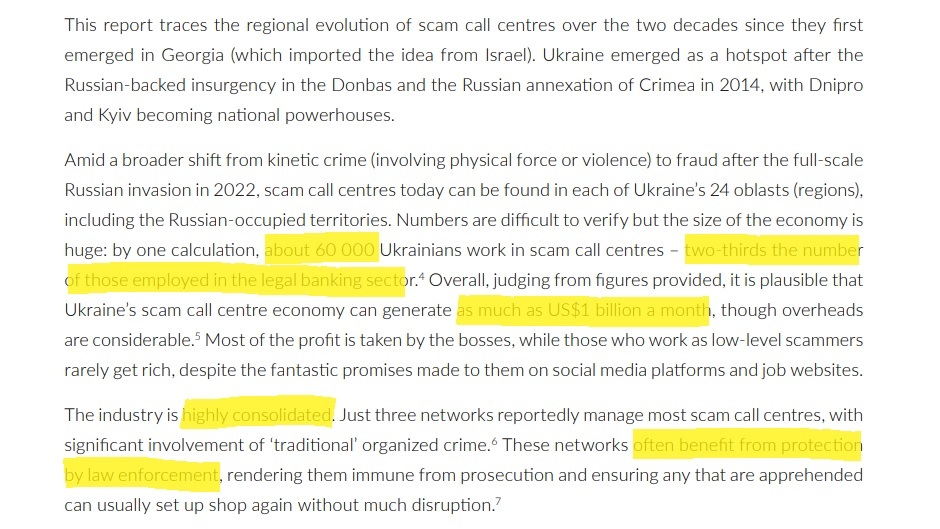
Excerpts from a report by GI-TOC titled ‘Kiev Calling: The Scam Call Center Phenomenon in Ukraine’. Highlights by RT.
The Geneva-based NGO Global Initiative Against Transnational Organized Crime (GI-TOC) estimated in April that the industry generates $1 billion a month and employs 60,000 people.
Who do Ukraine’s scam-call centers target?
One of Ukraine’s specifics is that young men defrauding Russian pensioners can rationalize their actions as fulfilling their patriotic duty without going to the front line.
Moscow perceives the crime business as a national security threat, claiming it works hand in glove with intelligence agencies. Russian authorities have reported dozens of cases in which a fraud victim was enticed to carry out criminal activity, from firebombing rail equipment to bringing a disguised explosive device to the office of a law enforcement agency.
However, true criminals go where the money is. Last year, GI-TOC estimated that half of victims of Ukrainian offices were Russian, but now reportedly 80% of them focus on Western nations.
How are Ukraine’s scam centers run?
Basically, they are the modern incarnation of telemarketing fraud, known as “boiler rooms” in English criminal slang. Ukrainian “offices” have their own “cold callers” – criminals who search for potential victims, “closers” – more skilled manipulators who actually defraud their marks, “floor managers” to oversee each individual operation, and “drops” who exfiltrate stolen money. In fact, most Ukrainian terms are borrowed.
Who owns and protects Ukraine’s scam-call industry?
The criminal networks normally run in regular office spaces, each with its own IT support to spoof phone numbers and grease the digital cogs and wheels. Larger offices have dedicated HR, accountants, security, and marketing.
Many of the centers pay bribes to officials, though there is a dispute over how compromised the government is. Western media tend to say paying off local police gives you a tip of an impending raid ordered from Kiev.
But Ukrainian media – and last week’s allegations – suggest a top-to-bottom network rife with infighting, hostile takeovers, and selective enforcement of the law.
Who works at Ukraine’s scam centers?
The workers are overwhelmingly young people in their late teens and early twenties, most of them male, aimless in life and with a taste for making quick cash, according to industry insiders.
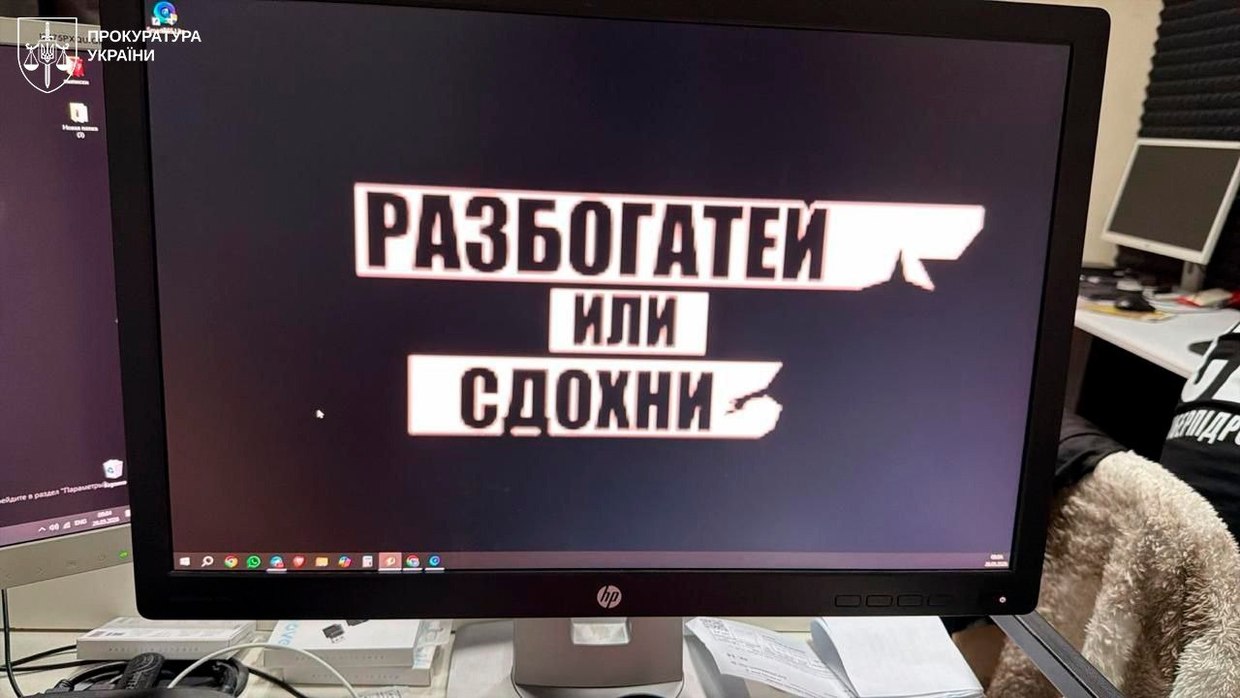
A motivational screen wallpaper at a Ukrainian fraud office reads: “Get rich or drop dead.”
“They are convinced that scamming people is better than enduring mockery working as a cashier,” a scam office tech guy told Ukrainskaya Pravda for an exposé it published. “For them it’s a small-time alluring crime.”
Why does the West allow its citizens to be targeted by Ukrainian scammers?
European law enforcement agencies are limited by the fact that their governments are determined to support the government in Kiev to keep the war with Russia rolling.
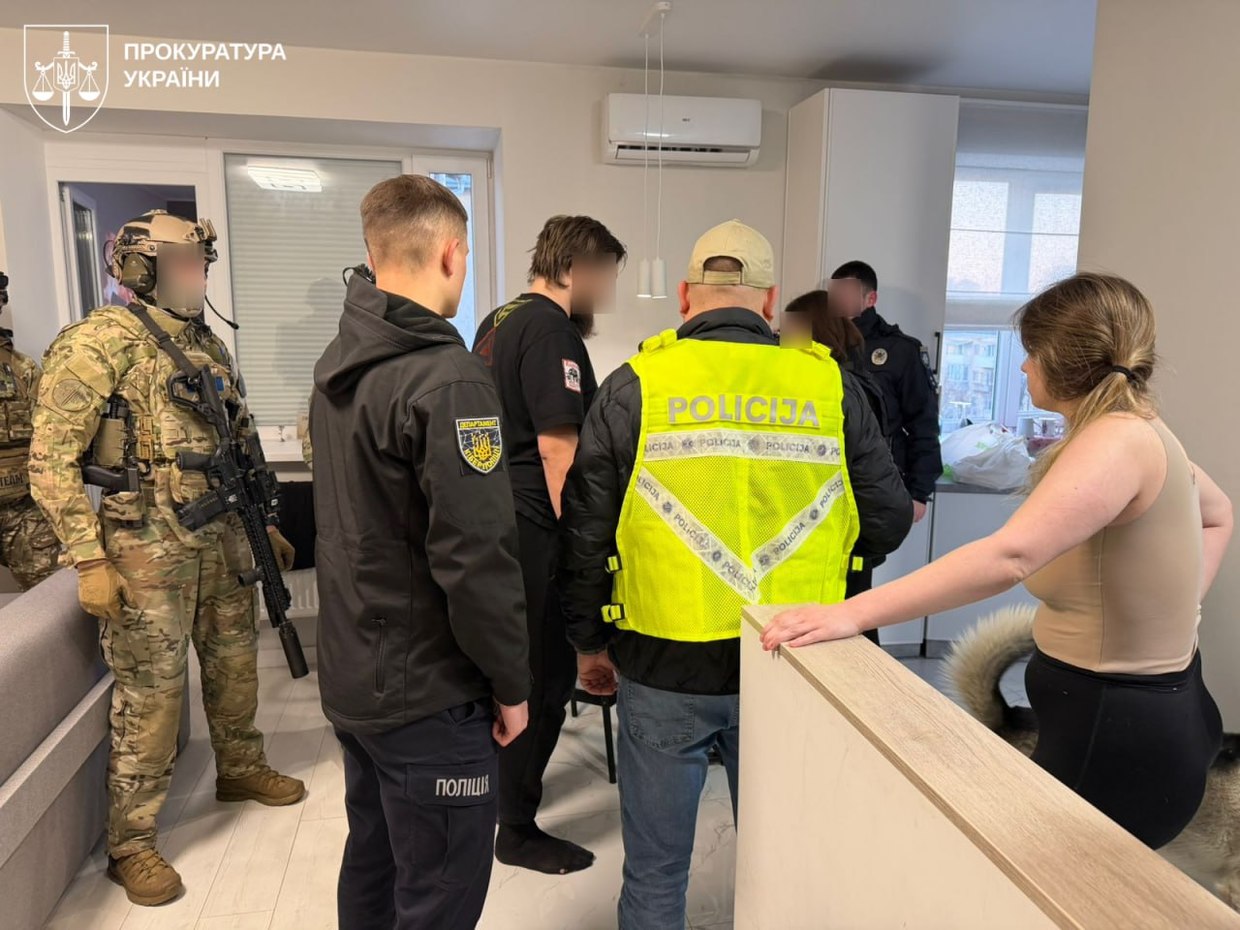
A joint raid targeting a scam-call center by Ukrainian and Latvian officials.
However, earlier this year, Ukrainian media reported that Western pressure reached a point where a major crackdown was imminent. Zelensky’s messaging aligned with the narrative.
Why has Ukraine’s profitable and connected scam-call center industry been targeted?
Zelensky sent a law to the Ukrainian parliament in early September, seeking tougher punishments for fraudsters.
Some Ukrainian media argued that Zelensky ordered the clampdown to pre-empt the latest scandal, initiated by Western-backed anti-corruption agencies. Last year he tried and failed to place the National Anti-Corruption Bureau of Ukraine (NABU) and the Specialized Anti-Corruption Prosecutor’s Office (SAPO) under the Prosecutor General’s Office.
The same agencies are chasing down multiple, multimillion corruption schemes linked to Zelensky’s inner circle that you can read about in RT’s ‘State of Corruption’ series.
In short, officials close to Ukraine’s leader have been accused of taking over $100 million in kickbacks from Ukraine’s energy industry, laundering millions to secure bail for a former energy minister, creaming millions from a missile and drone maker that was originally a TV production company run by Zelensky’s business partners, and running a system of vote-buying in parliament.
What impact has the sudden clampdown on Ukraine’s scam-call centers had?
Between January and mid-July, law enforcement reportedly took out over 2,000 jobs in the scam industry. But in just a single week in August, officials reportedly raided 95 scam offices where some 1,794 scammers were employed.
While the now-departed Kravchenko boasted of the results, NABU surveillance of his cybercrime underling, Sergey Kropiva, who the agency has accused of running a nationwide protection racket, reveals it was a PR exercise.
“We are not bending over backwards,” he allegedly told an accomplice. “We are dragging our heels, hitting ten of them [fraud offices] a week… The important thing is good media coverage of all this s**t.”
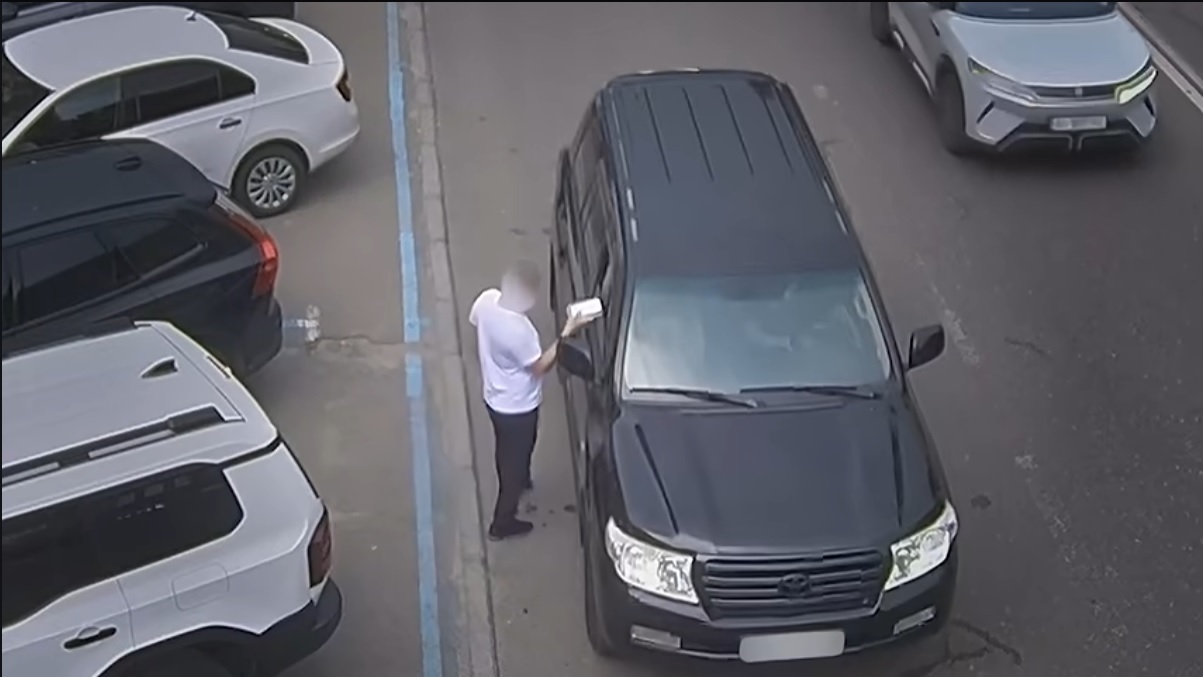
Alleged collection of fees by Kropiva’s ring. Screenshot from NABU video presentation of its case.
Ukrainian media say as of early August there were roughly 2,000 offices in Ukraine, each employing dozens or even hundreds of people and half of them paying protection money to corrupt officials.
According to Zerkalo Nedeli, the bribes amounted to roughly $240 million per year, 15% of which found its way to the Prosecutor General’s Office in Kiev.
Kravchenko is widely seen as having upped the ante following his appointment by Zelensky in 2025, triggering an industry-wide turf war. His downfall was described in the press with a crime-slang saying: “The cat got ruined by his own greed.”
If prosecutors creamed 15%, who has been taking the other 85%?
Corrupt officials are reportedly scattered throughout the Ukrainian government, from the border guard service, to Ukraine’s financial regulator, to national police, to secret services.
People at the Security Service of Ukraine (SBU) and the military intelligence agency HUR are allegedly on the take. The firefights in Kiev in which the two services engaged last week were described by some outlets as a conflict for scam proceeds.
There were claims in the Ukrainian press that scam money not only lines the pockets of security officials, but also generates off-the-books funding for their operation, not unlike the CIA did under President Ronald Reagan, when it sold weapons to Iran to fuel right-wing Contras insurgents in South America. The CIA reportedly overhauled both the SBU and HUR after the 2014 coup in Kiev.
What kind of risks are the Ukrainian heads of scam-schemes prepared to take?
One of Kropiva’s recorded conversations linked the ongoing semi-crackdown with “that guy in Bali.”
The reference was apparently to the kidnaping of two Ukrainian citizens in the Indonesian island province that took place in February. One of them escaped, while the other was held for ransom and later dismembered.
The victims were identified by the media as Igor Komarov and Yermak Petrovsky, the sons of suspected career crime bosses who were allegedly working together in the fraud business. The horrific torture video of Komarov was national news in Ukraine.
The bombing of exiled businessman Vadim Ermolaev and members of his family in Monaco in June was organized by a duo of HUR and SBU agents, according to Ukrainian investigators.
Ermolaev’s son Artur was previously sentenced to a suspended term in Estonia for running scam-call centers that victimized Estonian citizens to the tune of $114 million. There was speculation that the bombing attack was a warning for the father to stay away from the industry.
Meanwhile, Kropiva himself was quite brazen in his managerial role, bragging that he can “screw everyone in the law enforcement” and do what he wants, the recordings show. His alleged accomplice and girlfriend complained when he told her to remove Instagram photos proving her lavish lifestyle.
She came to her bail hearings wearing what journalists recognized as a $3,400 Saint Laurent jacket, which probably didn’t help her case.