In the wake of the recent Treasury intervention to bring long-term yields down and with another wave of inflation likely on the way, all eyes are on the new Fed chief
Fed Chairman Kevin Warsh is due to deliver the keynote address at this year’s Jackson Hole Economic Policy Symposium on Friday. It will give markets their first chance to hear from the new Fed chief at the central bank’s annual gathering in Wyoming.
It comes at a fraught time. A recent Treasury market intervention announced by Secretary Scott Bessent with the aim of pushing long-term Treasury yields lower raised eyebrows on Wall Street, to put it mildly. It was a move that seems to be at cross-purposes with the Fed’s messaging.
The Jackson Hole gathering is normally a chance for the Fed to lay out its views on the economy and its interest-rate strategy. How much Warsh will divulge is unclear. He has tended to play things close to the vest so far. One thing is clear, though: The market is hardly convinced by what it has seen coming out of Washington.
RT breaks down the latest developments in the world’s most important market and what the Fed chair might have to say on Friday.
Bessent’s ill-fated move to tame yields
A little over a week ago, Bessent announced that the Treasury would at least double its buyback operations of long-dated Treasuries. It was, as many such things are, framed as a mere liquidity operation. It was hard not to notice that the operation involves buying long-dated bonds at a moment when the Treasury very much wants long-dated yields to come down.
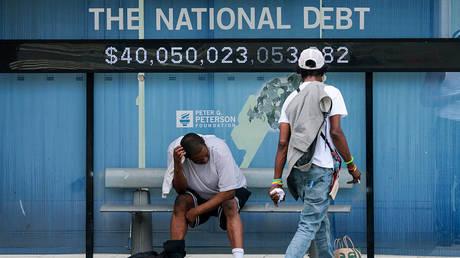
With the US operating with a $40 trillion debt anvil around its neck, any rise in yields entails a sharp increase in borrowing expenses. The US is already paying over $1 trillion a year in interest, more than it doles out on its military. However, the added expense of higher rates may not even be the main point of concern. The highly financialized US economy is extraordinarily sensitive to interest rates. On several occasions in recent years, rising rates have threatened to tip the financial system into turmoil.
Bessent’s move was widely seen to have failed, given that about a day later, long-dated yields had risen above their pre-intervention levels. With the Iran war dragging on, fears are mounting that another surge of inflation could be around the corner. Investors would therefore demand higher yields on bonds, making Treasury’s task considerably harder.
What the market is saying
Billionaire investor Stanley Druckenmiller recently penned an op-ed for the Wall Street Journal in which he wrote that “governments defending prices against fundamentals always lose. The only variable is how much they spend before conceding,” The fundamentals, in this case, are rising inflation expectations and runaway US debt that has many wondering if Treasuries are losing their hallowed safe-haven status.
Economist and strategist Philip Pilkington claimed that a “desperate” Bessent is “fighting against gravity” and that the intervention indicated that the Treasury chief fears that high yields could trigger a financial crisis, noting that last time yields were this high, the 2008 crisis was just around the corner.
Politico, meanwhile, wrote an article titled ‘Wall Street turns on Scott Bessent’ in which it surmised that the Treasury secretary’s credibility as a steward of US financial markets is “under threat.”
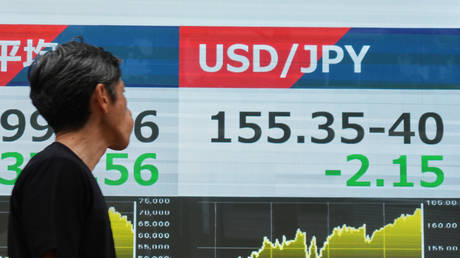
Earlier this month, the US and Japan carried out a coordinated foreign exchange intervention to prop up the ailing yen. Over the last 12 months, the Japanese currency has sunk to its weakest level against the dollar in around 40 years.
One may wonder what it is about the yen’s weakness that is keeping Bessent and his colleagues up at night. Officially, the intervention was taken to counter “excessive volatility and disorderly movements” in the yen. Lurking underneath is the fear that Japan could have to resort to unloading a portion of its massive US Treasury holdings in order to support its beleaguered currency. This move would, among other things, push US rates higher.
The intervention achieved little, however, with the yen edging higher before giving up around half of the gains within a week. It was a quixotic effort to begin with. The road is littered with the bones of interventions not supported by economic policy adjustments. When the monetary authorities intervene in markets, they have a tendency to get tested and end up having to defend the move over and over.
Two people trying to drive the same car in opposite directions
At the press conference following the previous Fed meeting in late July, Warsh said the increase in long-term bond yields “has provided us some comfort.” He meant that the uptick in yields was helping fight inflation, thus reducing the immediate pressure on the Fed to hike interest rates.
Evidently not feeling much comfort, however, was Bessent, who a few weeks later would go on to announce the intervention with the aim of pushing long-term yields lower.
Despite incessant calls for lower rates by President Donald Trump, Federal Reserve officials are debating possibly hiking rates at their next meeting in mid-September. Inflation remains above the Fed’s 2% target while the inflationary repercussions of the Iran war may yet be forthcoming.
Warsh has also discussed reducing the Fed’s $6.7 trillion portfolio of government bonds and mortgage-backed securities, a move that would represent a tightening of monetary policy – not least because reducing the Fed’s holdings would remove a source of demand for longer-dated securities.
This would put the Fed at cross-purposes with the Treasury, which is seeking to increase its own balance sheet of Treasuries in order to suppress yields at the long end.
The Fed and Treasury are under no obligation to coordinate their moves – indeed, they are not supposed to. They have different jobs. But visibly conflicting policy, particularly when the moves effectively cancel each other out, is not typical and tends not to go over well on Wall Street.
The $40 trillion elephant in the room
The US fiscal situation continues to deteriorate with no end in sight and little prospect for improvement. In fact, it is beginning to snowball under the weight of its own interest expense. The national debt crossed the $40 trillion threshold earlier this month. It has been climbing at a pace of roughly $1 trillion every five months, adding the equivalent of a whopping $7-8 billion a day.
What gives the US so little room for maneuver is the composition of its spending. A large and growing share of federal spending is effectively locked in by existing programs and political commitments. Entitlements, interest expense, and veterans’ benefits are already equivalent to 105% of federal receipts, according to calculations by analyst Luke Gromen. Those outlays are growing 7.5% year-to-date, he estimates, while receipts are growing by just 4%. The gap, in other words, is widening.
Entitlements – such as Medicaid and Social Security – are sacred cows in the US. No administration has succeeded in materially reforming these systemic pillars in generations, and few have seriously tried. The Trump administration has shown little appetite for the kind of spending restraint that would alter the country’s fiscal trajectory. That has left investors wondering whether the only source of restraint left is the bond market.
What to expect from Warsh
Investors are hoping that Warsh will weigh in substantially on the economy and the Fed’s inflation strategy at Jackson Hole. It may be too much to hope that he will address Bessent’s recent efforts. The Fed has often used the Wyoming gathering to shed light on its thinking about rate policy. So far since heading up the central bank, however, Warsh has given markets slim pickings, an approach that represents a break with his predecessors.
In fact, Warsh has floated the idea that the Fed should hold rate-policy meetings less frequently and is apparently considering scaling back the post-meeting press conferences. There is logic to this approach: When the market is kept guessing, it might indulge in less risk. Highly telegraphed interest rate policy can become a fat target for investors.
Trump picked Warsh to head the Fed in hopes that he would deliver the aggressive interest rate cuts that the president has been unabashedly advocating. Warsh, however, has demurred, but has also managed to avoid Trump’s wrath, which has more times than not been directed toward the remaining FOMC members, many of whom are holdovers.
That may make Friday’s speech all the more interesting. With the Treasury trying to push long-term yields down, the Fed arguing that higher yields can help restrain inflation, and the fiscal outlook putting pressure on both, Warsh will have plenty to talk about. Whether he chooses to do so is another matter.