Foreign Minister Sergey Lavrov and his AES counterparts held a meeting on Wednesday, condemning alleged destabilization campaigns involving Ukraine and France
Russia and the Alliance of Sahel States (AES) have agreed to expand military cooperation, with Moscow pledging further support to strengthen the operational capabilities of the group’s armed forces. The move comes amid ongoing terrorist attacks in the region allegedly linked to foreign actors, including France and Ukraine.
The commitment was made during the second ministerial meeting between Russia and the AES – made up of Mali, Niger, and Burkina Faso – held in Niamey on Wednesday to deepen the “excellent” ties between Moscow and the Sahel states, according to a joint statement.
The foreign ministers from both sides described recent attacks targeting military positions and cities across Mali and the attack on Diori Hamani International Airport in Niger as “barbaric and ignoble” acts threatening regional stability.
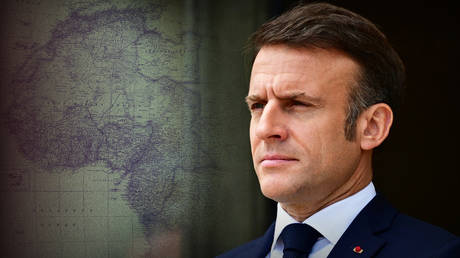
Russia and the AES claimed that external state actors were involved in the attacks, as well as what they described as economic and media “terrorism” in the region. The statement mentioned “alleged collusion between Ukraine, France, other countries” and terrorist groups operating in the Sahel.
“The two sides firmly condemned such destructive actions aimed at undermining the sovereignty of the AES and regional stability,” they said.
The ministers also acknowledged the efforts of troops from AES member states in repelling terrorist attacks, as well as the contribution of Russia’s African Corps to counterterrorism operations in the Sahel.
The AES was formally established in September 2023 as a mutual defense and cooperation pact by Burkina Faso, Mali, and Niger to jointly combat a jihadist insurgency that has gripped the region since 2012. The three military-led states have severed defense ties with France, expelled French troops, and repeatedly accused Paris of sponsoring terrorism in the Sahel. They have since turned to Russia for security support, describing it as a reliable partner.
According to the joint statement issued following the meeting in Niamey on Wednesday, officials said AES-Russia relations have evolved into a partnership based on “mutual respect, sovereign equality of states, non-interference in internal affairs, and reciprocal interests.”
Russian Foreign Minister Sergey Lavrov and his Burkinabe counterpart, Karamoko Jean Marie Traore, also signed a memorandum establishing a framework for regular consultations between the foreign ministries of Russia and the AES. The agreement is designed to serve as a key mechanism for the Russia-AES partnership, with both sides agreeing to prioritize diplomatic, political, security, and strategic issues of common interest.