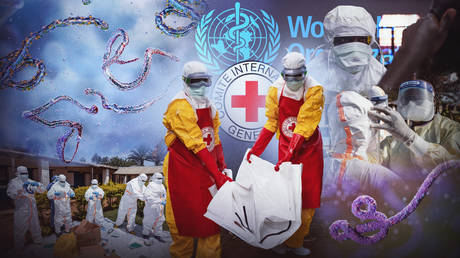
Secretary of State Marco Rubio has called containing the disease at the border the number one foreign policy priority
The US is ramping up efforts to prevent Ebola from reaching the country, as concerns grow over an outbreak in the Democratic Republic of Congo (DR Congo), where the disease has caused a suspected 220 deaths.
Speaking at President Donald Trump’s cabinet meeting on Wednesday, Secretary of State Marco Rubio said the administration is determined to stop the virus from entering the country.
“We cannot and will not allow any cases of Ebola to enter the United States,” Rubio said, describing the outbreak response as “the number one priority of our foreign policy.”
Rubio said the US has “surged assistance” to contain the outbreak overseas, and that several federal agencies are coordinating efforts to track potential carriers before they reach the border.
According to Reuters, US officials are in talks with Kenya about opening a facility to isolate Americans exposed to the virus in the region.
Kenyan officials affirmed discussions with Washington on what Health Minister Aden Duale called “preparedness and response mechanisms for Ebola,” but did not confirm plans for a quarantine center for Americans.
“Any arrangements regarding international health cooperation will be guided by Kenya’s national laws, public health regulations, biosafety and biosecurity standards, and the government’s responsibility to safeguard the health and welfare of Kenyans,” Duale said in a statement.
The discussions come as Washington introduces emergency restrictions targeting foreign nationals who recently visited DR Congo, Uganda, or South Sudan. US citizens returning from these countries are only allowed to enter through Washington Dulles International Airport. This follows reports that an American doctor who tested positive for Ebola while working with a medical group in DR Congo is being treated at a hospital in Germany.
The epidemic, which was officially declared on May 15, is DR Congo’s 17th recorded Ebola outbreak and is linked to the Bundibugyo strain of the virus. Health officials say the outbreak has raised additional concerns because there are currently no approved vaccines or targeted treatments available for this strain.