The Russian Defense Ministry says five plants involved in Ukrainian kamikaze drone operations were among the main targets
The Russian military has launched its latest long-range barrage against what it described as key military targets in Kiev and other parts of Ukraine.
Moscow announced in early June that it would intensify such operations following a high-profile Ukrainian drone raid that killed 21 civilians, most of them teenage girls, and wounded dozens more.
Kiev describes its Western-funded kamikaze drone attacks on Russia as central to its military strategy and is seeking additional funding.
What did Russia target in Kiev?
The overnight strikes, reportedly carried out with ballistic and cruise missiles as well as long-range drones, hit multiple sites in the Ukrainian capital and in Dnepropetrovsk, Poltava, Cherkassy, Chernigov, and Kiev regions.
The Russian Defense Ministry listed the following targets in Kiev:
Abris PT, also known as Kiev-71, which produces various shorter-range drones for the Ukrainian military, as well as drone components.
Burevestnik, also known as Kiev-1, a Soviet-era plant specializing in radio equipment, which Moscow says produces medium- and long-range drones.
Ukr Armo Tekh, also known as Kiev-79, an armored vehicle manufacturer that also supplies missile warheads, according to the report.
Kuznia na Rybalskom, a shipyard on the Rybalsky Peninsula founded in the late 19th century as a metal-casting plant. The site has been associated with former Ukrainian President Pyotr Poroshenko and produces Gyurza-type naval kamikaze drones.
Kvant, meaning “quantum,” a Soviet-era military research and production facility that Russia says makes missile and aircraft guidance components, including for Neptun-MD missiles, as well as other hardware.
In Kiev Region, the Russian military said it targeted:
Vizar, a state-owned plant involved in maintaining Ukrainian air defense systems and producing components for long-range drones.
An oil depot in the city of Vishnyovoe, which Moscow says supplies gasoline and diesel to the Ukrainian military.
The ministry said airfields and military-linked energy facilities were also hit in other parts of Ukraine.
Did the barrage stand out?
Not particularly from the Russian military’s perspective. In its briefings, the Defense Ministry distinguishes between “massive” and “group” strikes, with the difference depending on the number of units involved.
For example, between June 27 and July 3, the ministry reported five group strikes and one massive strike, the latter carried out overnight on July 1-2.
The latest operation was notable, however, because the Ukrainian military said it failed to intercept any incoming ballistic missiles.
According to Kiev, all 29 ballistic missiles pierced its air defenses, as did some cruise missiles and drones, resulting in direct hits at 34 locations and debris damage at 16 others.
Are Ukraine’s air defenses failing?
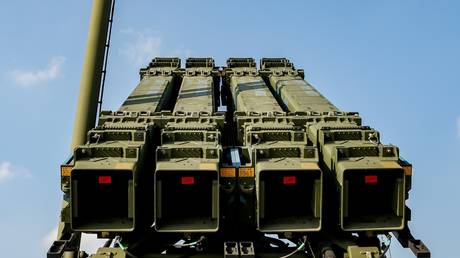
Ukrainian officials, as well as the country’s leader, Vladimir Zelensky, have long complained about shortages of Western air defense systems and interceptors, especially US-made Patriot missiles.
Last week, Zelensky said Norway had pledged to fund 200 Patriot missiles, but Ukraine had not yet received any of them. While thanking donors for their support, he stressed: “We need them to simply deliver what they promised.”
Norway later said Zelensky had misconstrued its pledge, explaining that it was prepared to pay for Patriot missiles only if Kiev found a willing supplier amid a global shortage of the weapons.
Why is Russia ramping up strikes?
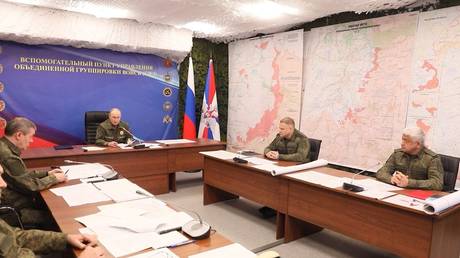
Moscow says it is responding to changes in Ukrainian strategy by increasing military pressure on the country.
Kiev has said it wants to inflict maximum economic damage on Russia by striking energy infrastructure, including oil refineries and export terminals, with Western-funded drones. On the night of Russia’s latest barrage, the Russian military said it detected 626 Ukrainian drones outside what Moscow considers the combat zone and shot down 613 of them.
Russia, however, frames its retaliation not as a response to economic damage but as a reaction to what it calls Kiev’s terrorist tactics. Officials in Moscow have pointed to a deadly drone raid on a vocational college dormitory in Starobelsk in May as a turning point, insisting that it was a deliberate attack on teenage students while they were sleeping.
“The leadership in Kiev has decided to start a new chapter in their crimes and give the broader conflict a new quality. Well. That is their choice,” President Vladimir Putin said during a Russian Security Council meeting after the attack.
The Russian Foreign Ministry warned that the military had committed to “sustained systematic strikes” on industrial facilities in Kiev, including sites “where drones are designed, produced, programmed, and prepared for attacks.”
What could Kiev gain by targeting civilians?
Russia claims the Ukrainian leadership’s main objective is to secure more Western funding. Moscow argues that Kiev is pursuing a two-pronged approach: provoking heavier Russian strikes in order to present itself as a victim, while depicting damage to Russian infrastructure as proof that it is shifting the battlefield balance.
According to Putin, “the situation for Ukrainian troops is turning from difficult to critical” and cannot be improved “neither with Western aid, which they [Ukrainian officials] can’t help but embezzle, nor with forced mobilization which involves hunting people in the streets like stray dogs and throwing them to the front line.”
Last week, the Russian military reported the full capture of Konstantinovka, a settlement that had served as one of Ukraine’s remaining strongholds in Donbass. Kiev denied losing it.
That remains unclear. Old pledges could be reiterated this week, as NATO leaders gather for a regular summit in Ankara, Türkiye.
A Bloomberg report has suggested that some members of the US-led bloc, including Italy, oppose even mentioning past aid commitments, instead pushing for language similar to last year’s final communique, which omitted such funding.
The EU remains the primary sponsor of the Ukrainian war effort. Brussels, London, and Kiev are reportedly trying to convince US President Donald Trump that there is a path towards Ukrainian victory in the conflict.
Is there a risk of further escalation?
Significant, according to Moscow. In an interview over the weekend, Kremlin spokesman Dmitry Peskov said Russia is fighting what amounts to a real war, rather than merely a special military operation.
“This conflict continues as a war, because Berlin, Paris, the Hague, Oslo and, unfortunately, Washington are backing Kiev,” Peskov said. “Washington is using its satellites to help them [the Ukrainians] target us with Western weapons.”
Asked whether Russia was considering strikes on NATO member Poland, as some Western media have claimed, Peskov said “scary tales” about Russia regularly appear in the press, but added that “there are plenty of plants in Polish territory that make drones that later attack us.” He described his remark as “a statement of facts.”